Articles | Volume 13, issue 2
https://doi.org/10.5194/ms-13-635-2022
© Author(s) 2022. This work is distributed under
the Creative Commons Attribution 4.0 License.
https://doi.org/10.5194/ms-13-635-2022
© Author(s) 2022. This work is distributed under
the Creative Commons Attribution 4.0 License.
Stiffness analysis of a 3-DOF parallel mechanism for engineering special machining
College of Mechanical and Electronic Engineering, Shandong University
of Science and Technology, Qingdao 266590, China
Shanghai Collaborative Innovation Center of Intelligent Manufacturing
Robot Technology for Large Components, Shanghai University of Engineering
Science, Shanghai 201620, China
Jianglong Tang
College of Mechanical and Electronic Engineering, Shandong University
of Science and Technology, Qingdao 266590, China
Changtao Yan
College of Mechanical and Electronic Engineering, Shandong University
of Science and Technology, Qingdao 266590, China
Guohua Cui
Shanghai Collaborative Innovation Center of Intelligent Manufacturing
Robot Technology for Large Components, Shanghai University of Engineering
Science, Shanghai 201620, China
Minghui Zhang
College of Mechanical and Electronic Engineering, Shandong University
of Science and Technology, Qingdao 266590, China
Yan'an Yao
College of Mechanical and Electronic Engineering, Shandong University
of Science and Technology, Qingdao 266590, China
School of Mechanical, Electronic and Control Engineering, Beijing
Jiaotong University, Beijing 100044, China
Related authors
Changtao Yan, Kan Shi, Haiqiang Zhang, and Yanan Yao
Mech. Sci., 13, 137–146, https://doi.org/10.5194/ms-13-137-2022, https://doi.org/10.5194/ms-13-137-2022, 2022
Short summary
Short summary
Aiming at the complex control system of a quadruped robot, a leg structure of a quadruped robot was designed based on mechanism synthesis. The innovativeness of this robot is that it can achieve a special gait driven only by a single motor. Simulation and experimental analysis prove that the mechanism is reasonable, reliable and can meet the requirements of linear walking and climbing. The conclusions of this research will be useful for application in field of single actuated quadruped robots.
Haiqiang Zhang, Jianglong Tang, Qing Gao, Guohua Cui, Kan Shi, and Yan'an Yao
Mech. Sci., 13, 123–136, https://doi.org/10.5194/ms-13-123-2022, https://doi.org/10.5194/ms-13-123-2022, 2022
Short summary
Short summary
Compared with the two traditional intelligent optimization algorithms, the results show that the particle swarm optimization configuration algorithm, based on an improved orthogonal experiment design, has a better optimization effect, and the results are improved to a certain extent. The evaluation indexes of a multi-objective optimization design are often contradictory. The designer needs to compromise and select an appropriate parameter design value.
Xingqi Yin, Xuemin Sun, Zhihong Chen, Xianhong Zhang, Ruiming Li, and Yanan Yao
Mech. Sci., 17, 439–451, https://doi.org/10.5194/ms-17-439-2026, https://doi.org/10.5194/ms-17-439-2026, 2026
Short summary
Short summary
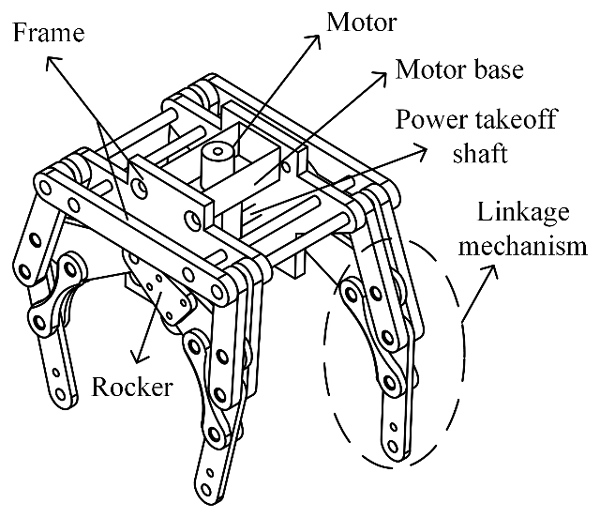
This study addresses the challenges of capturing failed spacecraft and uncooperative space debris. Based on bionic principles, we propose a multi‑segment serial–parallel spatial closed‑chain capture mechanism, which can extend, envelop, and fix targets with high stability. Simulations and prototype tests demonstrate that the design increases capture range and flexibility, providing a feasible solution for space debris removal and failed satellite recovery.
Kan Shi, Zongjia Wang, Changtao Yan, and Zhiwei Wang
Mech. Sci., 15, 417–430, https://doi.org/10.5194/ms-15-417-2024, https://doi.org/10.5194/ms-15-417-2024, 2024
Short summary
Short summary
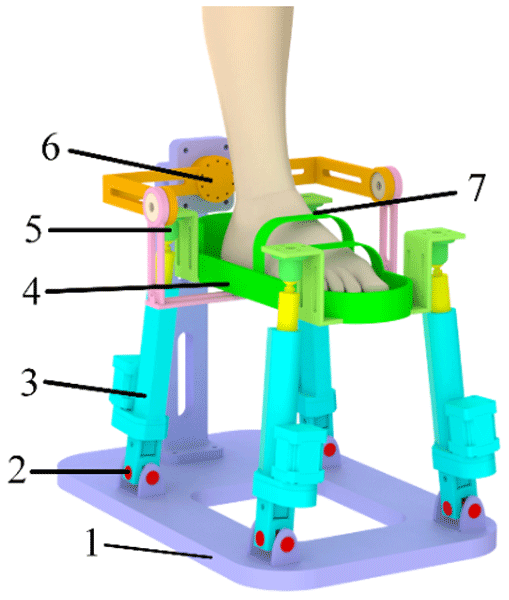
In order to lessen the impact on the team of rehabilitation practitioners and provide patients with a higher-quality rehabilitation process, an ankle rehabilitation robot based on a parallel mechanism is proposed. The feasibility of the ankle rehabilitation robot proposed in this paper is proven by analysis, which lays a foundation for future human–machine experiments. It can act as a reference for future research of the ankle rehabilitation mechanism.
Ruiming Li, Xianhong Zhang, Shuo Zhang, Ran Liu, and Yan-an Yao
Mech. Sci., 14, 387–398, https://doi.org/10.5194/ms-14-387-2023, https://doi.org/10.5194/ms-14-387-2023, 2023
Short summary
Short summary
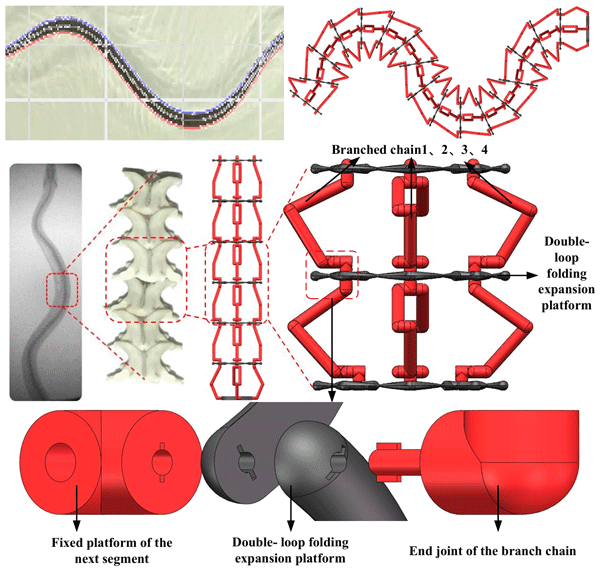
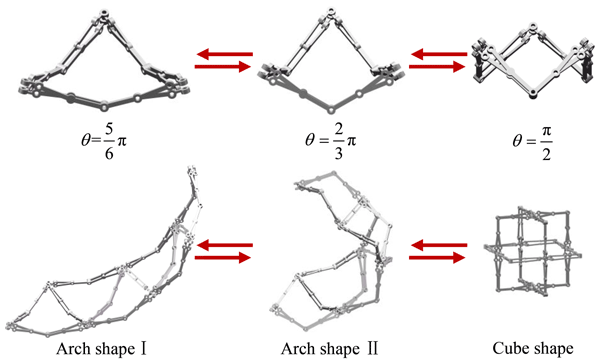
This paper deals with the construction of a novel family of multimode deployable mechanisms. By connecting many identical threefold-symmetric Bricard-like mechanisms, a multimode deployable arch is proposed for the first time, which can switch between the scissor-like deployable mode and the arch deformable mode through the transition configuration. Then, new multimode center-driven deployable mechanisms can be obtained by connecting three and six multimode deployable arches.
Shi-Wu Li, Kan Shi, Ming-Jie Wang, and Yan-An Yao
Mech. Sci., 13, 625–634, https://doi.org/10.5194/ms-13-625-2022, https://doi.org/10.5194/ms-13-625-2022, 2022
Short summary
Short summary
China is one of the first countries that produced textiles in the world. It has designed and developed a variety of equipment to facilitate textile work. However, due to unclear descriptions in the records and illustrations, a variety of designs with different structures may have been produced. This paper briefly analyzes the structures of textile mechanisms and explores the degree of freedom of the mechanisms to find feasible designs in line with functional requirements.
Changtao Yan, Kan Shi, Haiqiang Zhang, and Yanan Yao
Mech. Sci., 13, 137–146, https://doi.org/10.5194/ms-13-137-2022, https://doi.org/10.5194/ms-13-137-2022, 2022
Short summary
Short summary
Aiming at the complex control system of a quadruped robot, a leg structure of a quadruped robot was designed based on mechanism synthesis. The innovativeness of this robot is that it can achieve a special gait driven only by a single motor. Simulation and experimental analysis prove that the mechanism is reasonable, reliable and can meet the requirements of linear walking and climbing. The conclusions of this research will be useful for application in field of single actuated quadruped robots.
Haiqiang Zhang, Jianglong Tang, Qing Gao, Guohua Cui, Kan Shi, and Yan'an Yao
Mech. Sci., 13, 123–136, https://doi.org/10.5194/ms-13-123-2022, https://doi.org/10.5194/ms-13-123-2022, 2022
Short summary
Short summary
Compared with the two traditional intelligent optimization algorithms, the results show that the particle swarm optimization configuration algorithm, based on an improved orthogonal experiment design, has a better optimization effect, and the results are improved to a certain extent. The evaluation indexes of a multi-objective optimization design are often contradictory. The designer needs to compromise and select an appropriate parameter design value.
Cited articles
Ali, R., Afshin, T., and Kamali, E. A.: On the stiffness analysis of robotic
manipulators and calculation of stiffness indices, Mech. Mach. Theory, 130,
382–402, https://doi.org/10.1016/j.mechmachtheory.2018.08.025, 2018.
Araujo-Gómez, P., Díaz-Rodríguez, M., and Mata, V.: Kinematic analysis and dimensional optimization of a 2R2T parallel manipulator, J Braz. Soc. Mech. Sci. Eng., 41, 425–433, https://doi.org/10.1007/s40430-019-1934-1, 2019.
Cao, W. A. and Ding, H.: A method for stiffness modeling of 3R2T over
constrained parallel robotic mechanisms based on screw theory and strain
energy, Precis. Eng., 51, 10–29, https://doi.org/10.1016/j.precisioneng.2017.07.002,
2017.
Cao, W. A. and Ding, H. F.: A method for solving all joint reactions of
3R2T parallel mechanisms with complicated structures and multiple redundant
constraints, Mech. Mach. Theory, 121, 718–730, https://doi.org/10.1016/j.mechmachtheory.2017.11.015, 2018.
Cao, W. A., Ding, H. F., and Yang, D. H.: A method for compliance modeling of five degree-of-freedom overconstrained parallel robotic mechanisms with
3T2R output motion, J. Mech. Robot., 9, 1–11, https://doi.org/10.1115/1.4035270, 2017.
Chen, B., Cui, Z., and Jiang, H.: Producing negative active stiffness in
redundantly actuated planar rotational parallel mechanisms, Mech. Mach.
Theory, 128, 336–348, https://doi.org/10.1016/j.mechmachtheory.2018.06.002, 2018.
Fang, H. R., Zhu, T., Zhang, H. Q., Yang, H., and Jiang, B. S.: Design and
Analysis of a Novel Hybrid Processing Robot Mechanism, Int. J. Autom.
Comput., 17, 403–416, https://doi.org/10.1007/s11633-020-1228-1, 2020.
Fang, Y. F. and Tsai, L. W.: Structure synthesis of 4-DoF and 5-DoF
parallel manipulators with identical limb structures, Ind. Robot., 21,
799–810, https://doi.org/10.1177/0278364902021009314, 2002.
Gosselin, C. and Schreiber, L. S.: Redundancy in Parallel Mechanisms, Appl.
Mech. Rev., 70, 1–13, https://doi.org/10.1115/1.4038931, 2018.
Huang, T., Dong, C., and Liu, H.: A simple and visually orientated approach
for type synthesis of over constrained 1T2R parallel mechanisms, Robotica,
37, 1161–1173, https://doi.org/10.1017/S0263574718000395, 2019.
Jiang, B. S., Fang, H. R., and Zhang, H. Q.: Type Synthesis and Kinematics
Performance Analysis of a Class of 3T2R Parallel Mechanisms with Large
Output Rotational Angles, Int. J. Autom. Comput., 18, 96–109, https://doi.org/10.1007/s11633-019-1192-9, 2019.
Jiang, B. S., Fang, H. R., and Zhang, H. Q.: Type Synthesis and Dynamics
Performance Evaluation of a Class of 5-DOF Redundantly Actuated Parallel
Mechanisms, Int. J. Autom. Comput., 18, 96–109, https://doi.org/10.1007/s11633-020-1255-y, 2021.
Li, K., Jiang, H., Zuo, C., and Huang, Q.: Variable stiffness design of
redundantly actuated planar rotational parallel mechanisms, Chinese J.
Eronaut., 30, 818–826, https://doi.org/10.1016/j.cja.2016.07.001, 2017.
Li, Q. and Hervé, J. M.: 1T2R Parallel mechanisms without parasitic
motion, IEEE. T. Robot., 26, 401–410, https://doi.org/10.1109/TRO.2010.2047528, 2010.
Moosavian, A. and Xi, F. F.: Design and analysis of reconfigurable parallel
robots with enhanced stiffness, Mech. Mach. Theory, 77, 92–110, https://doi.org/10.1016/j.mechmachtheory.2014.02.005, 2014.
Moosavian, A. and Xi, F. F.: Statically redundant parallel robots,
Meccanica, 51, 1623–1637, https://doi.org/10.1007/s11012-015-0272-3, 2016.
Portman, V. T.: Wrench transformation technique for robot
stiffness evaluation: Direct sum based solution and application to
kinetostatic indices, Mech. Mach. Theory, 154, 94–114,
https://doi.org/10.1016/j.mechmachtheory.2020.104040, 2020.
Sun, T. and Huo, X. M.: Type synthesis of 1T2R parallel mechanisms with
parasitic motions. Mech. Mach. Theory, 128, 412–428, https://doi.org/10.1016/j.mechmachtheory.2018.05.014, 2018.
Sun, T., Lian, B. B., and Song, Y. M.: Stiffness analysis of a 2-DOF
over-constrained RPM with an articulated traveling platform, Mech. Mach.
Theory, 96, 165–178, https://doi.org/10.1016/j.mechmachtheory.2015.09.008, 2016.
Tian, H. B., Ma, H. W., and Xia, J.: Stiffness analysis of a metamorphic
parallel mechanism with three configurations, Mech. Mach. Theory, 142,
94–114, https://doi.org/10.1016/j.mechmachtheory.2019.103595, 2019.
Wang, H., Zhang, L., Chen, G., and Huang, S.: Parameter optimization of
heavy-load parallel manipulator by introducing stiffness distribution
evaluation index, Mech. Mach. Theory, 108, 244–259, https://doi.org/10.1016/j.mechmachtheory.2016.10.011, 2017.
Wen, K., Shin, C. B., and Seo, T. W.: Stiffness Synthesis of 3-DOF Planar
3RPR Parallel Mechanisms, Robotica, 34, 2776–2787, https://doi.org/10.1017/S0263574715000363, 2015.
Wu, J., Li, T. M., and Wang, J. S.: Stiffness and natural frequency of a
3-DOF parallel manipulator with consideration of additional leg candidates,
Robot. Auton. Syst., 61, 868–875, https://doi.org/10.1016/j.robot.2013.03.001, 2013.
Wu, J., Yu, G., and Gao, Y.: Mechatronics modeling and vibration analysis of
a 2-DOF parallel manipulator in a 5-DOF hybrid machine tool, Mech. Mach.
Theory, 121, 430–445, https://doi.org/10.1016/j.mechmachtheory.2017.10.023, 2018.
Wu, J., Ye, H., and Yu, G.: A novel dynamic evaluation method and its
application to a 4-DOF parallel manipulator, Mech. Mach. Theory, 168,
104627, https://doi.org/10.1016/j.mechmachtheory. 2021.104627, 2022.
Wu, K., Yu, J., and Zong, G.: A Family of Rotational Parallel Manipulators
With Equal-Diameter Spherical Pure Rotation, J. Mech. Robot., 6, 011008,
https://doi.org/10.1115/1.4025860, 2014.
Xu, Y., Liu, W., Yao, J., and Zhao, Y.: A method for force analysis of the
over constrained lower mobility parallel mechanism, Mech. Mach. Theory, 88,
31–48, https://doi.org/10.1016/j.mechmachtheory.2015.01.004, 2015.
Yan, S. J., Ong, S. K., and Nee, A. Y. C.: Stiffness analysis of
parallelogram-type parallel manipulators using a strain energy method,
Robot. Cim.-Int. Manuf., 37, 13–22, https://doi.org/10.1016/j.rcim.2015.05.004, 2016.
Zhang, H. Q., Fang, H. R., Zhang, D., Luo, X. L., and Zhao, F. Q.:
Kinematics and Dynamics Simulation Analysis of a 3-DOF Parallel Mechanism
for Application in Hybrid Machine, Mech. Mach. Science, 79, 247–258, https://doi.org/10.1007/978-981-15-0142-5_25, 2019.
Zhang, J., Zhao, Y. Q., and Jin, Y.: Kinetostatic-model-based stiffness
analysis of Exechon PKM, Robot. Cim-Int. Manuf., 37, 208–220, https://doi.org/10.1016/j.rcim.2015.04.008, 2016.
Short summary
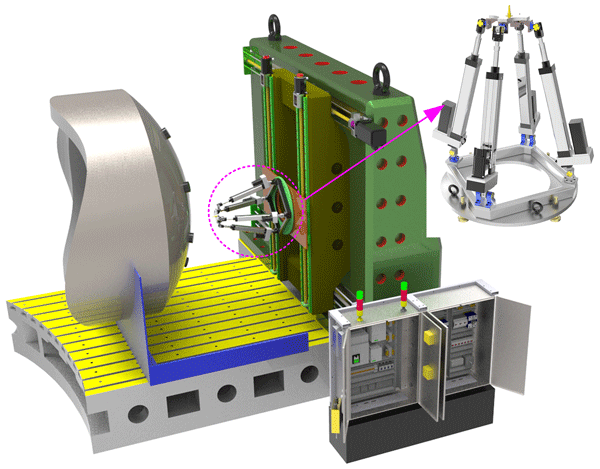
To improve the stiffness performance of the parallel mechanism, this paper proposes a novel 3-DOF redundantly actuated 2RPU-2SPR parallel mechanism. What is more, the stiffness model of the parallel mechanism is deduced and the accuracy of the stiffness model is verified through finite-element analysis. Finally, the simulation experiment results demonstrate that the redundantly actuated parallel mechanism has better stiffness performance compared to a traditional 2RPU-SPR parallel mechanism.
To improve the stiffness performance of the parallel mechanism, this paper proposes a novel...