Articles | Volume 15, issue 2
https://doi.org/10.5194/ms-15-461-2024
© Author(s) 2024. This work is distributed under
the Creative Commons Attribution 4.0 License.
https://doi.org/10.5194/ms-15-461-2024
© Author(s) 2024. This work is distributed under
the Creative Commons Attribution 4.0 License.
Simulated vibration characterization of the aero-turbine engine vibration isolation system under broadband random excitation
Huawen Peng
Zhuzhou Times New Material Technology Co., Ltd., Zhuzhou 412007, China
Bo Zou
Zhuzhou Times New Material Technology Co., Ltd., Zhuzhou 412007, China
Jingyun Yang
Hunan Provincial Key Laboratory of Health Maintenance for Mechanical Equipment, Hunan University of Science and Technology, Xiangtan 411201, China
Rong Fu
Zhuzhou Times New Material Technology Co., Ltd., Zhuzhou 412007, China
Xingwu Ding
Zhuzhou Times New Material Technology Co., Ltd., Zhuzhou 412007, China
Da Zhang
Hunan Provincial Key Laboratory of Health Maintenance for Mechanical Equipment, Hunan University of Science and Technology, Xiangtan 411201, China
Guangfu Bin
CORRESPONDING AUTHOR
Hunan Provincial Key Laboratory of Health Maintenance for Mechanical Equipment, Hunan University of Science and Technology, Xiangtan 411201, China
Related authors
No articles found.
Dunyuan Luo, Guangfu Bin, Andrew Ball, Fengshou Gu, Haiyan Miao, Chao Li, Ahmed Hamood, and Wei Yuan
Mech. Sci., 17, 593–613, https://doi.org/10.5194/ms-17-593-2026, https://doi.org/10.5194/ms-17-593-2026, 2026
Short summary
Short summary
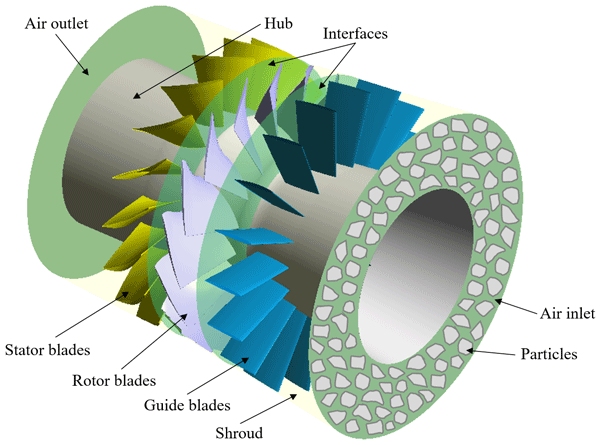
Surface roughness has the greatest impact on the erosion wear of the rotor blade, followed by the stator blade, with the least on the guide blade. As surface roughness increases, the maximum wear rate rises and the concentrated erosion wear area expands, while its location does not shift significantly. The results can provide a basis for the erosion wear assessment of compressor blades at different service stages.
Hongli Yue, Chao Li, Guangfu Bin, Xianghuan Liu, Jian Li, Anhua Chen, and Qiang Li
Mech. Sci., 17, 545–555, https://doi.org/10.5194/ms-17-545-2026, https://doi.org/10.5194/ms-17-545-2026, 2026
Short summary
Short summary
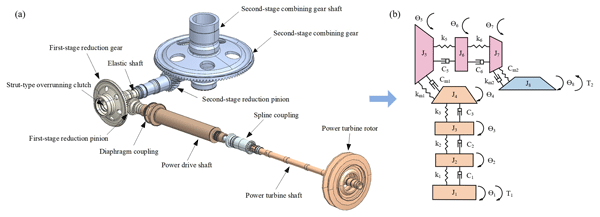
Helicopter engines often generate rapidly changing torque under different flight conditions, which can increase vibration in the transmission system and affect reliability. This study examines how these variations influence system behavior in typical scenarios. The results show that the rate of torque change, rather than its magnitude, plays a key role. Faster changes significantly amplify vibration in critical components, providing guidance for improving system safety and durability.
Ziyang Zhou, Guangfu Bin, Chao Li, Yaozhi Gao, and Maharaja Bayjid Md
Mech. Sci., 16, 375–390, https://doi.org/10.5194/ms-16-375-2025, https://doi.org/10.5194/ms-16-375-2025, 2025
Short summary
Short summary
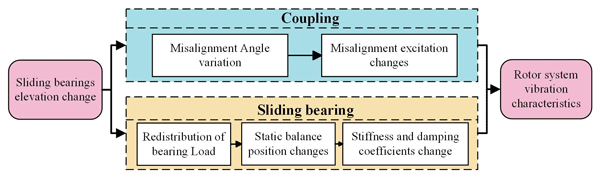
The two-span three-support rotor is a typical structure of rotating machinery such as steam turbine units, compressor units, and water pumps. When the elevation of the sliding bearing changes, the misalignment excitation of the coupling and the stiffness damping of the bearing will change accordingly, which will affect the vibration characteristics of the rotor. This paper can provide theoretical guidance and data support for the structural design and fault diagnosis of the two-span three-support rotor.
Qingxiong Lu, Chao Li, Yangyan Zhang, Hao Fang, and Guangfu Bin
Mech. Sci., 14, 237–246, https://doi.org/10.5194/ms-14-237-2023, https://doi.org/10.5194/ms-14-237-2023, 2023
Short summary
Short summary
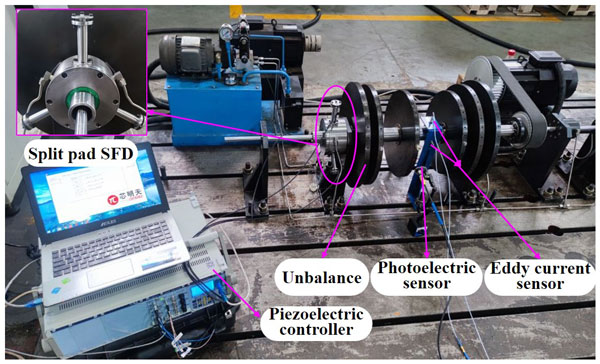
Helicopters are easy to hit by hard objects during operation, harming pilots. So, we want to provide some technical references for the safe operation of helicopters. What are the factors that affect the safety? Then we analyze how to control this factor through simulation and specific experiments and observe the vibration of the equipment. Finally, results show that the stability of the equipment can be enhanced by designing a certain device to adjust the influencing factors.
Cited articles
Afonso, F., Sohst, M., Diogo, C. M., Rodrigues, S.S., Ferreira, A., Ribeiro, I., Marques, R., Rego, F. F., Sohouli, A., Portugal-Pereira, J., and Policarpo, H.: Strategies towards a more sustainable aviation: A systematic review, Prog. Aerosp. Sci., 137, 100878, https://doi.org/10.1016/j.paerosci.2022.100878, 2023.
Bin, G., Li, C., Li, J., and Chen, A.: Erosion-damage-induced vibration response of aero-gas generator rotor system, Mech. Syst. Signal Pr., 195, 110298, https://doi.org/10.1016/j.ymssp.2023.110298, 2023.
Chen, W., Guo, Z., Chen, S., Cao, Y., Guo, X., Ma, H., and Wen, B.: Semi-analytic modeling and experimental verification of arbitrary aero-engine complex spatial pipeline, Appl. Math. Model., 131, 505–534, https://doi.org/10.1016/j.apm.2024.04.003, 2024.
Chen, X., Zhao, J., Jing, Y., Cao, X., Yuan, S., Luo, J., and Pu, H.: A novel permanent magnet vibration isolator with wide stiffness range and high bearing capacity, Mechatronics, 98, 103119, https://doi.org/10.1016/j.mechatronics.2023.103119, 2024.
Filippone, A.: Aircraft noise prediction, Prog. Aerosp. Sci., 68, 27–63, https://doi.org/10.1016/j.paerosci.2014.02.001, 2014.
Fu, J., Bai, J., Lai, J., Li, P., Yu, M., and Lam, H. K.: Adaptive fuzzy control of a magnetorheological elastomer vibration isolation system with time-varying sinusoidal excitations, J. Sound Vib., 456, 386–406, https://doi.org/10.1016/j.jsv.2019.05.046, 2019.
Ji, L., Luo, Y., Zhang, Y., Xie, S., and Xu, M.: A creative wide-frequency and large-amplitude vibration isolator design method based on magnetic negative stiffness and displacement amplification mechanism, J. Sound Vib., 572, 118185, https://doi.org/10.1016/j.jsv.2023.118185, 2024.
Kan, X. and Xing, T.: A novel mathematical model for the design of the resonance mechanism of an intentional mistuning bladed disk system, Mech. Sci., 13, 1031–1037, https://doi.org/10.5194/ms-13-1031-2022, 2022.
Kirmizi, M., Aygun, H., and Turan, O.: Energetic and exergetic metrics of a cargo aircraft turboprop propulsion system by using regression method for dynamic flight, Energy, 296, 131153, https://doi.org/10.1016/j.energy.2024.131153, 2024.
Kocak, K. and Yilmaz, C.: Design of a compliant lever-type passive vibration isolator with quasi-zero-stiffness mechanism, J. Sound Vib., 558, 117758, https://doi.org/10.1016/j.jsv.2023.117758, 2023.
Kwon, S. C., Jo, M. S., Ko, D. H., and Oh, H. U.: Viscoelastic multilayered blade-type passive vibration isolation system for a spaceborne cryogenic cooler, Cryogenics, 105, 102982, https://doi.org/10.1016/j.cryogenics.2019.102982, 2020.
Lee, H. M., Garg, S., Lim, K. M., and Lee, H. P.: Comparison of cabin noise of turboprop and turbofan aircrafts, Appl. Acoust., 214, 109651, https://doi.org/10.1016/j.apacoust.2023.109651, 2023.
Leng, D., Feng, W., Ning, D., and Liu, G.: Analysis and design of a semi-active X-structured vibration isolator with magnetorheological elastomers, Mech. Syst. Signal Pr., 181, 109492, https://doi.org/10.1016/j.ymssp.2022.109492, 2022.
Li, C., Bin, G., Li, J., and Liu, Z.: Study on the erosive wear of the gas-solid flow of compressor blade in an aero-turboshaft engine based on the Finnie model, Tribol. Int., 163, 107197, https://doi.org/10.1016/j.triboint.2021.107197, 2021.
Li, C., Bin, G., Li, J., Yang, P., and Wang, W.: Influence of inlet distortion on the wear of aero-compressor blades, Int. J. Mech. Sci., 230, 107551, https://doi.org/10.1016/j.ijmecsci.2022.107551, 2022.
Li, C., Bin, G., Li, J., and Yang, P.: Erosion wear characteristics of the aero-compressor blades in full speed range, Powder Technol., 418, 118227, https://doi.org/10.1016/j.powtec.2023.118227, 2023.
Liang, H., Fu, H., and Hao, G.: A miniaturized statically balanced compliant mechanism for on-chip ultralow wide-bandwidth vibrational energy harvesting, Mech. Sci., 15, 159–168, https://doi.org/10.5194/ms-15-159-2024, 2024.
Lin, D., Yang, F., Gong, D., and Li, R.: A new vibration isolator integrating tunable stiffness-damping and active driving properties based on radial-chains magnetorheological elastomer, Mech. Syst. Signal Pr., 183, 109633, https://doi.org/10.1016/j.ymssp.2022.109633, 2023.
Lu, Q., Li, C., Zhang, Y., Fang, H., and Bin, G.: Study on the vibration control method of a turboshaft engine rotor based on piezoelectric squeeze film damper oil film clearance, Mech. Sci., 14, 237–246, https://doi.org/10.5194/ms-14-237-2023, 2023.
Ma, H., Guan, H., Qu, L., Yang, T., Zeng, Y., Chen, Y., Zhu, Z., and Wang, H.: Blade-coating-casing rubbing induced vibration responses and wear characteristics, Tribol. Int., 194, 109571, https://doi.org/10.1016/j.triboint.2024.109571, 2024.
Oh, H. U., Lee, K. J., and Jo, M. S.: A passive launch and on-orbit vibration isolation system for the spaceborne cryocooler, Aerosp. Sci. Technol., 28, 324–331, https://doi.org/10.1016/j.ast.2012.11.013, 2013.
Roncen, T., Sinou, J. J., and Lambelin, J. P.: Experiments and nonlinear simulations of a rubber isolator subjected to harmonic and random vibrations, J. Sound Vib., 451, 71–83, https://doi.org/10.1016/j.jsv.2019.03.017, 2019.
Somanath, S., Marimuthu, R., and Krishnapillai, S.: Frequency domain analysis of pre-stressed elastomeric vibration isolators, Defence Technology, 25, 33–47, https://doi.org/10.1016/j.dt.2022.10.004, 2023.
Tahan, M., Tsoutsanis, E., Muhammad, M., and Karim, Z. A.: Performance-based health monitoring, diagnostics and prognostics for condition-based maintenance of gas turbines: A review, Appl. Energ., 198, 122–144, https://doi.org/10.1016/j.apenergy.2017.04.048, 2017.
Tong, W., Wei, B., Moshrefi-Torbati, M., Zhou, X., Yurchenko, D., and Yang, K.: Investigation of a monostable nonlinear vibration isolator with the inertia-elastic boundary, Commun. Nonlinear Sci., 132, 107887, https://doi.org/10.1016/j.cnsns.2024.107887, 2024.
Wang, J., Chen, Y., Pan, K., and He, X.: Test and analysis of vibration transmission characteristics of turboprop engine mounting systems, Noise and Vibration Control, 40, 250–255 + 259, 2020 (in Chinese).
Wang, P., Yang, Y., Ma, H., Xu, H., Li, X., Luo, Z., and Wen, B.: Vibration characteristics of rotor-bearing system with angular misalignment and cage fracture: Simulation and experiment, Mech. Syst. Signal Pr., 182, 109545, https://doi.org/10.1016/j.ymssp.2022.109545, 2023.
Wang, X., Yu, N., Wu, C., Zhang, W., and Yan, B.: Lever-type high-static-low-dynamic-stiffness vibration isolator with electromagnetic shunt damping, Int. J. Nonlinear Mech., 146, 104128, https://doi.org/10.1016/j.ijnonlinmec.2022.104128, 2022.
Yan, G., Qi, W. H., Lu, J. J., Liu, F. R., Yan, H., Zhao, L. C., Wu, Z. Y., and Zhang, W. M.: Bio-inspired multi-joint-collaborative vibration isolation, J. Sound Vib., 568, 118089, https://doi.org/10.1016/j.jsv.2023.118089, 2024.
Yan, K., Zhao, T. Y., and Ma, H.: Coupled vibration analysis of a rotating pre-twist blade-hub assembly with a setting angle reinforced by graphene nanoplatelets, Thin Wall. Struct., 195, 111287, https://doi.org/10.1016/j.tws.2023.111287, 2024.
Yang, P., Yue, W., Li, J., Bin, G., and Li, C.: Review of damage mechanism and protection of aero-engine blades based on impact properties, Eng. Fail. Anal., 140, 106570, https://doi.org/10.1016/j.engfailanal.2022.106570, 2022.
Yang, P., Yue, W., Chen, A., and Bin, G.: Influence of SiO2 and Al2O3 particles on erosion wear of aero-compressor blades, Wear, 530, 204992, https://doi.org/10.1016/j.wear.2023.204992, 2023a.
Yang, P., Li, C., Yue, W., Bin, G., and Chen, A.: Study on erosion wear characteristics of aero-compressor blades considering distortion degree, Tribol. Int., 189, 108895, https://doi.org/10.1016/j.triboint.2023.108895, 2023b.
Yang, T., Ma, H., Qin, Z., Guan, H., and Xiong, Q.: Coupling vibration characteristics of the shaft-disk-drum rotor system with bolted joints, Mech. Syst. Signal Pr., 169, 108747, https://doi.org/10.1016/j.ymssp.2021.108747, 2022.
Yang, Z., Zhang, R., Guo, Z., Guo, J., and Zhou, Y.: Research on the optimal speed of vehicles passing speed bumps on the highway based on an immune algorithm, Mech. Sci., 15, 315–330, https://doi.org/10.5194/ms-15-315-2024, 2024.
Ye, K., Ji, J. C., and Fitch, R.: Further investigation and experimental study of an origami structure-based quasi-zero-stiffness vibration isolator, Int. J. Nonlinear Mech., 157, 104554, https://doi.org/10.1016/j.ijnonlinmec.2023.104554, 2023.
Zhu, B., Zhang, X., and Zhao, T.: Nonlinear planar and non-planar vibrations of viscoelastic fluid-conveying pipes with external and internal resonances, J. Sound Vib., 548, 117558, https://doi.org/10.1016/j.jsv.2023.117558, 2023.
Zuo, S., Wang, D., Zhang, Y., and Luo, Q.: Design and testing of a parabolic cam-roller quasi-zero-stiffness vibration isolator. Int. J. Mech. Sci., 220, 107146, https://doi.org/10.1016/j.ijmecsci.2022.107146, 2022.
Zheng, G., Tan, H., Wu, Z., Zhang, F., Zhang, Y., and Luo, G.: Aerodynamics and bird ingestion characteristics of a bulge-adjustable turboprop engine inlet, Aerosp. Sci. Technol., 144, 108777, https://doi.org/10.1016/j.ast.2023.108777, 2024.
Zhao, T., Li, K., and Ma, H.: Study on dynamic characteristics of a rotating cylindrical shell with uncertain parameters, Anal. Math. Phys., 12, 97, https://doi.org/10.1007/s13324-022-00697-3, 2022.
Short summary
This study explores the actual demand of wide-frequency vibration isolation and low-frequency shock resistance of a vibration isolation system for complex external excitation of the aircraft turboprop engine. The performance of a type of turbo-propeller engine vibration isolation system at a 1.5–2000 Hz vibration frequency is investigated by combining simulation and experimental research. It provides the test basis and idea for the optimization of the aero-engine vibration isolation system.
This study explores the actual demand of wide-frequency vibration isolation and low-frequency...