Articles | Volume 17, issue 1
https://doi.org/10.5194/ms-17-453-2026
© Author(s) 2026. This work is distributed under
the Creative Commons Attribution 4.0 License.
https://doi.org/10.5194/ms-17-453-2026
© Author(s) 2026. This work is distributed under
the Creative Commons Attribution 4.0 License.
A reconfigurable seven-link multi-mode external-fixation system for improving emergency limb fracture stabilization efficiency

Cuizhi Fei
School of Health Science and Engineering, University of Shanghai for Science and Technology, Shanghai, 2000093, China
Zongqi Jiao
Department of Orthopaedic Surgery, Shanghai Changzheng Hospital, Naval Medical University, Shanghai, 200003, China
Qiaoling Meng
Institute of Rehabilitation Engineering and Technology, University of Shanghai for Science and Technology, Shanghai, 2000093, China
Bangke Zhang
CORRESPONDING AUTHOR
Department of Orthopaedic Surgery, Shanghai Changzheng Hospital, Naval Medical University, Shanghai, 200003, China
Xuhua Lu
CORRESPONDING AUTHOR
Department of Orthopaedic Surgery, Shanghai Changzheng Hospital, Naval Medical University, Shanghai, 200003, China
Related authors
No articles found.
Rongna Xu, Qiaoling Meng, Qiaolian Xie, Yuxin Zheng, Cuizhi Fei, Vincenzo Parenti Castelli, and Hongliu Yu
Mech. Sci., 16, 61–73, https://doi.org/10.5194/ms-16-61-2025, https://doi.org/10.5194/ms-16-61-2025, 2025
Short summary
Short summary
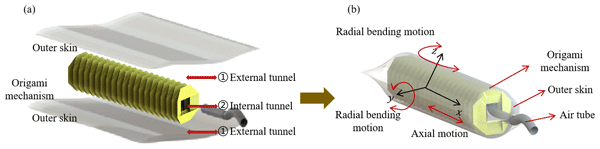
This paper proposes a novel dual-tunnel soft pneumatic origami actuator to provide a large maximum shrinkage rate for reciprocating motion. A programmed design method is proposed based on the geometric parameter model and stiffness model of the actuator. In comparison to other actuators, this actuator weighs only 5 g, and the force-to-weight ratio is 600. The maximum shrinkage rate of the actuator is 61 %, increasing the potential for lightweight and compact devices.
Qiaolian Xie, Qiaoling Meng, Wenwei Yu, Rongna Xu, Zhiyu Wu, Xiaoming Wang, and Hongliu Yu
Mech. Sci., 14, 159–170, https://doi.org/10.5194/ms-14-159-2023, https://doi.org/10.5194/ms-14-159-2023, 2023
Short summary
Short summary
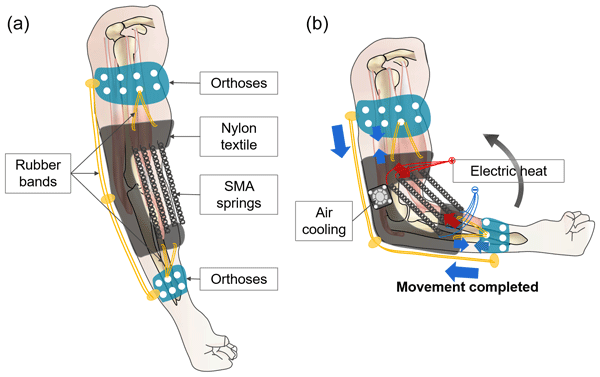
This paper presents a novel soft bionic elbow exoskeleton based on shape metal alloy (SMA) actuators (Sobee-SMA). The exoskeleton adopts a bionic design, combining active deformation material SMA and high elastic material rubber band to simulate the contraction and relaxation of the elbow skeletal muscle. According to the static analysis of the human–exoskeleton coupling model and experiments, the exoskeleton provides elbow-assisted motion and ensures the safety of the thermal heating process.
Qiaoling Meng, Yiming Yue, Sujiao Li, and Hongliu Yu
Mech. Sci., 13, 675–685, https://doi.org/10.5194/ms-13-675-2022, https://doi.org/10.5194/ms-13-675-2022, 2022
Short summary
Short summary
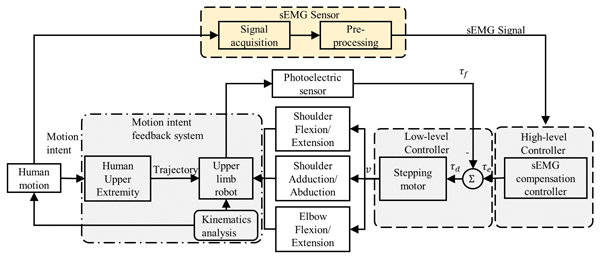
This paper proposes a novel EMG-based motion compensation controller in active training control to improve patients’ active participation. After proposing an upper limb rehabilitation robot and doing the path plan, the EMG compensation experiments and the active training control experiment are done to prove that the method can control the robot in providing auxiliary force according to patients’ motion intents. The robot can guide the patients in implementing reference tasks in active training.
Qiaoling Meng, Mingpeng Jiang, Zongqi Jiao, and Hongliu Yu
Mech. Sci., 13, 1–13, https://doi.org/10.5194/ms-13-1-2022, https://doi.org/10.5194/ms-13-1-2022, 2022
Short summary
Short summary
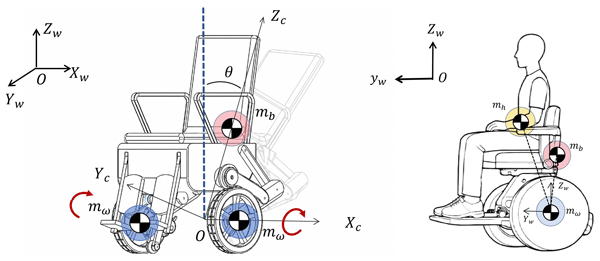
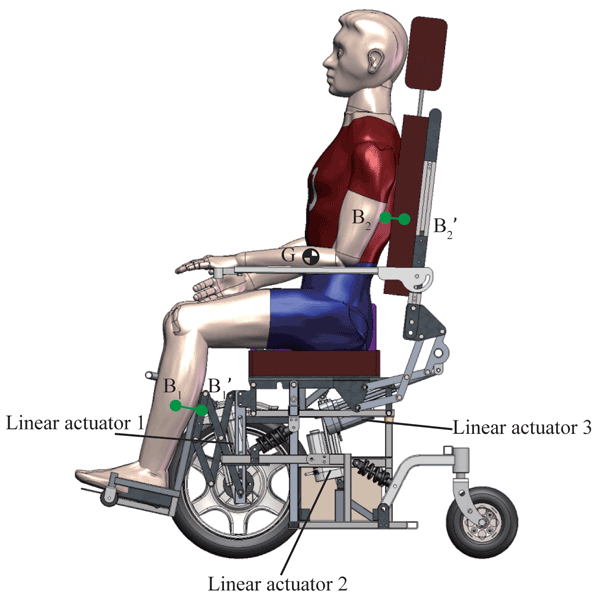
This paper proposes a bionic, multi-posture wheelchair, based on the proposed human–wheelchair coupling model, according to the movement characteristics and requirements. The two key factors in designing the multi-posture wheelchair, the consistency of the motion center and the compensation of the shifting center of gravity, are analyzed in this paper. The novel multi-posture wheelchair can implement the sit-to-lie and sit-to-stand transformations with a maximum slipping distance of 10.5 mm.
Qiaolian Xie, Qiaoling Meng, Qingxin Zeng, Hongliu Yu, and Zhijia Shen
Mech. Sci., 12, 661–675, https://doi.org/10.5194/ms-12-661-2021, https://doi.org/10.5194/ms-12-661-2021, 2021
Short summary
Short summary
This paper proposes a new 13 degrees of freedom equivalent kinematic model for the human upper limb and fully considers the movement characteristics of human upper limbs in anatomy. The proposed model can be utilized to analyze the human upper limb workspace and joint motions. Furthermore, the model can effectively evaluate the existing upper limb exoskeleton and provide suggestions for structural improvements in line with human motion.
Qiaoling Meng, Zongqi Jiao, Hongliu Yu, and Weisheng Zhang
Mech. Sci., 12, 639–648, https://doi.org/10.5194/ms-12-639-2021, https://doi.org/10.5194/ms-12-639-2021, 2021
Short summary
Short summary
This paper proposes a novel, 4 degrees of freedom, end-effector-based upper limb rehabilitation robot with space training. The robot can assist the human upper limb in performing rehabilitation training of the shoulder flexion/extension and adduction/abduction and elbow flexion/extension. Different from the desktop-type end-effector-based robot, the proposed robot can provide a wide range of shoulder flexion/extension training and cover the range of movement of the human upper limb.
Cited articles
Abd Aziz, A. U., Abdul Wahab, A. H., Abdul Rahim, R. A., Abdul Kadir, M. R., and Ramlee, M. H.: A finite element study: Finding the best configuration between unilateral, hybrid, and ilizarov in terms of biomechanical point of view, Injury, 51, 2474–2478, https://doi.org/10.1016/j.injury.2020.08.001, 2020.
Abdul Wahab, A. H., Wui, N. B., Abdul Kadir, M. R., and Ramlee, M. H.: Biomechanical evaluation of three different configurations of external fixators for treating distal third tibia fracture: Finite element analysis in axial, bending and torsion load, Comput. Biol. Med., 127, 104062, https://doi.org/10.1016/j.compbiomed.2020.104062, 2020.
Almigdad, A., Mustafa, A., Alazaydeh, S., Alshawish, M., Bani Mustafa, M., and Alfukaha, H.: Bone Fracture Patterns and Distributions according to Trauma Energy, Advances in Orthopedics, 2022, 1–12, https://doi.org/10.1155/2022/8695916, 2022.
Antonov, A., Fomin, A., and Kiselev, S.: Inverse and forward kinematic analysis of a 6-DOF foldable mechanism with a circular rail (FoldRail mechanism), Mech. Mach. Theory, 206, 105904, https://doi.org/10.1016/j.mechmachtheory.2024.105904, 2025.
Belmont, P. J., McCriskin, B. J., Hsiao, M. S., Burks, R., Nelson, K. J., and Schoenfeld, A. J.: The Nature and Incidence of Musculoskeletal Combat Wounds in Iraq and Afghanistan (2005–2009), J. Orthop. Trauma, 27, e107–e113, https://doi.org/10.1097/BOT.0b013e3182703188, 2013.
Bible, J. E. and Mir, H. R.: External Fixation: Principles and Applications, J. Am. Acad. Orthop. Sur., 23, 683–690, https://doi.org/10.5435/JAAOS-D-14-00281, 2015.
Bliven, E. K., Greinwald, M., Hackl, S., and Augat, P.: External fixation of the lower extremities: Biomechanical perspective and recent innovations, Injury, 50, S10–S17, https://doi.org/10.1016/j.injury.2019.03.041, 2019.
Bull, D., Sykes, M., Saeidi, M., and Bull, A.: External fixators in austere environments under surge capacity conditions: A systematic review, Clin. Biomech., 124, 106500, https://doi.org/10.1016/j.clinbiomech.2025.106500, 2025.
Chao, E. Y. S. and Hein, T. J.: Mechanical Performance of the Standard Orthofix External Fixator, Orthopedics, 11, 1057–1069, https://doi.org/10.3928/0147-7447-19880701-09, 1988.
Evans, M., Kenwright, J., and Tanner, K. E.: Analysis of Single-Sided External Fracture Fixation, Engineering in Medicine, 8, 133–137, https://doi.org/10.1243/EMED_JOUR_1979_008_036_02, 1979.
Fernando, P. L. N., Abeygunawardane, A., Wijesinghe, P., Dharmaratne, P., and Silva, P.: An engineering review of external fixators, Med. Eng. Phys., 98, 91–103, https://doi.org/10.1016/j.medengphy.2021.11.002, 2021.
Fragomen, A. T. and Rozbruch, S. R.: The Mechanics of External Fixation, HSS Journal®: The Musculoskeletal Journal of Hospital for Special Surgery, 3, 13–29, https://doi.org/10.1007/s11420-006-9025-0, 2007.
Hadeed, M. M., Evans, C. L., Werner, B. C., Novicoff, W. M., and Weiss, D. B.: Does external fixator pin site distance from definitive implant affect infection rate in pilon fractures?, Injury, 50, 503–507, https://doi.org/10.1016/j.injury.2018.10.041, 2019.
Hoogervorst, P., Shearer, D. W., and Miclau, T.: The Burden of High-Energy Musculoskeletal Trauma in High-Income Countries, World J. Surg., 44, 1033–1038, https://doi.org/10.1007/s00268-018-4742-3, 2020.
Leonardo-Diaz, R., Alonso-Rasgado, T., Jimenez-Cruz, D., Bailey, C. G., and Talwalkar, S.: Performance evaluation of surgical techniques for treatment of scapholunate instability in a type II wrist, Numer. Methods Biomed. Eng., 36, e3278, https://doi.org/10.1002/cnm.3278, 2020.
Liu, J., Zhao, P., Chen, K., Zhang, X., and Zhang, X.: 1U-Sized Deployable Space Manipulator for Future On-Orbit Servicing, Assembly, and Manufacturing, Space Sci. Technol., 2022, 9894604, https://doi.org/10.34133/2022/9894604, 2022.
Medici, A., D'Onofrio, E., Mazzoleni, M. G., Tangredi, B., Tramontano, A., and De Simone, A. M.: Major trauma, definitive treatment of the lower limbs, Lo Scalpello, 37, 42–54, https://doi.org/10.36149/0390-5276-275, 2023.
Meng, Q., Fei, C., Jiao, Z., Xie, Q., Dai, Y., Fan, Y., Shen, Z., and Yu, H.: Design and kinematical performance analysis of the 7-DOF upper-limb exoskeleton toward improving human-robot interface in active and passive movement training, Technol. Health Care, 30, 1167–1182, https://doi.org/10.3233/THC-213573, 2022.
Mishra, A., Kumar, P., Ghosh, P., and Tiwari, N.: Forward kinematics and dynamics modeling of a 2PRU-1PRS parallel manipulator, Acta Mech., https://doi.org/10.1007/s00707-025-04581-6, 2025.
Niu, Q., Zhao, J., Liang, L., Xing, J., Li, H., and Wang, Z.: A general framework for the analytical inverse kinematics solution of industrial robots, Proc. Inst. Mech. Eng. Part C-J. Eng. Mech. Eng. Sci., 239, 4499–4511, https://doi.org/10.1177/09544062251318236, 2025.
Raja Izaham, R. M. A., Abdul Kadir, M. R., Abdul Rashid, A. H., Hossain, M. G., and Kamarul, T.: Finite element analysis of Puddu and Tomofix plate fixation for open wedge high tibial osteotomy, Injury, 43, 898–902, https://doi.org/10.1016/j.injury.2011.12.006, 2012.
Russo, A.-P., Caubere, A., Ghabi, A., Grosset, A., Mangin, P., Rigal, S., and Mathieu, L.: Sequential management of tibial fractures using a temporary unicortical external fixator, SICOT-J, 4, 39, https://doi.org/10.1051/sicotj/2018035, 2018.
Seligson, D.: Evolution of the Hoffmann Fixators, Injury-Int. J. Care Inj., 46, S3–S6, https://doi.org/10.1016/S0020-1383(15)30003-6, 2015.
Sever, M. Ş., Katı, Y. A., and Özkaya, U.: Destructive disasters, trauma, crush syndrome, and beyond, AOTT, 57, 306–314, https://doi.org/10.5152/j.aott.2023.23147, 2024.
Stern, C. A., Stockinger, Z. T., Todd, W. E., and Gurney, J. M.: An Analysis of Orthopedic Surgical Procedures Performed During U.S. Combat Operations from 2002 to 2016, Mil. Med., 184, 813–819, https://doi.org/10.1093/milmed/usz093, 2019.
Tresley, J., Schoenleber, S. J., Singer, A. D., and Clifford, P.: “Ilizarov” external fixation: what the radiologist needs to know, Skeletal Radiol., 44, 179–195, https://doi.org/10.1007/s00256-014-2001-8, 2015.
Vergara-Hernandez, R., Gonzalez-Islas, J.-C., Dominguez-Ramirez, O.-A., Rueda-Soriano, E., and Serrano-Chavez, R.: Dual Quaternion-Based Forward and Inverse Kinematics for Two-Dimensional Gait Analysis, J. Funct. Morphol. Kinesiol., 10, 298, https://doi.org/10.3390/jfmk10030298, 2025.
Wang, J., Tian, Y., Xi, F., Chablat, D., Ren, G., and Zhao, Y.: A Pill Bug-Inspired Two-Mode Mobile Robot Covered With Sliding Curvy Shells, IEEE Trans. Robot., 42, 1275–1289, https://doi.org/10.1109/TRO.2026.3661723, 2026.
Weil, Y. A. and Mosheiff, R.: High-Energy Injuries Caused by Penetrating Trauma, in: The Poly-Traumatized Patient with Fractures, edited by: Pape, H.-C., Sanders, R., and Borrelli, J., Springer Berlin Heidelberg, Berlin, Heidelberg, 281–293, https://doi.org/10.1007/978-3-642-17986-0_23, 2011.
Widanage, K. N. D., De Silva, M. J., Dulantha Lalitharatne, T., Bull, A. M. J., and Gopura, R. A. R. C.: Developments in circular external fixators: A review, Injury, 54, 111157, https://doi.org/10.1016/j.injury.2023.111157, 2023.
Wolfson, N., Lerner, A., and Roshal, L.: Orthopedics in Disasters: Orthopedic Injuries in Natural Disasters and Mass Casualty Events, Springer Berlin/Heidelberg, Berlin, Heidelberg, 1 pp., ISBN 978-3-662-48948-2 , 2016.
Yun, H. C., Murray, C. K., Nelson, K. J., and Bosse, M. J.: Infection After Orthopaedic Trauma: Prevention and Treatment, J. Orthop. Trauma, 30, S21–S26, https://doi.org/10.1097/BOT.0000000000000667, 2016.
Short summary
The reconfigurable external fixation based on the seven-link mechanism has configurations in multiple dimensions, multiple postures, and multiple fracture scenarios, enabling rapid and stable fixation of fractures in the femur, tibia, elbow joint, knee joint, and ankle joint. It has been verified that this external fixation has stable structure and reliable fixation and significantly shortens the operation time and can be used for temporary fracture fixation in emergency medical scenarios.
The reconfigurable external fixation based on the seven-link mechanism has configurations in...