Articles | Volume 17, issue 1
https://doi.org/10.5194/ms-17-525-2026
© Author(s) 2026. This work is distributed under
the Creative Commons Attribution 4.0 License.
the Creative Commons Attribution 4.0 License.
https://doi.org/10.5194/ms-17-525-2026
© Author(s) 2026. This work is distributed under
the Creative Commons Attribution 4.0 License.
the Creative Commons Attribution 4.0 License.
Review article
| 
12 May 2026
Review article |
| 12 May 2026
| 12 May 2026
Review article: Hadal-zone gearbox multi-physics lubrication dynamics: synergistic effects of hydrostatic pressure and thermal suppression
Yongmei Wang
School of Motorcar Engineering, Heilongjiang Institute of Technology, No. 999, Hongqidajie Road, Daowai District, Harbin 150036, China

School of Mechatronics and Automation, Huaqiao University, No. 668 Jimei Avenue, Jimei District, Xiamen 361021, China
Jiafu Ruan
School of Mechatronics and Automation, Huaqiao University, No. 668 Jimei Avenue, Jimei District, Xiamen 361021, China
Xi Chen
CORRESPONDING AUTHOR
China Communications Construction Company (CCCC), Third Harbor Engineering Bureau Sixth Engineering Co., Ltd. (Xiamen), No. 189, Huachang Road, Huli District, Xiamen, Fujian Province 361006, China
Weiqiang Zou
School of Mechatronics and Automation, Huaqiao University, No. 668 Jimei Avenue, Jimei District, Xiamen 361021, China
Related authors
Jiafu Ruan, Xigui Wang, Yongmei Wang, and Weiqiang Zou
Mech. Sci., 16, 515–531, https://doi.org/10.5194/ms-16-515-2025, https://doi.org/10.5194/ms-16-515-2025, 2025
Short summary
Short summary
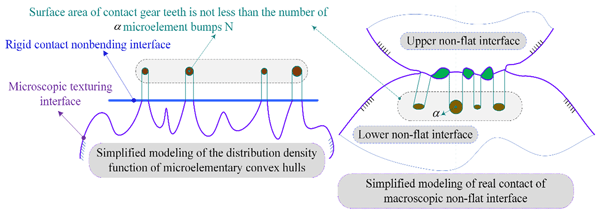
A thermoelastic hydrodynamic lubrication (TEHL) model with interface micro-texture (IMT) evaluates load-bearing capacity. The model characterises the textured interface with micro-convex peaks (MCPs) by introducing an equivalent scale factor and an optimised distribution density function. A mathematical framework quantifies anti-scuffing load-bearing capacity (ASLBC) under steady-state TEHL, revealing coupled stiffness–damping in a micro-textured meshing interface (MTMI) under dynamic loading.
Xuehua Chen, Jiafu Ruan, and Xigui Wang
Mech. Sci., 17, 883–900, https://doi.org/10.5194/ms-17-883-2026, https://doi.org/10.5194/ms-17-883-2026, 2026
Short summary
Short summary
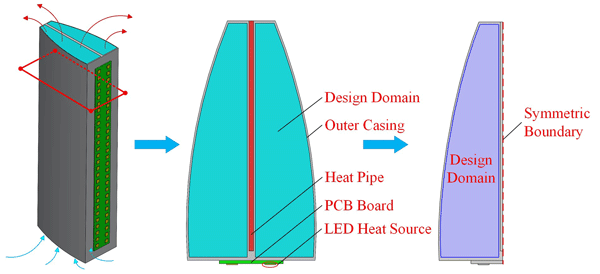
This study tackles overheating in deep-sea LED fish-attracting lamps under extreme heat. A new cooling approach combines special surface patterns, chimney airflow, and heat pipes. The lamp housing is reshaped to channel heat efficiently from the light source to the outer shell. Fine surface textures at key contacts further improve heat flow. Tests show this reduces peak temperature by 6.73% compared to conventional designs, offering an effective solution for high-power underwater lighting.
Xinbo Zhang, Zongrong Sun, and Xigui Wang
Mech. Sci. Discuss., https://doi.org/10.5194/ms-2026-176, https://doi.org/10.5194/ms-2026-176, 2026
Preprint under review for MS
Short summary
Short summary
Gear shafts in ships and machines work under heavy loads. Striking a metal surface with rapid ultrasonic pulses makes it harder, smoother and longer-lasting by squeezing its outer layer. But warmth during operation may weaken this benefit. We treated a steel gear shaft this way, then kept it warm. The surface stayed hard and smooth; heat only slightly eased the squeezing, while hardening remained intact. Computer predictions matched our tests, supporting safe use of this method in warm service.
Jiafu Ruan, Xigui Wang, Yongmei Wang, and Weiqiang Zou
Mech. Sci., 16, 515–531, https://doi.org/10.5194/ms-16-515-2025, https://doi.org/10.5194/ms-16-515-2025, 2025
Short summary
Short summary
A thermoelastic hydrodynamic lubrication (TEHL) model with interface micro-texture (IMT) evaluates load-bearing capacity. The model characterises the textured interface with micro-convex peaks (MCPs) by introducing an equivalent scale factor and an optimised distribution density function. A mathematical framework quantifies anti-scuffing load-bearing capacity (ASLBC) under steady-state TEHL, revealing coupled stiffness–damping in a micro-textured meshing interface (MTMI) under dynamic loading.
Short summary
This study examines deep-sea gear lubrication challenges under extreme conditions, including high pressure, with a focus on EHL (elasto-hydrodynamic lubrication) theory and interface texturing advances. Critical gaps remain in multi-physics coupling and synergistic texture-coating interactions. The paper proposes a research roadmap integrating multi-scale modelling, surface engineering optimization, experimental validation, and industrial implementation to enable robust deep-sea transmission systems.
This study examines deep-sea gear lubrication challenges under extreme conditions, including...


