the Creative Commons Attribution 4.0 License.
the Creative Commons Attribution 4.0 License.
 | 27 Oct 2026
Mechanically informed three-dimensional wear inversion of stone stair treads under pedestrian loading
Jun Yao
Changdong Yin

Binyu Fei
Zhou Xu
Yiwen Wu
Qiang Liu
Dongdong Ye
Repeated pedestrian loading produces measurable wear on stone staircase treads, but its mechanical interpretation remains challenging because present surface morphology results from coupled contact loading, material loss, environmental aging, and measurement uncertainty. This study proposes a mechanically informed, non-destructive framework for three-dimensional wear analysis and service age inversion of stone stair treads. The framework integrates point-cloud-based surface reconstruction, polynomial profile fitting, finite-element (FE) contact simulation, and an environment-adaptive Archard wear model. Three-dimensional tread morphology is first reconstructed from field scanning data and converted into wear depth profiles. FE analysis is then used to evaluate stress concentration and loading-path differences during ascent, descent, and multi-person use. The improved Archard model incorporates time-dependent material degradation and environmental correction terms to relate accumulated wear to pedestrian loading and service duration. The method is evaluated using four stone staircases with different ages and traffic intensities. The results show that the framework captures spatial wear morphology, explains the mechanical origin of localized tread depressions, and distinguishes loading signatures associated with different movement modes. The inverse wear model estimates service ages with a mean accuracy of 94.4 %, while sensitivity and Monte Carlo tests indicate low sensitivity to material-aging perturbations and robust performance under 5 % point cloud noise. This work provides an applied mechanics approach for linking measured surface morphology, contact stress, and time-dependent wear evolution in stone stair structures.
- Article
(9749 KB) - Full-text XML
- BibTeX
- EndNote


Stone stair treads subjected to repeated pedestrian loading provide a field-scale example of long-term contact-driven wear. During stair use, foot-tread interaction involves cyclic normal forces, tangential friction, local impact, sliding, and abrasion (McFadyen and Winter, 1988; Karaca et al., 2012; Harper et al., 2018; Sousa, 2019). These mechanical processes gradually transform initially planar tread surfaces into concave, rounded, and locally irregular morphologies. Although worn stone staircases are frequently encountered in historic buildings and public spaces, their surface evolution is essentially a contact wear problem governed by pedestrian loading, material removal, environmental aging, and service duration (Karaca et al., 2012; Sousa, 2019; Gireson et al., 2023). Understanding this process is therefore relevant not only to the assessment of stone-built structures but also to the broader mechanics of natural stone flooring and pedestrian-induced surface degradation.
Previous studies on stone flooring and building stones indicate that abrasion resistance and surface deterioration are influenced by contact load, mineral composition, pore structure, roughness, moisture, salt crystallization, and freeze–thaw action (Vazquez-Calvo et al., 2012; Karaca et al., 2012; Alves et al., 2021; Oguchi and Yu, 2021; Gireson et al., 2023). Concurrently, biomechanical studies further demonstrate that these foot–tread interactions differ markedly between ascent and descent in terms of foot placement, loading sequence, joint kinetics, and ground reaction forces (Riener et al., 2002; Protopapadaki et al., 2007; Harper et al., 2018; Reznick et al., 2021). These differences suggest that pedestrian movement modes may leave distinct mechanical signatures on tread surfaces. The observed wear morphology should therefore be regarded not as a simple geometric defect or visual deterioration but as the accumulated outcome of a coupled loading–wear process that records the spatial distribution of contact stress and material loss over time.
Tribological wear modeling provides a theoretical basis for relating contact loading to material loss. The Archard law and its modified forms have been widely applied to estimate cumulative wear under repeated contact, while finite-element (FE) approaches enable the simulation of local pressure, stress concentration, and surface evolution in three-dimensional contact problems (Archard, 1953; McColl et al., 2004; Hegadekatte et al., 2005, 2008; Schmidt et al., 2018; Bastola et al., 2022). Recent FE-based wear studies have further improved wear prediction by considering transient surface updating, extrapolation schemes, thermal–plastic effects, fretting wear behavior, and numerical implementation in commercial FE platforms (Gan et al., 2021; Cai et al., 2023; Yan et al., 2024). Meanwhile, recent work also indicates that constant wear coefficients may be insufficient for complex contact conditions because wear depends on contact pressure, deformation energy, surface state, and material degradation (Hu et al., 2022; Choudhry et al., 2024). These developments provide a useful foundation for analyzing worn stone stair treads. However, most existing wear simulations are designed for controlled engineering components or laboratory tribometers, whereas field staircases involve irregular geometry, variable pedestrian loading, environmental aging, and incomplete measurement data.
Non-contact three-dimensional measurement provides an effective means to address this challenge by capturing the detailed surface morphology of worn treads. Techniques such as terrestrial laser scanning, depth sensing, close-range photogrammetry, and point cloud reconstruction have been widely applied for geometric documentation, deformation monitoring, and surface analysis (Remondino, 2011; Soudarissanane et al., 2011; Kazhdan and Hoppe, 2013; Cheng et al., 2018; Adamopoulos et al., 2021; Yang et al., 2023). Recent studies have also emphasized the importance of point cloud registration, learned feature extraction, and missing-region completion for improving the reliability of three-dimensional surface data in complex field environments (Dong et al., 2020; Markiewicz et al., 2023; Li et al., 2024). In mechanical assessment, however, scanned morphology is often treated as a descriptive output rather than as the final state of a time-dependent wear process. For worn stair treads, the key challenge is to translate point-cloud-derived geometry into mechanically meaningful information. This involves identifying stress-related wear zones; distinguishing loading paths associated with ascent, descent, or multi-person use; and estimating service age from accumulated material loss. Meeting this challenge requires an integrated framework that combines surface reconstruction, contact mechanics, and inverse wear modeling.
The application of such a non-destructive framework must also address uncertainties in field data and material parameters. Surface scans may contain noise, missing regions, and registration errors arising from scanning geometry, occlusion, surface roughness, and environmental conditions (Soudarissanane et al., 2011; Cheng et al., 2018; Dong et al., 2020; Markiewicz et al., 2023; Li et al., 2024). Over long service periods, stone hardness and wear resistance can also be altered by environmental weathering, biological activity, and cumulative mechanical damage (Oguchi and Yu, 2021; Sesana et al., 2021; Nastou and Zerefos, 2024). These factors can alter the relationship between contact loading and observed wear depth. A mechanically interpretable model for stone stair treads should therefore incorporate contact stress simulation, time-dependent material degradation, and robustness evaluation under measurement uncertainty rather than relying solely on static geometric indicators.
Based on these considerations, this study presents a non-destructive computational framework for three-dimensional inverse wear analysis of stone staircase treads under pedestrian contact loading. By integrating point cloud acquisition, polynomial profile fitting, FE contact simulation, and an environment-adaptive Archard wear model, the framework establishes a unified procedure for mechanically interpreting long-term tread wear from present surface conditions. Unlike previous studies that have mainly focused on geometric documentation of worn surfaces or forward wear simulation under prescribed loading conditions, the present study treats the observed tread morphology as the accumulated outcome of a long-term loading–wear process and uses it as the basis for inverse mechanical interpretation. This approach therefore bridges descriptive geometric characterization and conventional forward wear modeling, extending surface wear analysis from documentation or prediction toward reconstruction of past use from the present wear state. The specific objectives are to quantify spatial wear morphology from irregular tread surfaces, to examine the mechanical relationship between wear distribution and pedestrian movement modes, to identify wear evolution deviations that may indicate material or intervention-related anomalies, and to evaluate the feasibility of service age inversion from present surface conditions. Through this work, worn stair treads are regarded not merely as deteriorated surfaces but as measurable mechanical records of long-term contact loading and wear evolution.
2.1 Data acquisition and preprocessing
2.1.1 Three-dimensional scanning and point cloud data acquisition
Long-term pedestrian use transforms staircase treads from regular planar surfaces into concave, rounded, and locally irregular morphologies. To accurately capture these wear patterns, a non-destructive 3D point cloud scanning framework using an Intel RealSense D455 depth camera was adopted. Field investigations were conducted at Guangji Temple (a historic Buddhist sanctuary), Wuhu Ancient City (a Ming Dynasty architectural complex), and Zheshan Park (a high-traffic modern public space) in Wuhu, Anhui Province, China. Four representative staircases were selected to cover different construction dates, usage intensities, and preservation conditions.
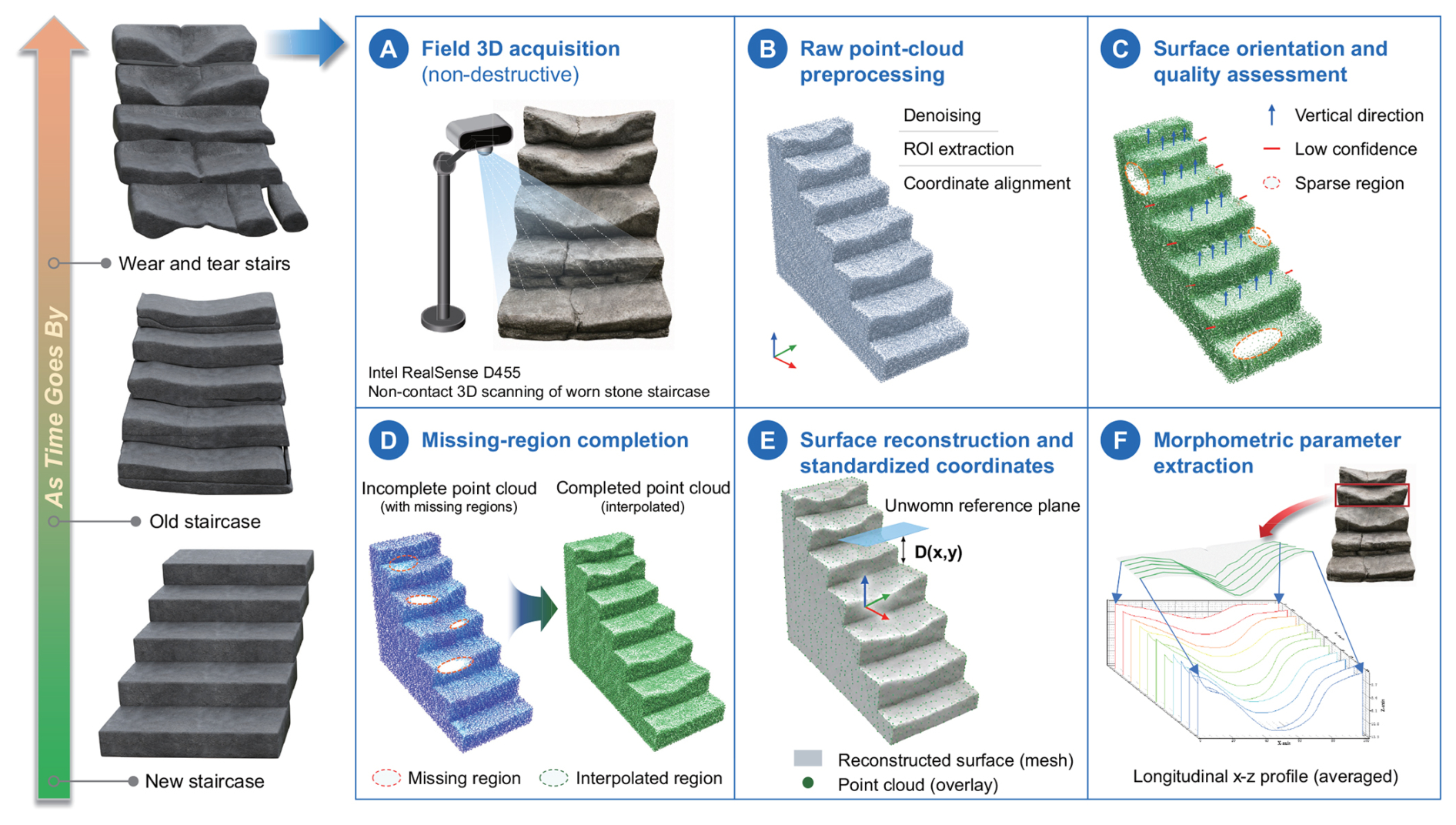
Figure 1Schematic diagram of the standardized 3D point cloud data acquisition protocol for non-destructive documentation of historical staircase surface morphology.
The standardized scanning workflow is illustrated in Fig. 1. Raw point clouds were denoised, cropped by region of interest, and aligned to a unified coordinate system. Surface normals were estimated for reconstruction, and sparse or occluded regions were interpolated where necessary. Tread width, height, depth, and wear-related deformation were then extracted. To reduce local noise, each tread was divided into transverse sampling intervals, and depth values within each interval were averaged to generate stable longitudinal profiles for contour fitting and wear depth calculation.
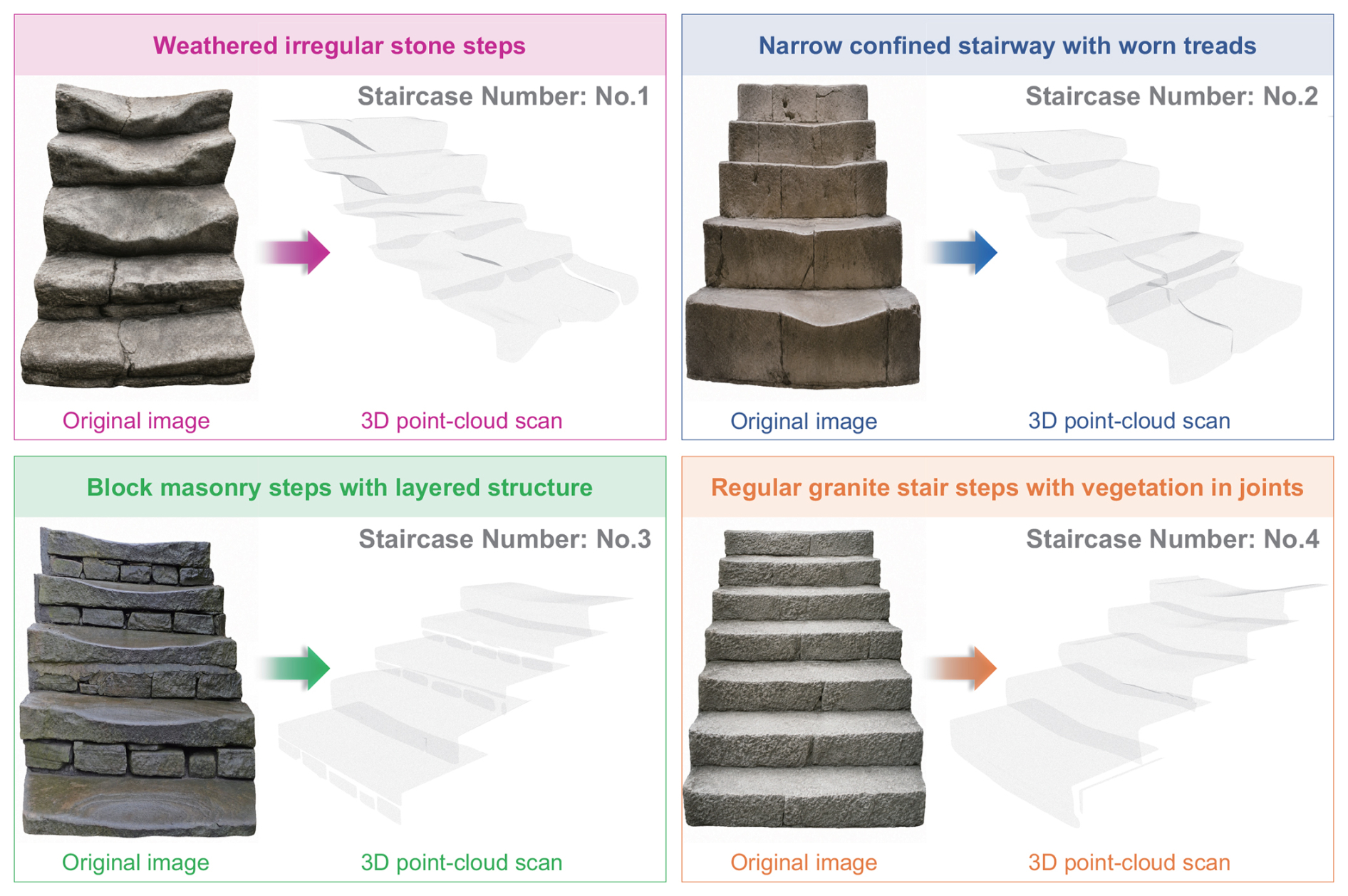
Figure 2Original visual documentation and corresponding 3D point cloud reconstruction results for the four representative staircases investigated in this study.
Photographic documentation and the corresponding point cloud reconstructions for the four staircases are presented in Fig. 2. These examples illustrate the diversity of tread geometry, material condition, and surface disturbance encountered in heritage and urban environments. The point cloud reconstructions provide the geometric foundation for identifying spatial wear patterns, comparing traffic-related deformation, and detecting local anomalies associated with repair or severe material loss.
In addition to geometric data, historical and contextual parameters were compiled to support wear interpretation and service-age inversion. Staircase no. 1 from Guangji Temple was associated with approximately 200 daily pedestrian transits and an estimated construction date of 1065 CE. Staircase no. 2 from Wuhu Ancient City experienced approximately 50 daily pedestrian transits and was dated to around 1575 CE. Staircase no. 3 and staircase no. 4 from Zheshan Park were both constructed in 2005 but showed markedly different use intensities, with approximately 800 and 30 transits per day, respectively. Notably, the reported daily pedestrian frequencies represent present-day, short-term field observations and are therefore used as approximate descriptors of current traffic intensity rather than as exact reconstructions of long-term historical pedestrian flow. These traffic and chronological parameters served as essential inputs for the subsequent wear evolution analysis, while the known construction dates provided validation benchmarks for the age inversion model.
2.1.2 Coordinate system and wear depth definition
To enable comparable quantification of tread wear among staircases with different dimensions and preservation states, a unified orthogonal coordinate system was established after point cloud alignment. As shown in Fig. 3, the origin was placed at the lower-left corner of each tread surface. The x axis was defined along the walking direction, the y axis was defined along the transverse width of the step, and the z axis represented vertical surface elevation. Within this coordinate system, the wear depth function D(x,y) was defined as the vertical depression of the present tread surface relative to an estimated unworn reference plane. Larger D(x,y) values indicate stronger material loss, whereas anomalously small values within otherwise worn areas may suggest preserved geometry, local repair, or material heterogeneity. This standardized definition provides the geometric basis for subsequent profile fitting, mechanical interpretation, traffic pattern recognition, and service age inversion.
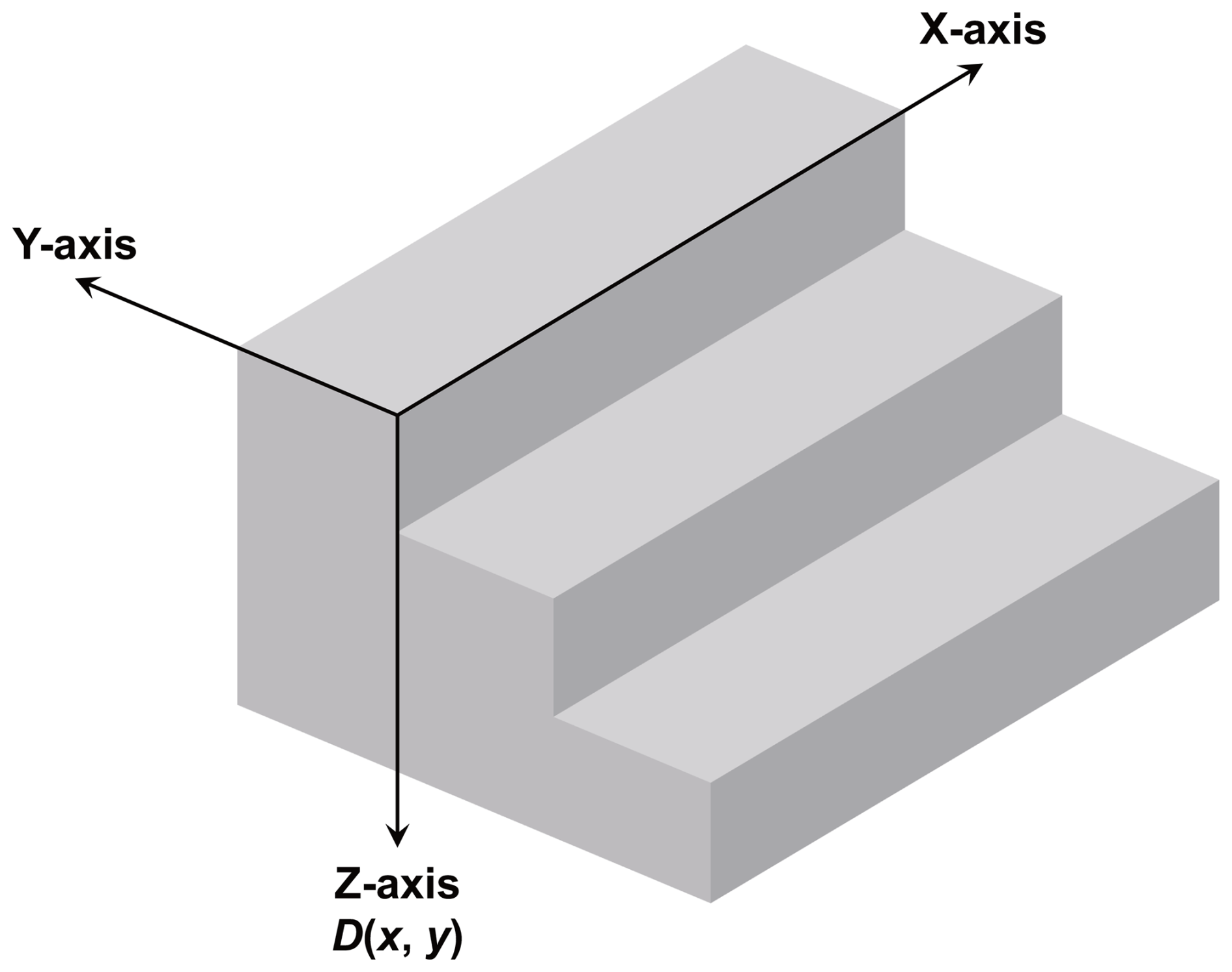
Figure 3Standardized coordinate system and wear depth definition for staircase tread morphology.
2.2 Model construction
The proposed framework converts three-dimensional tread morphology into mechanically interpretable evidence of long-term use by combining polynomial profile fitting, FE contact analysis, and an improved Archard wear model. Polynomial fitting extracts continuous geometric features from point cloud profiles. FE simulation explains the stress concentration under pedestrian loading. The wear model links accumulated tread loss with traffic, material aging, and environmental variation.
2.2.1 Polynomial fitting model of the outer contour
Based on the preprocessed point cloud data, polynomial fitting was applied to characterize the outer contour of each tread profile. Since the point cloud had been segmented along the transverse y axis, each profile line could be treated as a longitudinal cross-section in the x–z plane at a fixed y coordinate. For each profile, the vertical surface elevation Z was approximated by an nth-degree polynomial:
where ak denotes the polynomial coefficient to be determined. The polynomial function provides a continuous approximation of the scanned profile and reduces the influence of isolated point cloud fluctuations while preserving the main geometric characteristics of tread concavity, edge rounding, and local deformation. The coefficients were estimated using the least-squares method by minimizing the residual sum of squares between the measured point cloud elevations and the fitted profile, yielding the corresponding positive definite system of equations.
In the above, Zi is the measured elevation at sampling point xi, and m is the number of sampled points in the profile. The solution vector is obtained by inverting the positive-definite system, ensuring numerical stability. This compact least-squares formulation avoids the need for manually solving the expanded normal equation system and improves the clarity of the modeling procedure. The polynomial degree was objectively selected using the Akaike Information Criterion (AIC) rather than being prescribed empirically to account for both fitting performance and model complexity (Akaike, 1974). The criterion helps avoid unnecessarily complex polynomial representations while preserving the principal morphological features of the tread profiles, thereby reducing the risks of underfitting broad concave wear features and overfitting local scanning noise. Simultaneously, the derivative-based indicators can provide the geometric basis for distinguishing different traffic-induced wear patterns.
2.2.2 FE mechanical analysis and contact modeling
To interpret the mechanical origin of tread deformation, FE contact analysis was conducted to simulate the stress distribution generated by pedestrian loading. The staircase tread was discretized into cubic finite elements. Each element was connected through nodal points, allowing the step body to be represented as a continuous elastic system. Based on the virtual work principle, the relationship between nodal displacement vector {δ}e and nodal force {F}e is defined by the element stiffness matrix [k]:
The corresponding strain and stress fields were calculated from the displacement solution using {ϵ}=[B]{δ}e and {σ}=[D]{ϵ}, where [B] is the strain–displacement matrix, and [D] is the elastic constitutive matrix. Through this procedure, the spatial distribution of stress and deformation on the tread surface could be estimated under representative pedestrian loading conditions.
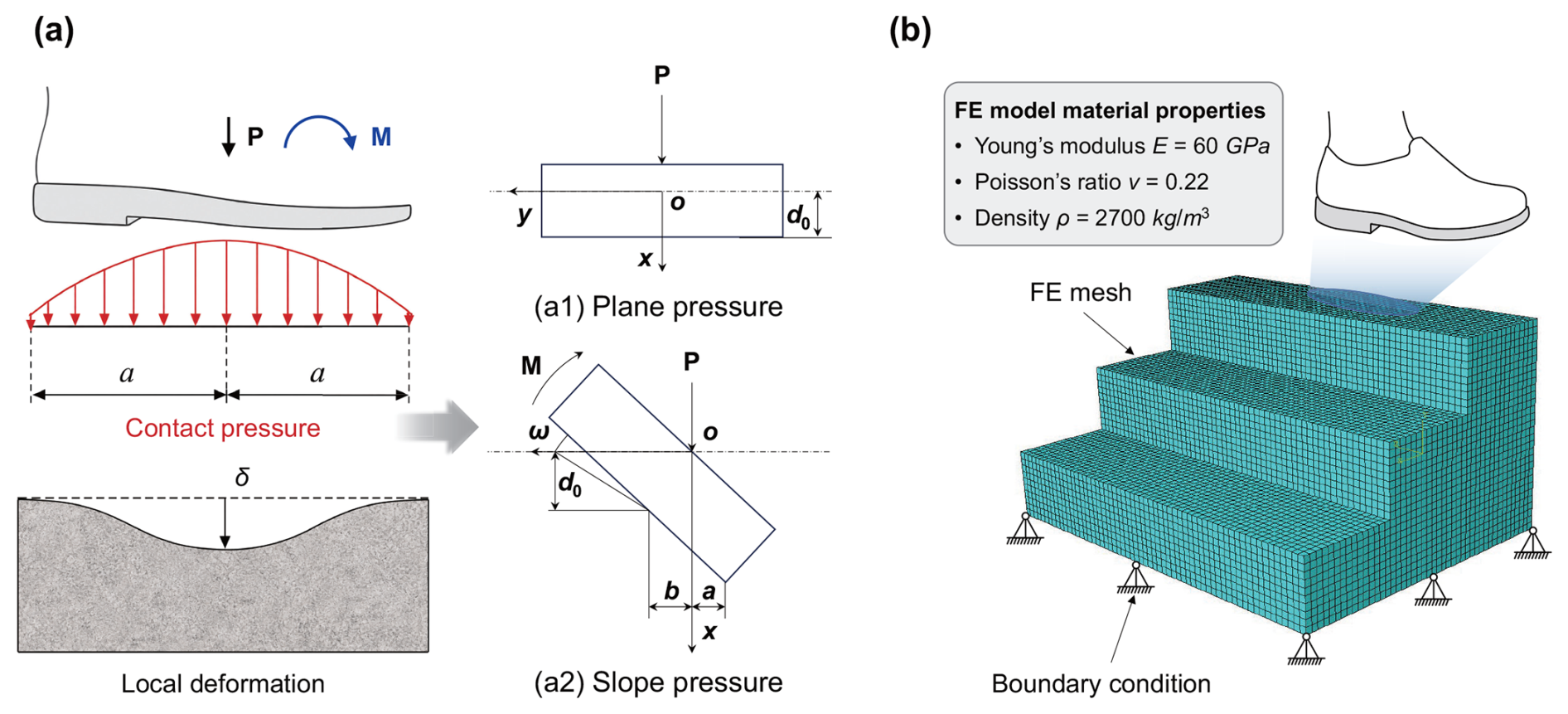
Figure 4Mechanical model of contact between human feet and stairs (a) and FE model configuration for foot–tread contact simulation (b).
Because staircase wear is produced through repeated interaction between the human foot and the tread surface, contact mechanics was introduced to link pedestrian loading with local material loss. As shown in Fig. 4a, the foot–tread interaction was simplified as an elastic contact problem under combined vertical load and local bending moment. The contact pressure distribution under a vertical load P and bending moment M can be expressed as , where a is the semi-width of the contact region, and y is the local coordinate within the contact zone. Accordingly, a three-dimensional FE model of the staircase was established and discretized using regular hexahedral elements, as shown in Fig. 4b. The stone material was simplified as a homogeneous isotropic elastic medium, with Young's modulus E=60 GPa, Poisson's ratio ν=0.22, and density ρ=2700 kg m−3. These values were adopted as representative elastic parameters for comparative mechanical analysis rather than as site-specific calibrated properties for each staircase. Accordingly, the FE simulations are primarily used to interpret relative stress concentration and stress migration characteristics. Boundary constraints were applied at the lower supporting regions of the stair body to prevent rigid-body displacement, while pedestrian loading was introduced through a simplified foot–tread contact area on the tread surface.
The contact model enables the conversion of pedestrian-induced loads into local stress and deformation fields. In the simulations, different loading positions and directions were assigned to represent ascending and descending movements because stair ascent and descent differ in terms of foot placement, body posture, and load transfer characteristics. The FE results were therefore used to interpret mechanically meaningful differences in wear localization rather than to directly determine service age.
2.2.3 Improved Archard wear modeling
To describe the time-dependent evolution of staircase tread wear, this study adopted an improved Archard-type wear model. The classical Archard model provides a widely used theoretical basis for relating wear volume to contact load, sliding distance, material hardness, and wear coefficient (Archard, 1953). However, heritage staircases experience long service periods under variable temperature, humidity, weathering, and material aging. Therefore, the classical model was extended by incorporating time-dependent material degradation and environmental correction factors, and the basic wear formulation can be expressed as follows:
where W represents the wear amount, K(T) is the material characteristic function, H(T) is the step hardness function, T denotes tread temperature, p is the dynamic contact pressure, and v is the material plastic flow velocity. To represent the influence of environmental fluctuation, a correction factor was introduced as follows:
where Tr and hr are the reference environmental parameters for temperature and humidity; ΔT and Δh are the variation ranges of temperature and humidity; and A and B are the influence coefficients of temperature and humidity on the correction factor, respectively. On long timescales, temperature and humidity were approximated as periodic environmental variables, expressed as and . To account for long-term material aging, the material property coefficient and hardness were further expressed as decay functions, namely and , where λ is the material property decay factor; k2 is the hardness decay factor; and k0 and k1 are the material property and step hardness at the initial temperature, respectively. The final time-dependent material coefficient and hardness function were therefore defined as and . These two functions allow the model to represent both cumulative material aging and environmental fluctuation.
During pedestrian movement, the contact pressure on the tread varies dynamically rather than remaining constant. The pressure generated by a single pedestrian can be approximated as
where m is body mass, g is gravitational acceleration, A is the effective contact area, a is the dynamic load amplification coefficient, and ω is the walking-related angular frequency. The effective contact area was estimated using Hertzian contact theory because the real contact area between the shoe sole and the rough stone surface is usually smaller than the apparent contact area. Considering cumulative wear and spatial diffusion of local material loss, the wear evolution equation can be written as follows:
where D is the diffusion coefficient representing the tendency of localized wear to spread to adjacent surface regions. The Laplace term was discretized by a central difference scheme, expressed as follows:
where Wi,j is the wear depth at grid point (i,j), and Δx is the spatial iteration step size. To improve computational efficiency and ensure numerical stability, an adaptive time step strategy is employed, subject to the following conditions:
where C is the Courant number, typically taken to be 0.5, and ϵ is a preset convergence threshold. Through this formulation, the wear model links present tread morphology with cumulative pedestrian use, material aging, and environmental variation. By back-extrapolating the simulated wear evolution from the observed tread morphology to the initial unworn state, the service age of each staircase can be estimated.
2.3 Experimental design
The experimental design was intended to evaluate whether three-dimensional tread wear morphology can be used for mechanically interpretable loading-path identification and inverse service age estimation. First, derivative features extracted from the fitted tread profiles were used to identify spatially coherent wear gradient patterns. Second, FE simulations were used to interpret the mechanical significance of these patterns under different pedestrian loading modes, including ascent, descent, and multi-person use. Third, the improved Archard wear model was applied to estimate the service age of the stair treads and to test the stability of the inversion results under material-aging uncertainty and point cloud measurement noise.
2.3.1 Loading-path clustering analysis
Loading-path recognition was based on the assumption that repeated pedestrian contact produces organized wear gradient fields rather than random surface loss. The first derivative of the fitted tread profiles was used to characterize local slope variation, which reflects transitions among concave, convex, and relatively flat regions of the worn surface. For each tread, derivative values were assembled into a feature matrix, in which each element represents the local wear gradient feature at a given longitudinal and transverse sampling position. The K-means clustering algorithm identifies spatial wear patterns by minimizing the sum of squared Euclidean distances within clusters. The procedure comprises the following:
-
Randomly initialize K cluster centers from the sample data , , , where (1) represents the number of iterations.
-
According to the principle of minimum Euclidean distance, all samples are assigned to the cluster with the nearest cluster center. For sample xp in the rth iteration, if the following condition is satisfied, namely
where is the Euclidean distance between sample xp and cluster center , then xp is assigned to cluster .
-
Recalculate cluster centers with the formula
where is the number of sample points in cluster at the rth iteration.
-
Check whether the cluster centers have converged. If holds for all j values, the clustering process ends; otherwise, return to step 2 to continue the iteration.
The clustered regions were interpreted according to their spatial distribution on the tread surface. Centrally concentrated clusters were associated with dominant middle-route loading, lateral clusters indicated side-biased loading, and broadly dispersed clusters suggested multi-person or less directionally constrained use. Discontinuous or isolated clusters were interpreted cautiously because they may also arise from material heterogeneity, local damage, surface disturbance, or incomplete point-cloud reconstruction.
2.3.2 Service age inversion and robustness verification
Service age inversion was formulated as an inverse wear problem based on the improved Archard model. The observed wear field obtained from point-cloud reconstruction and polynomial fitting was compared with the simulated wear field generated under known or estimated traffic and material parameters. The optimal service time was determined by minimizing the difference between the measured and simulated wear fields and was used as the estimated service age of the stair tread.
The overall wear state was described using a wear degree coefficient , where V is the actual volume of the staircase after wear, and V0 is the original unworn volume. Sensitivity analysis was conducted by perturbing the material degradation coefficient as , where i=1, 2, 3, and 4, representing increasingly accelerated material aging. Additionally, robustness against point cloud measurement uncertainty was evaluated by adding random perturbations to the observed wear depth matrix. The noisy wear field was defined as follows:
where is the disturbed wear depth, D(x,y) is the original measured wear depth, η=0.05 is the noise amplitude, and ϵrand(x,y) is a uniformly distributed random variable between −1 and 1. By comparing the inversion results before and after parameter perturbation and artificial noise addition, the stability of the proposed inverse wear analysis framework was evaluated.
3.1 Three-dimensional profile fitting and contact stress response
3.1.1 Polynomial fitting results for the outer contour
According to the objective AIC-based model selection procedure, a 20th-degree polynomial was selected as the preferred compromise between fitting accuracy and model complexity. As shown in Fig. 5, the representative fitting result of staircase no. 1 captures the main morphological characteristics of tread wear, including central concavity, edge rounding, and asymmetric surface deformation. This morphology indicates that the tread surface has experienced long-term localized contact and repeated pedestrian loading along a relatively stable central path, which is consistent with long-term concentrated pedestrian use at the entrance of a religious site.
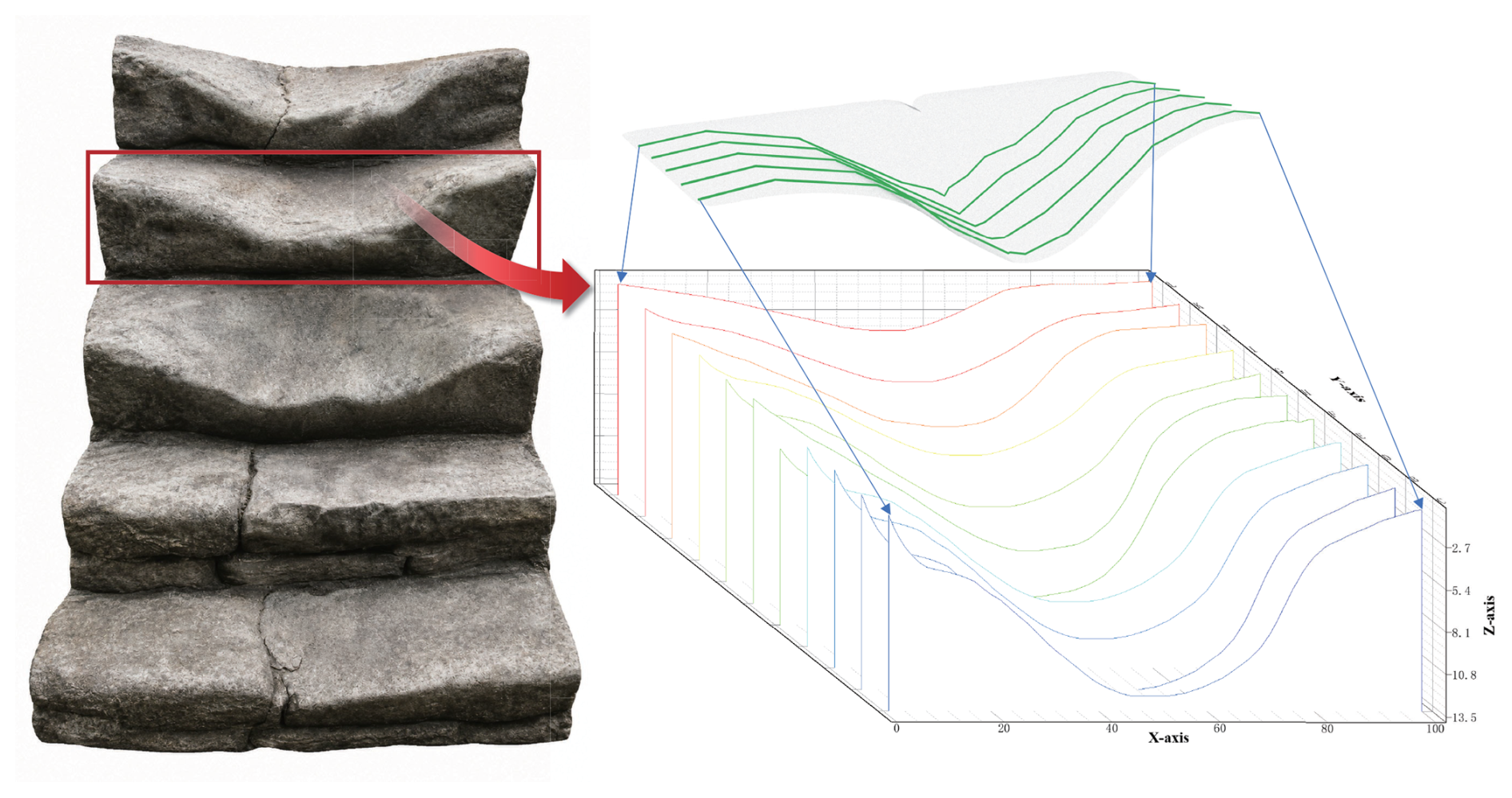
Figure 5Polynomial-fitted longitudinal tread profiles reconstructed from 3D point clouds for demonstrating the spatial morphology of staircase wear.
The fitted profiles convert irregular point cloud morphology into continuous and comparable geometric curves. This enables slope, curvature, and local depth variation to be extracted as quantitative indicators for subsequent contact-mechanical interpretation and loading-path identification. Minor oscillations appear near some boundary regions, especially where the point cloud is sparse or where the tread edge is affected by spalling or local loss (Jarząbek-Rychard and Maas, 2023). These oscillations have limited influence on the interpretation of the central wear zone, but they may affect local curvature estimation near damaged edges. Therefore, the fitted profiles should be interpreted together with point-cloud quality and field observations.
3.1.2 FE contact response
FE simulation was used to examine whether the observed tread morphology could be explained by pedestrian-induced contact stress. The static foot–tread contact model shows that stress is not uniformly distributed across the tread surface. As illustrated in Fig. 6a, the maximum stress occurs in the central contact region and decreases toward the lateral areas. This stress field is consistent with the bowl-shaped depression observed in the fitted tread profiles, indicating that long-term material loss is mainly associated with repeated localized contact rather than uniform surface degradation.
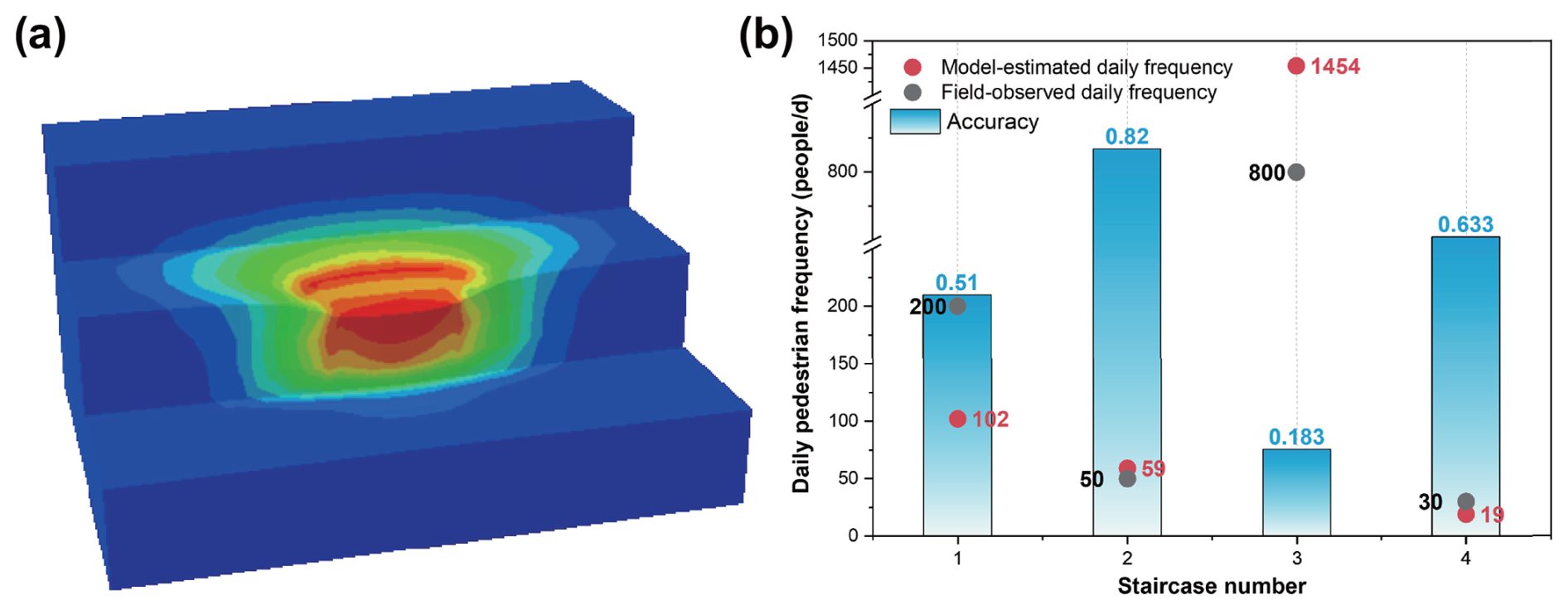
Figure 6Static FE stress distribution of a stone stair tread under representative foot–tread contact loading (a) and comparison between model-estimated and field-observed daily pedestrian frequency (b).
The static model produced a single-step wear index of 4.29 × 10⁻⁷. Based on this index and the known reference ages, daily pedestrian frequencies were inversely estimated and compared with field-observed values in Fig. 6b. The model captured the general order of loading intensity, but it did not reproduce the observed pedestrian flow consistently for all staircases. Staircase no. 2 showed the closest agreement, while larger deviations appeared in the other cases. The deviation between estimated and observed pedestrian frequency should not be interpreted simply as numerical failure. This difference is reasonable because the field-observed pedestrian count reflects a short-term measurement, whereas tread wear accumulates over much longer periods under variable loading intensity, environmental exposure, material aging, and changes in use conditions. Therefore, the static model is better regarded as a mechanical plausibility test. Its main role is to verify whether the spatial concentration of contact stress is compatible with the measured wear morphology.
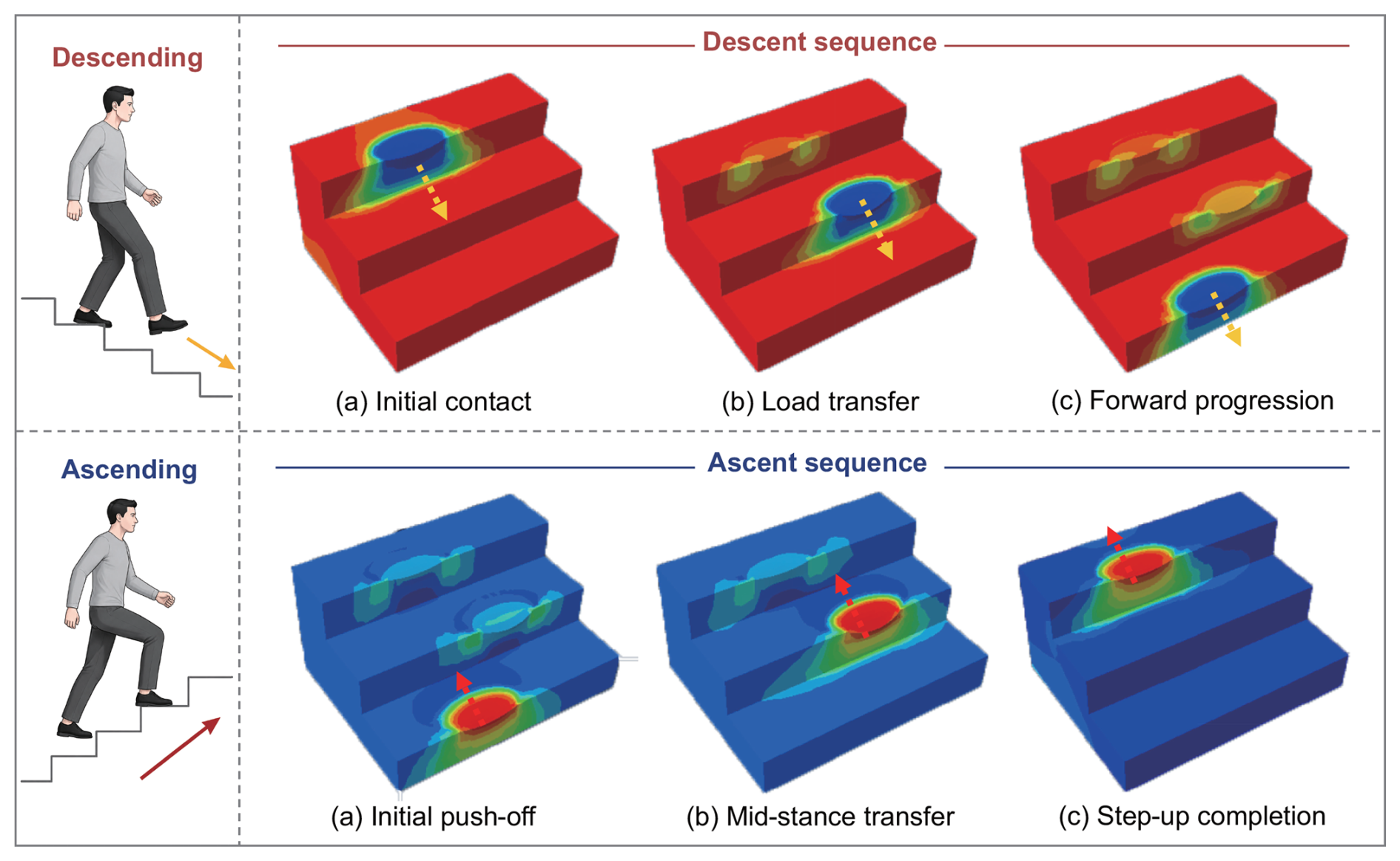
Figure 7Simulated dynamic stress migration during stair descent and ascent: descent sequence with posterior-to-midspan loading and ascent sequence with anterior push-off loading.
Dynamic simulations further reveal the directional difference between stair ascent and descent. As shown in Fig. 7, the stress concentration migrates differently under the two movement modes. During ascent, foot contact and push-off concentrate stress near the anterior region and nosing of the tread. During descent, the downward and forward motion of the body shifts loading toward the posterior and middle regions. These different stress migration paths provide a mechanical basis for using wear morphology to infer dominant pedestrian loading direction.
3.2 Loading-path identification from wear gradient clustering
The contact simulations demonstrate that different pedestrian movement modes generate distinct stress signatures on the tread surface. To represent multi-person loading, FE simulation was combined with Monte Carlo sampling of foot contact locations. In this model, contact points were randomly generated over the tread surface, and individual stress fields were superimposed. As shown in Fig. 8a, multi-person loading produces a more dispersed stress field than single-person directional loading. Instead of a narrow central loading corridor, the tread surface exhibits broader and less localized stress zones. This result provides a mechanical distinction between directional single-person loading and more distributed multi-person loading.
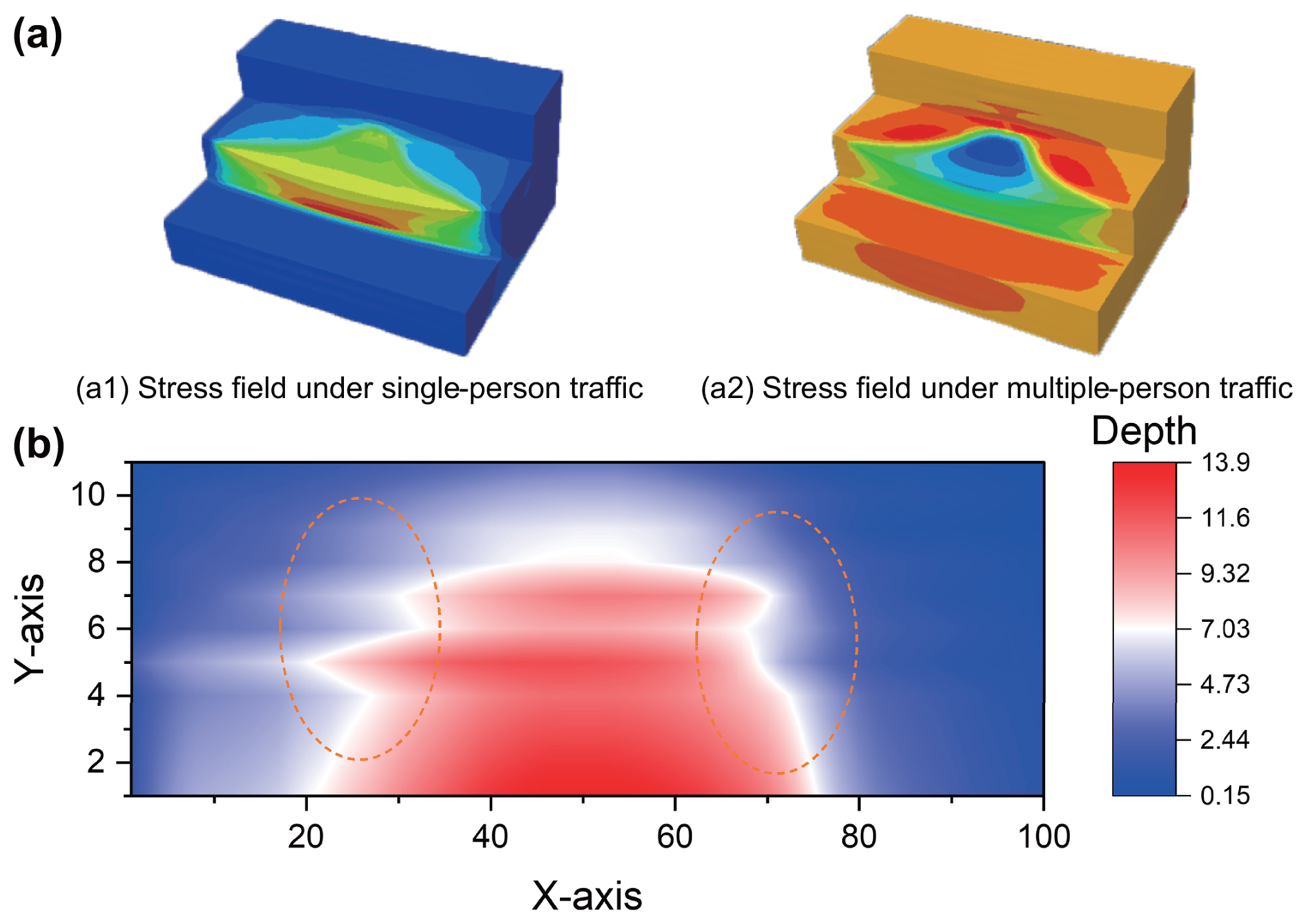
Figure 8Mechanical basis and clustering-based loading-path identification: (a) distributed stress field under multi-person loading and (b) clustered wear depth distribution used to infer dominant loading direction.
Based on this mechanical distinction, derivative-based K-means clustering was applied to the fitted tread profiles. Figure 8b shows the clustered wear depth distribution of the representative staircase. The strongest wear zones are concentrated in the central and anterior parts of the tread, which corresponds well to the ascent-induced stress pattern. This indicates that the representative tread was dominated by upward single-person loading, consistently with the observed functional use of the staircase.
Table 1Identification of loading paths based on derivative-feature clustering.

The classification results for the four staircases are summarized in Table 1. Staircase no. 1 and staircase no. 3 were classified as upward single-person loading cases. Staircase no. 2 was classified as a downward single-person loading case. Staircase no. 4 was classified as a universal multi-person loading case. The predicted loading modes agree with field-observed use patterns in all four cases.
The clustering results indicate that derivative features extracted from three-dimensional wear morphology encode useful information about pedestrian loading paths. The agreement across the four cases supports the mechanical relevance of the proposed feature set. However, the sample size remains limited, and the result should be considered to be a field validation of feasibility rather than a universal accuracy estimate. In practical applications, mixed circulation, temporary route changes, crowding effects, local material heterogeneity, and surface damage may all modify the wear gradient field. Therefore, loading-path classification should be interpreted together with mechanical simulation, site observation, and data quality assessment.
3.3 Wear evolution and service age inversion
The time-dependent wear of a stone stair tread can be divided into three conceptual stages: initial surface adaptation, stable operational wear, and later-stage accelerated deterioration. As shown in Fig. 9, surface asperities and sharp edges are rapidly smoothed during the initial stage. In the stable stage, material loss accumulates at a relatively steady rate under repeated pedestrian loading. In the later stage, wear may accelerate due to cracking, spalling, moisture-induced weakening, freeze–thaw damage, or other deterioration mechanisms. This staged evolution provides a useful basis for interpreting tread wear as a time-dependent mechanical process.
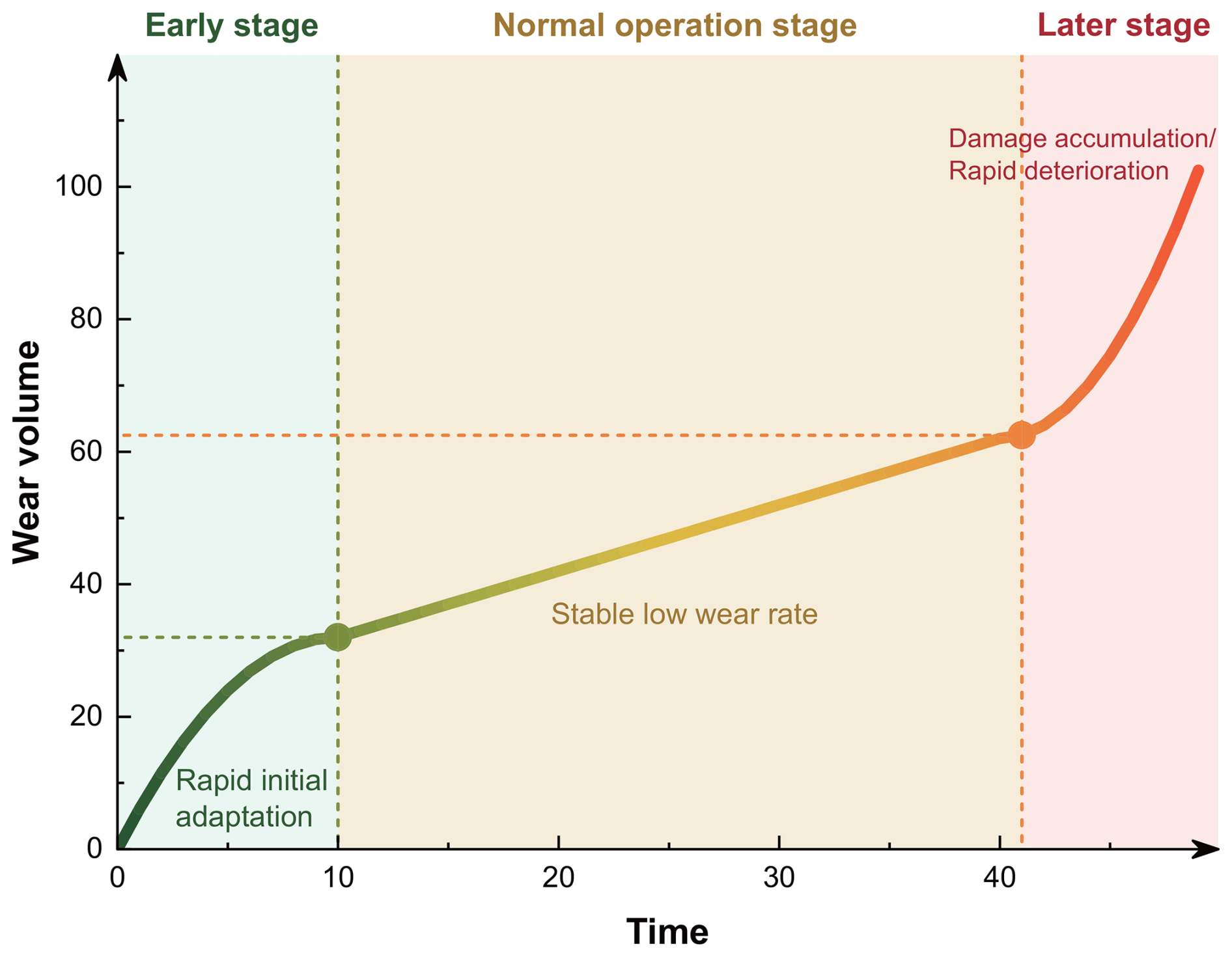
Figure 9Conceptual three-stage wear evolution curve for stone stair treads, including initial adaptation, stable operational wear and accelerated deterioration.
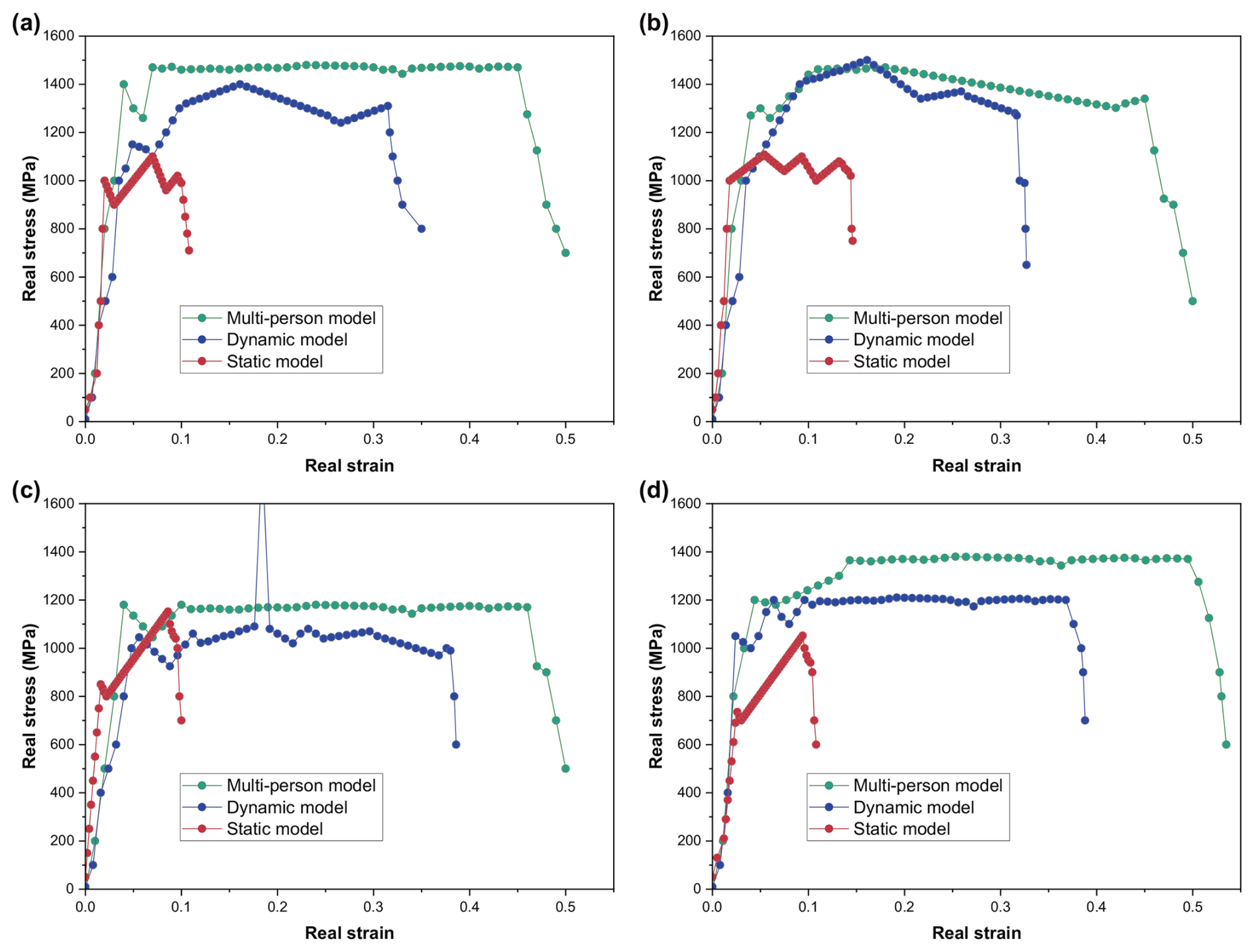
Figure 10Stress strain responses of the four staircases under static, dynamic and multi-person loading models: (a) staircase no. 1, (b) staircase no. 2, (c) staircase no. 3, and (d) staircase no. 4.
Figure 10 compares the stress strain responses of the four staircases under static, dynamic, and multi-person loading models. The multi-person model generally produces broader strain development and higher stress plateaus, while the static model shows a shorter response range. The dynamic model lies between these two conditions and better represents direction-dependent foot–tread interaction. These differences indicate that the mechanical response of a worn tread is controlled not only by service age but also by loading mode, traffic intensity, surface condition, and stone integrity.
The improved Archard model can also be used to screen anomalous wear behavior. If one step or local tread region shows a wear stage feature or inferred wear time that clearly deviates from adjacent regions under comparable loading and environmental conditions, the deviation may indicate material heterogeneity, local damage, replacement, repair, or measurement incompleteness. Such anomalies should be regarded as mechanical screening indicators rather than direct evidence of intervention. Their interpretation requires additional information such as material comparison, surface inspection, and historical or maintenance records.
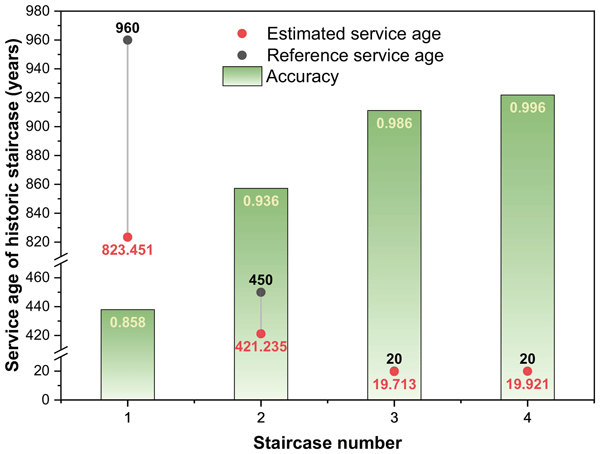
To evaluate whether present tread morphology can support service age estimation, the fitted wear depth profiles were used in the inverse wear model. The inversion estimates the service time required for the simulated wear field to approach the observed surface morphology under assumed traffic and material parameters. To quantify the agreement between the inverted and reference service ages, the relative accuracy for each staircase was calculated as , where testimated and treference denote the estimated and reference service ages of the investigated staircase, respectively. Figure 11 compares the model-inverted service ages with the reference ages of the four staircases.
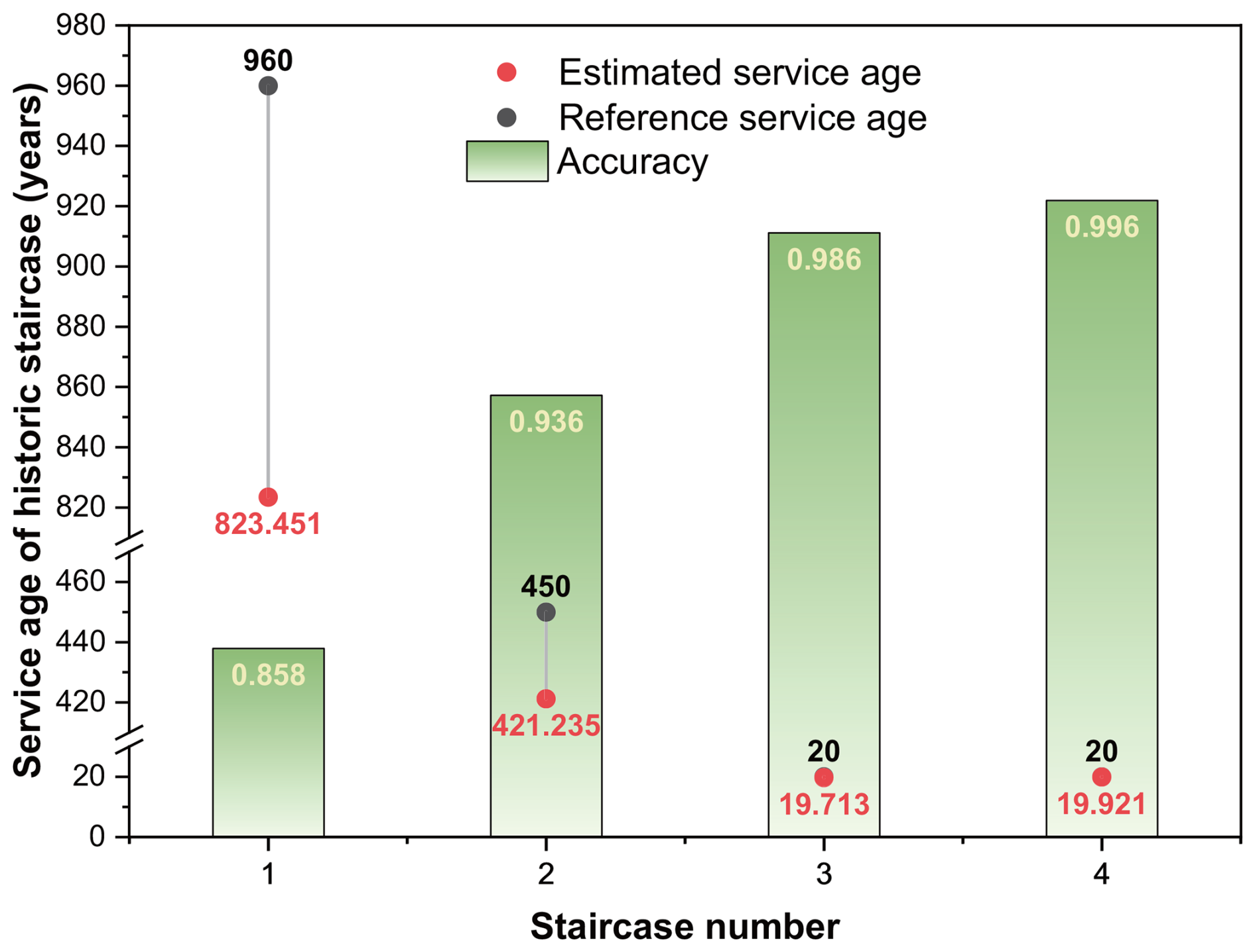
The inverse wear model achieved a mean relative accuracy of approximately 94.4 %. The two modern staircases showed particularly strong agreement, with errors of less than 0.3 years, because their service time, traffic intensity, and surface condition are relatively well constrained. Larger deviations occurred in the ancient cases, especially for staircase no. 1, where the model underestimated the reference age by approximately 136.5 years. This deviation is reasonable because loading frequency, environmental exposure, material condition, and use history may vary substantially over long service periods. Therefore, the inverted service age should be interpreted as a probabilistic mechanical estimate rather than deterministic dating. Its value lies in providing an independent quantitative indicator derived from measured wear morphology.
3.4 Sensitivity to material aging and point cloud noise
Because the wear behavior of stone treads is affected by time-dependent material degradation, the sensitivity of the inverse model to the material decay coefficient was evaluated. Figure 12 shows the influence of different decay factors under two wear regimes: long-term gradual (LTG) wear and short-term extreme (STE) wear. LTG wear represents normal pedestrian loading under moderate environmental conditions, whereas STE wear represents accelerated deterioration under severe moisture, freeze–thaw action, intense loading, or material weakening.
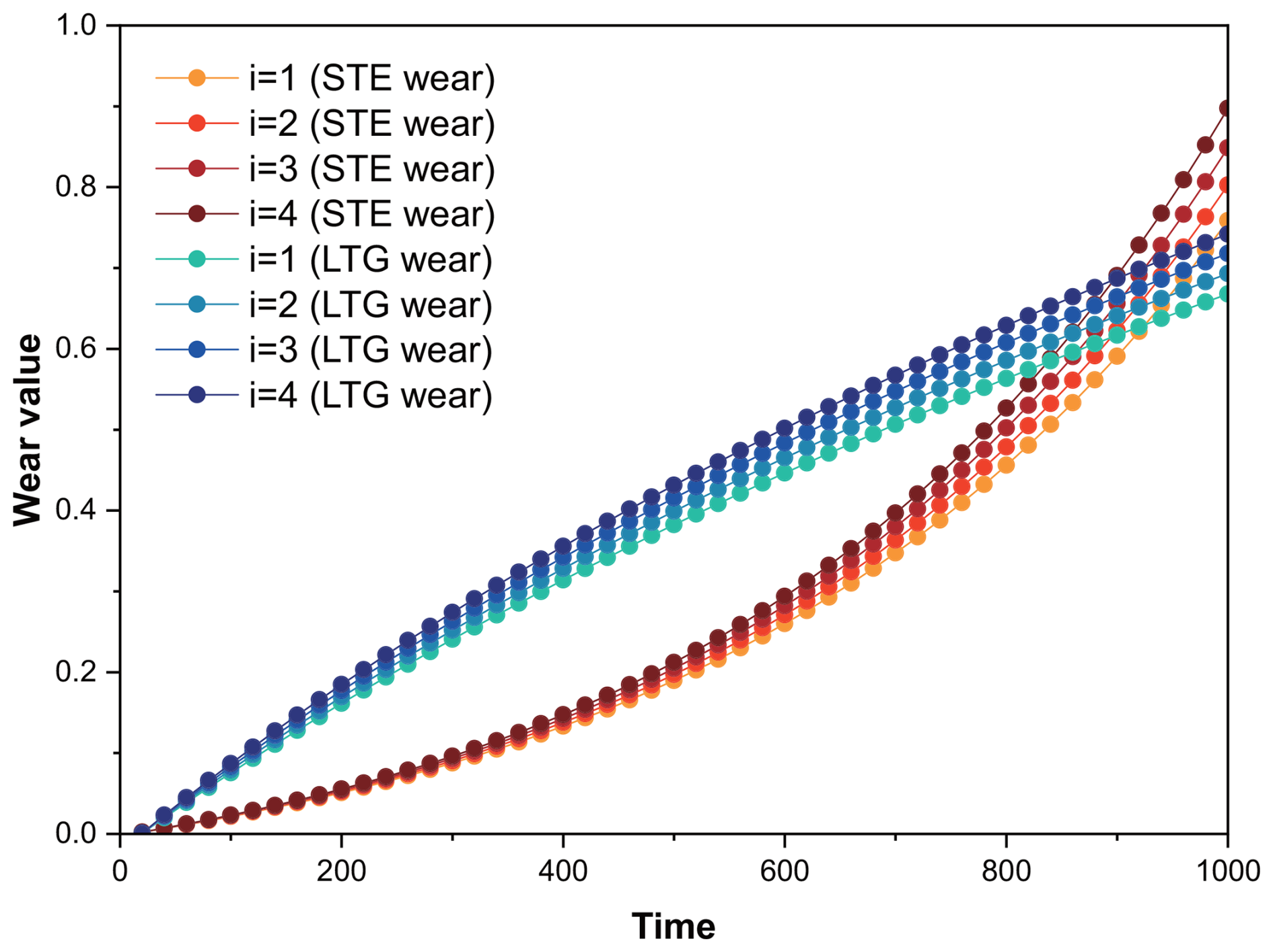
Figure 12Sensitivity of service age inversion to the material decay factor under LTG and STE wear regimes.
The predicted service ages remained within a variation range of less than 5 % under the tested decay factor perturbations. This indicates that the inverse model is not overly dependent on a single assumed material degradation coefficient. The relative stability is related to the environmental correction term, which adjusts the wear coefficient and hardness function according to temperature and humidity effects. However, this result should not be generalized to all stone types. Highly porous stones, strongly anisotropic stones, or salt-affected surfaces may show stronger sensitivity to degradation parameters. Further calibration using laboratory abrasion tests and site-specific environmental monitoring would improve parameter reliability.
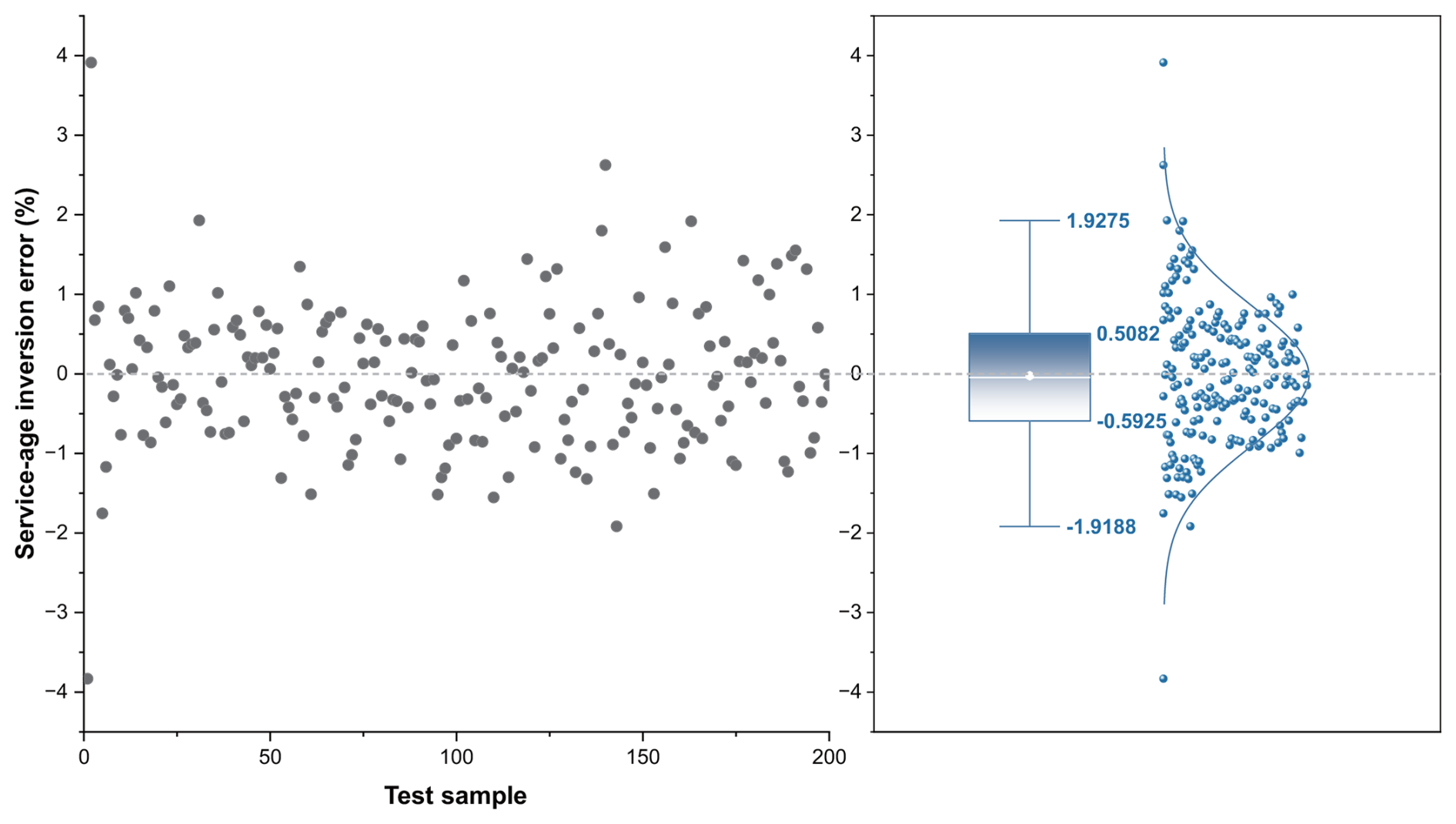
Figure 13Monte Carlo robustness test of service age inversion under 5 % artificial point cloud noise.
Robustness against point cloud measurement uncertainty was evaluated by adding 5 % random disturbance noise to the measured wear depth field. The 5 % disturbance level was adopted as a representative moderate perturbation for evaluating the stability of the inversion procedure rather than as a complete characterization of all field measurement errors. This perturbation accounts for and simulates possible errors associated with depth camera uncertainty, surface roughness, local occlusion, and incomplete reconstruction. As shown in Fig. 13, 200 Monte Carlo simulations show that most service age errors are concentrated near zero and that the overall error remains below 4 %. The compact distribution indicates that the proposed inverse wear framework is robust to moderate random point cloud disturbance.
These results support the applicability of the method under field measurement conditions. Nevertheless, the test mainly represents random measurement disturbance and does not fully capture systematic errors such as biased depth measurement, poor registration, structured missing regions, or large-scale surface loss. Future work should therefore include additional uncertainty scenarios and combine repeated scans, multi-resolution point clouds, or complementary measurement methods to improve the robustness of inverse wear analysis.
This study developed a mechanically informed framework for three-dimensional inverse wear analysis of stone staircase treads under pedestrian contact loading. By integrating point-cloud surface reconstruction, polynomial profile fitting, FE contact simulation, and an environment-adaptive Archard wear model, the method links measured tread morphology with contact stress distribution and time-dependent material loss. The FE results showed that pedestrian loading produces non-uniform stress fields that are consistent with localized tread depressions observed in the reconstructed profiles. Dynamic simulations further distinguished the stress migration characteristics of ascent and descent, providing a mechanical basis for identifying dominant loading paths from wear morphology. Derivative-based clustering of fitted tread profiles correctly classified ascent, descent, and multi-person use patterns in the four field cases. The improved Archard model enabled service-age inversion from observed wear fields. The estimated service ages achieved accuracies of 85.8 %, 93.6 %, 98.6 %, and 99.6 %, with a mean accuracy of 94.4 %. Sensitivity analysis showed that predicted ages varied by less than 5 % under material-aging perturbation, and Monte Carlo testing indicated that 5 % artificial point cloud noise kept service age inversion errors below 4 %. These results demonstrate that three-dimensional tread morphology can be used as a quantitative mechanical indicator of long-term contact loading and wear evolution.
The proposed framework provides an applied mechanics method for interpreting worn stone stair structures from measurable surface morphology. Future work should expand the dataset to different stone types, loading conditions, and environmental regimes and should incorporate laboratory abrasion calibration and probabilistic parameter identification to improve the generality of the inverse wear model.
The code and data used in this article can be made available on request to the corresponding author. The related data and analysis code, which are closely linked to the specific preprocessing procedures, parameter settings, and model configurations used in this study and are also associated with ongoing related research projects, can be provided for verification purposes upon reasonable request.
Jun Yao: methodology, software, formal analysis, investigation, data curation, resources, writing (original draft, review and editing), visualization. Changdong Yin: conceptualization, methodology, validation, investigation, writing (original draft, review and editing), visualization, supervision, project administration, funding acquisition. Binyu Fei: methodology, investigation, data curation, software, visualization. Zhou Xu: funding acquisition, software, supervision. Yiwen Wu: funding acquisition, investigation, software, validation. Qiang Liu: formal analysis, methodology, validation. Dongdong Ye: conceptualization, formal analysis, funding acquisition, software.
The contact author has declared that none of the authors has any competing interests.
Publisher's note: Copernicus Publications remains neutral with regard to jurisdictional claims made in the text, published maps, institutional affiliations, or any other geographical representation in this paper. The authors bear the ultimate responsibility for providing appropriate place names. Views expressed in the text are those of the authors and do not necessarily reflect the views of the publisher.
We sincerely appreciate the valuable contributions from the editor and the reviewers.
This research was funded by the Key Projects of Natural Science Research of Universities in Anhui Province (grant nos. 2025AHGXZK30354 and 2025AHGXZK30287), the Development Action Program for Young and Middle-aged Teachers of Universities in Anhui Province (grant no. YQYB2026085), the Science and Technology Plan Project of Wuhu City (grant no. 2025kj048), the Provincial Quality Engineering Projects of Higher Education Institutions in Anhui Province (grant nos. 2024jyxm0912 and 2025jyxm0749), the Educational Research Planning Project of Anhui Association for Vocational and Adult Education (grant nos. AZCJ2025334 and AZCJ2025089), the Natural Science Key Research Project of Wuhu Institute of Technology (grant nos. wzyzrzd202502, wzyzrzd202503, and wzyzrzd202504), and the Excellent Young Talents Fund of Higher Education Institutions of Anhui Province (grant no. 2024AH030006).
This paper was edited by Pengyuan Zhao and reviewed by two anonymous referees.
Adamopoulos, E., Rinaudo, F., and Ardissono, L.: A Critical Comparison of 3D Digitization Techniques for Heritage Objects, ISPRS Int. J. Geo-Inf., 10, 10, https://doi.org/10.3390/ijgi10010010, 2021.
Akaike, H.: A new look at the statistical model identification, IEEE T. Automat. Contr., 19, 716–723, https://doi.org/10.1109/TAC.1974.1100705, 1974.
Alves, C., Figueiredo, C. A. M., Sanjurjo-Sánchez, J., and Hernández, A. C.: Salt Weathering of Natural Stone: A Review of Comparative Laboratory Studies, Heritage, 4, 1554–1565, https://doi.org/10.3390/heritage4030086, 2021.
Archard, J. F.: Contact and Rubbing of Flat Surfaces, J. Appl. Phys., 24, 981–988, https://doi.org/10.1063/1.1721448, 1953.
Bastola, A., Stewart, D., and Dini, D.: Three-dimensional finite element simulation and experimental validation of sliding wear, Wear, 504–505, 204402, https://doi.org/10.1016/j.wear.2022.204402, 2022.
Cai, M., Zhang, P., Xiong, Q., Cai, Z., Luo, S., Gu, L., and Zeng, L.: Finite element simulation of fretting wear behaviors under the ball-on-flat contact configuration, Tribol. Int., 177, 107930, https://doi.org/10.1016/j.triboint.2022.107930, 2023.
Cheng, L., Chen, S., Liu, X., Xu, H., Wu, Y., Li, M., and Chen, Y.: Registration of Laser Scanning Point Clouds: A Review, Sensors, 18, 1641, https://doi.org/10.3390/s18051641, 2018.
Choudhry, J., Almqvist, A., and Larsson, R.: Improving Archard's wear model: An energy-based approach, Tribol. Lett., 72, 93, https://doi.org/10.1007/s11249-024-01888-8, 2024.
Dong, Z., Liang, F., Yang, B., Xu, Y., Zang, Y., Li, J., Wang, Y., Dai, W., Fan, H., Hyyppä, J., and Stilla, U.: Registration of large-scale terrestrial laser scanner point clouds: A review and benchmark, ISPRS J. Photogramm., 163, 327–342, https://doi.org/10.1016/j.isprsjprs.2020.03.013, 2020.
Gan, L., Xiao, K., Pu, W., Tang, T., and Wang, J. X.: A numerical method to investigate the effect of thermal and plastic behaviors on the evolution of sliding wear, Meccanica, 56, 2339–2356, https://doi.org/10.1007/s11012-021-01362-y, 2021.
Gireson, K., Çelik, S. B., and Çobanoğlu, İ.: Monitoring the decrease of abrasion resistance on natural building stones due to deterioration caused by freezing and thawing cycles, B. Eng. Geol. Environ., 82, 162, https://doi.org/10.1007/s10064-023-03201-8, 2023.
Harper, N. G., Wilken, J. M., and Neptune, R. R.: Muscle Function and Coordination of Stair Ascent, J. Biomech. Eng., 140, 011001, https://doi.org/10.1115/1.4037791, 2018.
Hegadekatte, V., Huber, N., and Kraft, O.: Finite element based simulation of dry sliding wear, Model. Simul. Mater. Sc., 13, 57–75, https://doi.org/10.1088/0965-0393/13/1/005, 2005.
Hegadekatte, V., Kurzenhäuser, S., Huber, N., and Kraft, O.: A predictive modeling scheme for wear in tribometers, Tribol. Int., 41, 1020–1031, https://doi.org/10.1016/j.triboint.2008.02.020, 2008.
Hu, J., Song, H., Sandfeld, S., Liu, X., and Wei, Y.: Breakdown of Archard law due to transition of wear mechanism from plasticity to fracture, Tribol. Int., 173, 107660, https://doi.org/10.1016/j.triboint.2022.107660, 2022.
Jarząbek-Rychard, M. and Maas, H.-G.: Modeling of 3D geometry uncertainty in Scan-to-BIM automatic indoor reconstruction, Automat. Constr., 154, 105002, https://doi.org/10.1016/j.autcon.2023.105002, 2023.
Karaca, Z., Günes Yılmaz, N., and Goktan, R. M.: Abrasion wear characterization of some selected stone flooring materials with respect to contact load, Constr. Build. Mater., 36, 520–526, https://doi.org/10.1016/j.conbuildmat.2012.06.004, 2012.
Kazhdan, M. and Hoppe, H.: Screened Poisson surface reconstruction, ACM T. Graphic., 32, 29, https://doi.org/10.1145/2487228.2487237, 2013.
Li, W., Pan, J., Hasegawa, K., Li, L., and Tanaka, S.: Missing Region Completion Network for Large-Scale Laser-Scanned Point Clouds: Application to Transparent Visualization of Cultural Heritage, Remote Sens., 16, 2758, https://doi.org/10.3390/rs16152758, 2024.
Markiewicz, J., Kot, P., Markiewicz, Ł., and Muradov, M.: The evaluation of hand-crafted and learned-based features in terrestrial laser scanning-structure-from-motion (TLS-SfM) indoor point cloud registration: The case study of cultural heritage objects and public interiors, Herit. Sci., 11, 254, https://doi.org/10.1186/s40494-023-01099-9, 2023.
McColl, I. R., Ding, J., and Leen, S. B.: Finite element simulation and experimental validation of fretting wear, Wear, 256, 1114–1127, https://doi.org/10.1016/j.wear.2003.07.001, 2004.
McFadyen, B. J. and Winter, D. A.: An integrated biomechanical analysis of normal stair ascent and descent, J. Biomech., 21, 733–744, https://doi.org/10.1016/0021-9290(88)90282-5, 1988.
Nastou, M. P. P. and Zerefos, S. C.: Effects of climate change on open air heritage: A review and the situation in the region of Mediterranean, Herit. Sci., 12, 367, https://doi.org/10.1186/s40494-024-01484-y, 2024.
Oguchi, C. T. and Yu, S.: A review of theoretical salt weathering studies for stone heritage, Prog. Earth Planet. Sc., 8, 32, https://doi.org/10.1186/s40645-021-00414-x, 2021.
Protopapadaki, A., Drechsler, W. I., Cramp, M. C., Coutts, F. J., and Scott, O. M.: Hip, knee, ankle kinematics and kinetics during stair ascent and descent in healthy young individuals, Clin. Biomech., 22, 203–210, https://doi.org/10.1016/j.clinbiomech.2006.09.010, 2007.
Remondino, F.: Heritage Recording and 3D Modeling with Photogrammetry and 3D Scanning, Remote Sens., 3, 1104–1138, https://doi.org/10.3390/rs3061104, 2011.
Reznick, E., Embry, K. R., Neuman, R., Bolívar-Nieto, E., Fey, N. P., and Gregg, R. D.: Lower-limb kinematics and kinetics during continuously varying human locomotion, Sci. Data, 8, 282, https://doi.org/10.1038/s41597-021-01057-9, 2021.
Riener, R., Rabuffetti, M., and Frigo, C.: Stair ascent and descent at different inclinations, Gait Posture, 15, 32–44, https://doi.org/10.1016/S0966-6362(01)00162-X, 2002.
Schmidt, A. A., Schmidt, T., Grabherr, O., and Bartel, D.: Transient wear simulation based on three-dimensional finite element analysis for a dry running tilted shaft-bushing bearing, Wear, 408–409, 171–179, https://doi.org/10.1016/j.wear.2018.05.008, 2018.
Sesana, E., Gagnon, A. S., Ciantelli, C., Cassar, J., and Hughes, J. J.: Climate change impacts on cultural heritage: A literature review, WIREs Clim. Change, 12, e710, https://doi.org/10.1002/wcc.710, 2021.
Soudarissanane, S., Lindenbergh, R., Menenti, M., and Teunissen, P.: Scanning geometry: Influencing factor on the quality of terrestrial laser scanning points, ISPRS J. Photogramm., 66, 389–399, https://doi.org/10.1016/j.isprsjprs.2011.01.005, 2011.
Sousa, L.: Behaviour of hard stones submitted to different foot traffic, Environ. Earth Sci., 78, 680, https://doi.org/10.1007/s12665-019-8693-2, 2019.
Vazquez-Calvo, C., Alvarez de Buergo, M., Fort, R., and Varas-Muriel, M. J.: The measurement of surface roughness to determine the suitability of different methods for stone cleaning, J. Geophys. Eng., 9, S108–S117, https://doi.org/10.1088/1742-2132/9/4/S108, 2012.
Yan, L., Guan, L., Wang, D., and Xiang, D.: Application and Prospect of Wear Simulation Based on ABAQUS: A Review, Lubricants, 12, 57, https://doi.org/10.3390/lubricants12020057, 2024.
Yang, S., Hou, M., and Li, S.: Three-Dimensional Point Cloud Semantic Segmentation for Cultural Heritage: A Comprehensive Review, Remote Sens., 15, 548, https://doi.org/10.3390/rs15030548, 2023.