the Creative Commons Attribution 4.0 License.
the Creative Commons Attribution 4.0 License.
 | 13 Oct 2026
Mechanical properties of reactive high-entropy alloys and energy-release characteristics of projectiles impacting a multi-layer circuitry target
Zhong Shi
Chenchen Wu

Wentong Qiao
Lijun Mao
Zhaojun Pang
Jinguo Liu
TiZr-based high-entropy alloys (HEAs) have emerged as promising energetic structural materials (ESMs) due to their unique combination of penetration capability and impact-induced energy-release behavior. However, a comprehensive understanding of the coupled deformation, fracture, and energy-release mechanisms in HEA-based ESMs, particularly for TiZr-based systems designed to balance mechanical strength and reactivity, remains elusive. In this work, three representative TiZr-based HEAs were fabricated via vacuum arc melting. A novel three-layer spaced target structure was designed to simulate combined metal-casing and internal circuitry systems. The underlying mechanisms governing the coupled mechanical-energetic response were investigated by integrating quasi-static and dynamic mechanical testing with post-mortem microstructural characterization and energy-release quantification. The flash duration and intensity of the energy release were further proposed as optical indicators to quantitatively characterize the impact-induced energy-release behavior of TiZr-based HEAs, where flash duration reflects the sustained energy-release capability and flash intensity represents the instantaneous energy-release intensity. The results demonstrate that TiZrNbWV exhibits the highest yield strength and superior dynamic mechanical performance, together with the most persistent energy-release behavior, whereas TiZrNbV exhibits the best plastic deformation capability and a slightly higher quasi-static fracture strength, along with the stronger instantaneous energy-release capability under low-velocity impact conditions. Ballistic tests indicate that penetration of the front aluminum (Al) plate is dominated by kinetic effects, whereas significant thermochemical energy release occurs during interaction between fragmented projectiles and the rear circuit board. Increasing impact velocity promotes projectile fragmentation and oxygen-assisted oxidation, significantly enhancing the energy-release intensity and post-penetration effects. This work provides insights into the design of HEA-based ESMs with improved mechanical and energetic performance for defense and aerospace applications.
- Article
(13755 KB) - Full-text XML
- BibTeX
- EndNote


Owing to synergistic interactions among multiple principal elements, high-entropy alloys (HEAs) exhibit unique characteristics, including the high-entropy effect, severe lattice distortion, sluggish diffusion, and the cocktail effect that confer superior energy-release performance compared with conventional alloys (Ugwuegbu et al., 2026; Resnina et al., 2025; Fang et al., 2019). As reactive damage elements, HEAs generate both kinetic penetration damage and impact-induced exothermic reactions, producing secondary damage effects such as extreme temperatures and overpressure. These attributes have positioned HEAs as promising candidates for diverse applications ranging from biomedical implants (Yi et al., 2025; Yang et al., 2022) to aerospace structural components (Liu et al., 2022; Lian et al., 2026).
The concept of HEAs was proposed by Yeh et al. (2004) and Cantor et al. (2004). Since then, this novel class of metallic materials has revolutionized the traditional alloy design paradigm by transitioning from one or two principal elements to multiple principal elements in near-equiatomic ratios. The distinctive atomic-scale local ordering and resulting configurational-entropy stabilization effects endow HEAs with exceptional structural and functional properties (Ren et al., 2023; Butler et al., 2017; Gorr et al., 2016), including remarkable fracture resistance at cryogenic temperatures, superior strength-ductility synergy, and outstanding electrocatalytic activity. Among the rapidly expanding family of HEAs, those designed as energetic structural materials (ESMs) have gained particular attention because of their dual functionality: maintaining structural integrity under mechanical loading while releasing substantial chemical energy upon high-strain-rate deformation or impact-induced fracture (Zhou et al., 2020; Hastings and Dreizin, 2018; Zhang et al., 2026; Jain et al., 2024; Huang et al., 2026; Wu et al., 2024). The advent of HEAs offers unprecedented opportunities to circumvent the limitations of conventional ESMs through compositionally complex microstructures that simultaneously enhance mechanical properties and tailor energetic responses.
Recent investigations have demonstrated that TiZr-based refractory HEAs exhibit promising penetration capabilities combined with impact-initiated energy-release characteristics (Qi et al., 2025; Zhao et al., 2026; Senkov et al., 2018; Meng et al., 2024; Li et al., 2025). For example, Chen et al. (2022) and Guo et al. (2024a) independently investigated the ballistic impact response of WFeNiMo HEAs, demonstrating their superior penetration capability against steel targets. Similarly, Li et al. (2024) examined jet formation and penetration characteristics of CuCoCrFeNi HEA liners, while Shi et al. (2022) reported on the ballistic impact response of Fe40Mn20Cr20Ni20 HEAs. These studies collectively underscore the potential of HEAs as next-generation kinetic-energy penetrators and reactive materials. However, a comprehensive understanding of the coupled deformation, fracture, and energy-release mechanisms under extreme dynamic loading conditions remains incomplete (Liu et al., 2022; Wu et al., 2022; Alijani et al., 2020).
Notably, recent work by Guo et al. (2024b) on HfZrTiTa0.2Al0.8 HEAs has highlighted the critical role of constituent elements in modulating energy-release characteristics. Ma et al. (2022) further demonstrated that Al0.5NbZrTi1.5Ta0.8Ce0.85 HEA exhibits tunable mechanical properties and impact energy-release behavior. Zheng et al. (2025) systematically studied the deformation mechanisms and energy-release characteristics of (Ti2Zr)1.5NbVAl0.5 under varying loading conditions, revealing the profound influence of strain rate on fragmentation and ignition. Despite these advances, several important issues remain unresolved. First, existing studies on TiZr-based HEAs have mainly focused on their quasi-static and dynamic mechanical properties, whereas the relationship between microstructure evolution, mechanical response, and impact-induced energy-release behavior remains insufficiently understood. Second, most investigations of ESMs have concentrated on single-target penetration or qualitative observations of impact-induced reactions, while the coupled penetration and energy-release behavior of TiZr-based HEAs against multilayer spaced targets has received considerably less attention. Such targets are particularly relevant to engineering scenarios involving an outer protective layer and internal electronic systems, where the projectile is required not only to penetrate the outer structure but also to induce effective damage and energy release within the protected subsystem. Third, quantitative evaluation of impact-induced energy release is still challenging. Conventional assessments based primarily on visual observations of flashes provide limited information regarding the temporal persistence and instantaneous intensity of the reaction. Therefore, a quantitative framework capable of distinguishing sustained from instantaneous energy-release characteristics is highly desirable.
To address this gap, three representative TiZr-based HEAs (TiZrWV, TiZrNbWV, and TiZrNbV) were fabricated via the vacuum arc melting technique. A three-layer spaced target structure, consisting of a first metallic plate, a second electronic-component target, and a third metallic plate, was designed to simulate a combined metal-casing and internal circuitry system. By integrating quasi-static and dynamic mechanical testing with post-mortem microstructural characterization and energy-release quantification, we seek to elucidate the underlying mechanisms governing the coupled structural and energetic responses. A key innovation is the introduction of flash duration and intensity as intermediate quantitative metrics for energy-release behavior, providing a new experimental perspective for TiZr-based HEAs. The remainder of this paper is organized as follows: Sect. 2 describes the material fabrication and experimental methods, Sect. 3 presents and discusses the results, and Sect. 4 draws the main conclusions.
2.1 Materials preparation
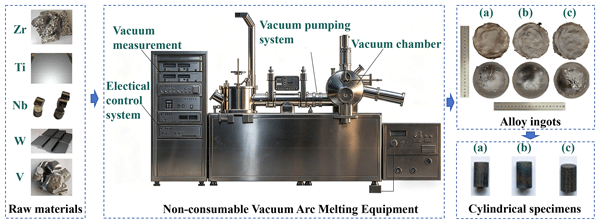
To achieve superior impact-induced energy-release performance, Ti and Zr, which possess relatively high heats of combustion, were selected as the base elements for the HEAs designed in this work. In addition, the alloying elements W, Nb, and V were introduced. W was incorporated to enhance solid-solution strengthening, whereas Nb and V were added to stabilize the corresponding solid-solution phases and refine the grains (Meng et al., 2023; Yu et al., 2025), thereby optimizing the mechanical properties. Three representative TiZr-based HEAs, namely TiZrWV, TiZrNbWV, and TiZrNbV, were fabricated using a non-consumable vacuum arc melting furnace, with the preparation procedure illustrated in Fig. 1. High-purity Zr, Ti, Nb, W, and V (each with a purity of at least 99.5 wt %) were selected as raw materials and accurately weighed in equiatomic ratios. Strong electromagnetic stirring during melting ensured uniform internal temperature and chemical composition of the samples. The alloy ingots were remelted six times, with the melt maintained in the liquid state for 20 min during each remelting session. Subsequently, the alloy ingots were rapidly solidified by argon-assisted forced convection (99.999 % purity; flow rate: 5 L min−1). Finally, cylindrical specimens with the designated dimensions were machined from the homogenized TiZr-based HEA ingots by wire electrical discharge machining.
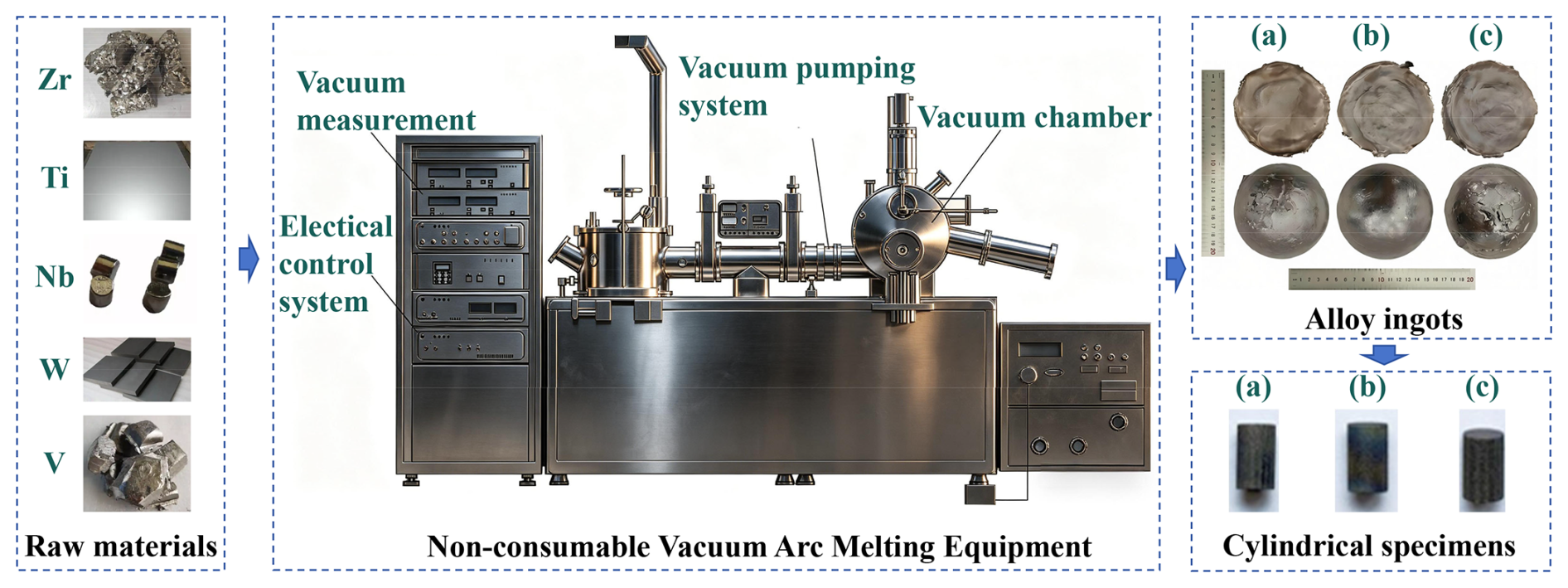
Figure 1Schematics of vacuum arc melting techniques to prepare specimens of (a) TiZrWV, (b) TiZrNbWV, and (c) TiZrNbV HEAs.
2.2 Quasi-static mechanical property tests
Quasi-static compression tests were conducted on cylindrical specimens to determine the quasi-static mechanical properties of the fabricated TiZr-based HEAs using an 810 Landmark universal testing machine (MTS, USA), as shown in Fig. 2. The specimens had diameters of 6.00 ± 0.02 mm and lengths of 9.00 ± 0.05 mm. The quasi-static compression tests for the three alloys were performed at strain rates of 0.001 and 0.01 s−1. A high-speed camera (APX-RS, Photron, Japan) was used to record the energy-release process of the specimens during quasi-static tests at a frame rate of 2000 fps. Each quasi-static compression test was repeated three times under identical loading conditions. The yield strength and fracture strength were calculated from the average results of the repeated measurements. The sampling frequency for recording mechanical response data was set to 50 Hz, and the strain rate is given as follows:
where ϵ denotes the engineering strain, v is the compression velocity, and h represents the height of the specimen.
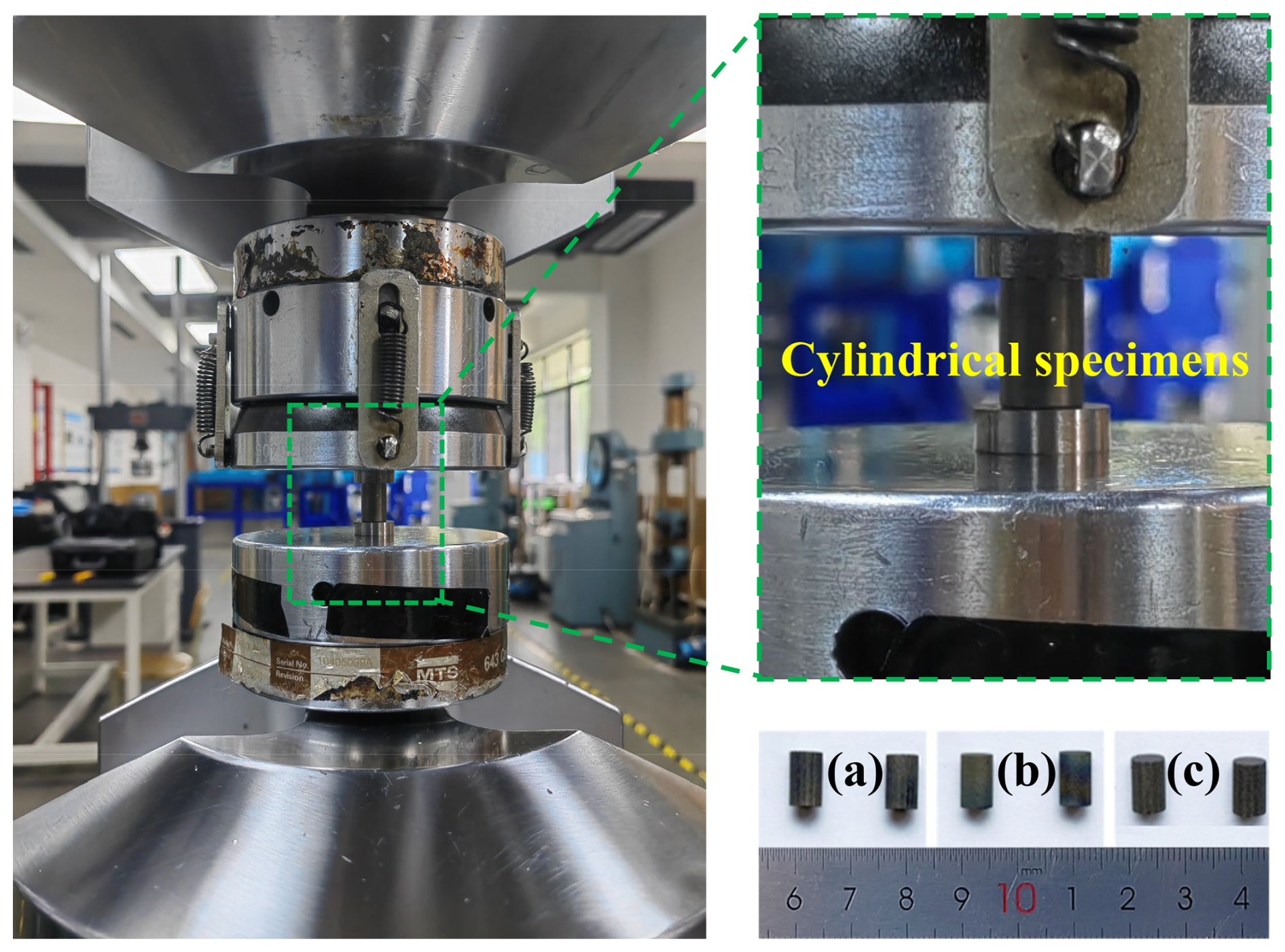
Figure 2Quasi-static mechanical property testing system and cylindrical specimens of (a) TiZrWV, (b) TiZrNbWV, and (c) TiZrNbV HEAs.
The engineering stress σ and strain ϵ can be expressed as follows:
where F is the applied compressive load, A0 denotes the initial cross-sectional area of the specimen, and Δh is the compression displacement. Consequently, the engineering stress–strain curves of the three HEAs can be determined.
2.3 Dynamic mechanical property tests
Dynamic mechanical property tests under high strain rates were conducted at room temperature using a self-developed split Hopkinson pressure bar (SHPB) system, as illustrated in Fig. 3. The specimens had diameters of 6.00 ± 0.02 mm and lengths of 9.00 ± 0.05 mm. The system mainly consists of an impact bar, an incident bar, a transmitted bar, and an absorbing bar. During the tests, strain gauges with a resistance of 120 Ω were attached to the incident and transmitted bars to acquire strain signals generated by stress-wave propagation. For each strain-rate condition, three repeated tests were performed to ensure the reliability and repeatability of the experimental data. To elucidate the intrinsic effect of strain rate on the behavior of each alloy, each alloy was tested individually at strain rates ranging from 1000 to 3100 s−1 by adjusting the gas gun chamber pressure. During the dynamic compression process, a high-speed camera was employed to record the energy-release behavior of the specimens at a frame rate of 20 000 fps.

During the tests, the displacements at the incident-bar/specimen and transmitted-bar/specimen interfaces are denoted as U1 and U2, respectively. Accordingly, the following relationships can be obtained:
where C0 is the elastic wave velocity in the impact bar, ϵi is the incident strain pulse, ϵt is the transmitted strain pulse, and ϵr denotes the reflected strain pulse.
Assuming that the original length and cross-sectional area of the specimen are Ls and As, respectively, the average strain in the specimen can be expressed using the three-wave method as follows:
Differentiating Eq. (6) yields the expression for the average strain rate of the specimen as follows:
The forces acting on the two specimen–bar interfaces can be denoted as F1 and F2, respectively:
where A0 is the cross-sectional area of the pressure bar, and E is the elastic modulus of the bar.
Accordingly, the average stress in the specimen can be expressed as follows:
According to dynamic force equilibrium, the specimen undergoes uniform stress loading and deformation, expressed as
Substituting Eq. (10) into Eqs. (6), (7), and (9), the dynamic stress–strain relationship of the specimen can be simplified and expressed as follows:
2.4 Impact-induced energy-release tests against metal-circuitry targets
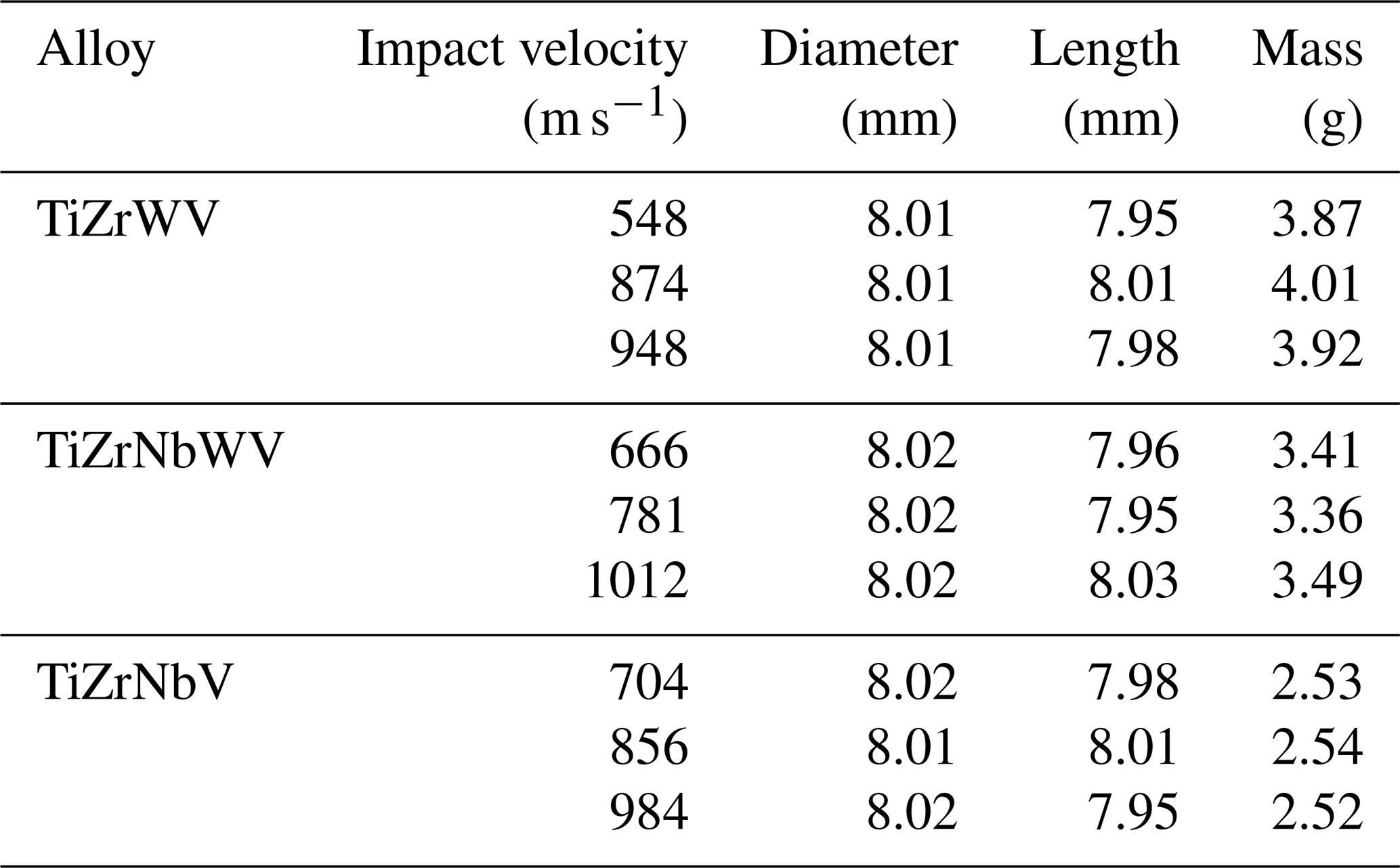
A ballistic gun test with a bore diameter of 14.5 mm was designed in this study to investigate the penetration and impact-induced energy-release behavior of the three HEAs against multi-layer targets at different impact velocities; the experimental setup is shown in Fig. 4. The HEAs were machined into cylindrical projectiles with a flat-ended nose configuration. For each alloy, three individual projectiles were tested at three different impact velocities, and the measured projectile lengths and masses are summarized in Table 1. The three-layer spaced target consisted of a 5 mm thick 2A12 aluminum (Al) front plate, an intermediate 1.6 mm thick circuit-board target populated with representative conventional electronic components, and a 3 mm thick 2A12 Al rear plate. The spacing between adjacent target layers was maintained at 100 mm. This target configuration was designed to simulate realistic structures comprising a metallic casing and internal electronic systems subjected to HEA penetration and the accompanying energy-release processes. All ballistic tests were conducted under normal impact conditions, with an impact angle of 90° relative to the target surface. A high-speed camera with a frame rate of 30 000 fps was employed to capture the transient penetration and energy-release processes. Owing to the destructive nature of ballistic impact tests, each impact condition was conducted once; the high-speed images presented here represent typical impact events with consistent penetration and energy-release characteristics observed across different impact velocities.
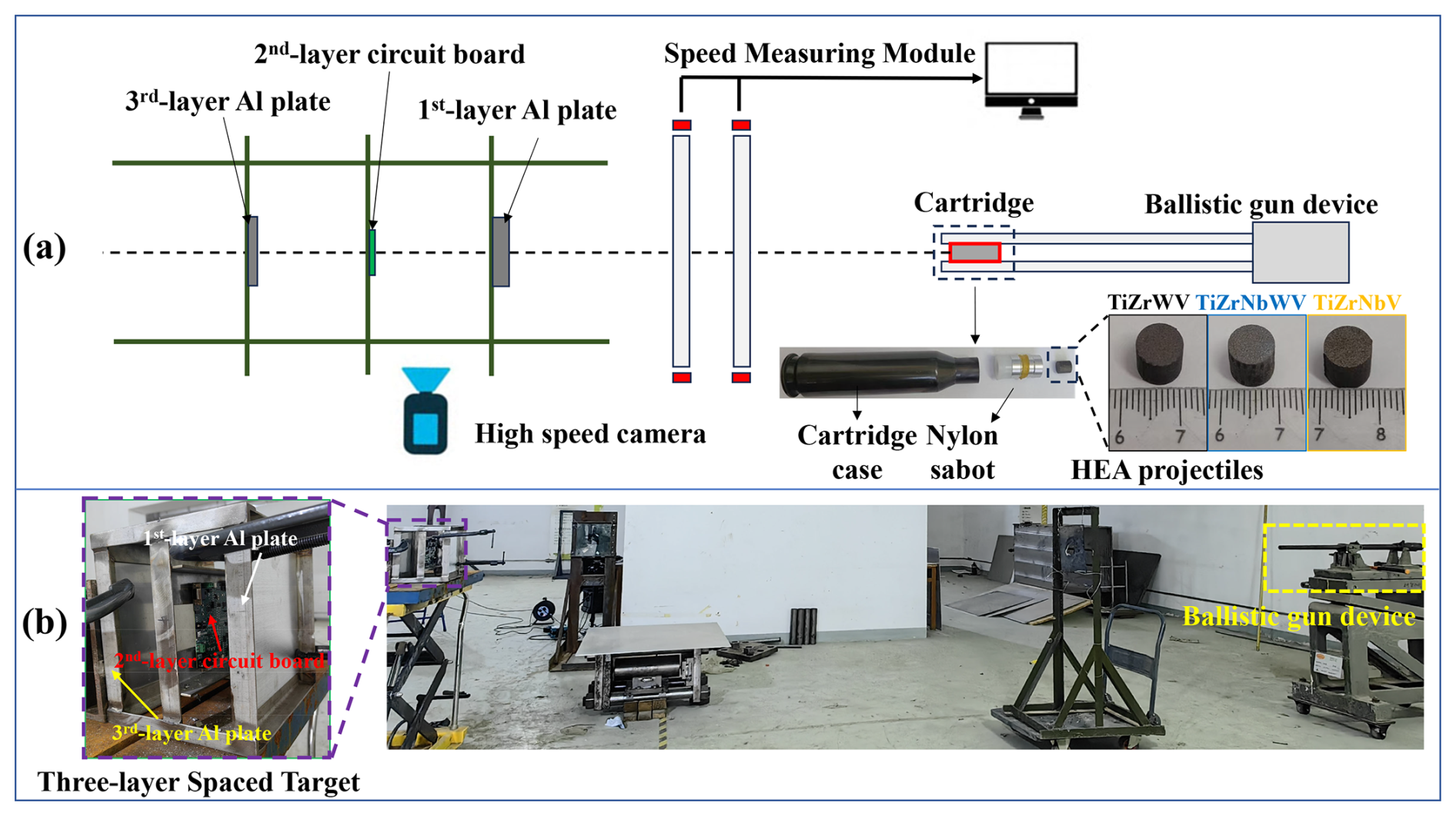
Figure 4Impact-induced energy-release testing setup. (a) A schematic diagram; (b) ballistic gun test platform.
Table 1Measured dimensions and masses of the HEA projectiles used in the ballistic tests.
3.1 Quasi-static mechanical property
The quasi-static compression test results are presented in Fig. 5. Fracture in TiZrWV predominantly occurred along shear planes oriented at approximately 45° relative to the compression axis. Notably, intense energy release was observed at the 45° fracture surfaces, where the flash exhibited high intensity and a relatively localized spatial distribution. In comparison, TiZrNbWV exhibited more pronounced and concentrated energy-release behavior, accompanied by higher flash intensity. Among the three alloys, TiZrNbV demonstrated the highest plastic deformation capability, indicating significantly enhanced toughness relative to the other two alloys. Furthermore, TiZrNbV exhibited more pronounced energy-release behavior and failed by shear fracture, with the fracture plane consistently oriented at 45° ± 5° to the compression axis; its fracture morphology was broadly similar to that of the other two alloys. Collectively, these results indicate that all three alloys exhibit sustained energy-release behavior and different degrees of deformation at the moment before fracture occurred, and the intensity of energy release increases under higher strain-rate conditions.
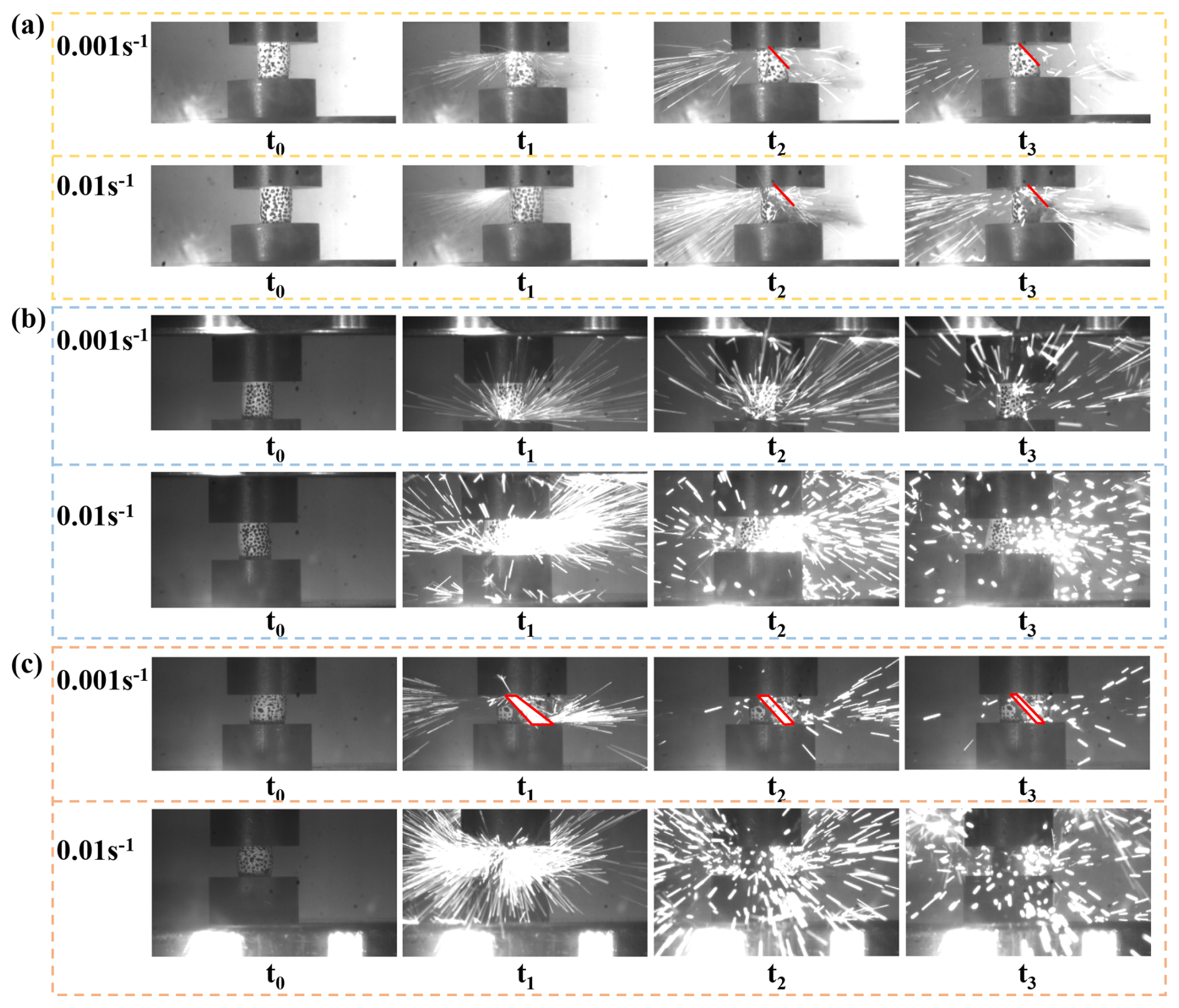
Figure 5Quasi-static compression results of three TiZr-based HEAs. (a) TiZrWV; (b) TiZrNbWV; and (c) TiZrNbV.
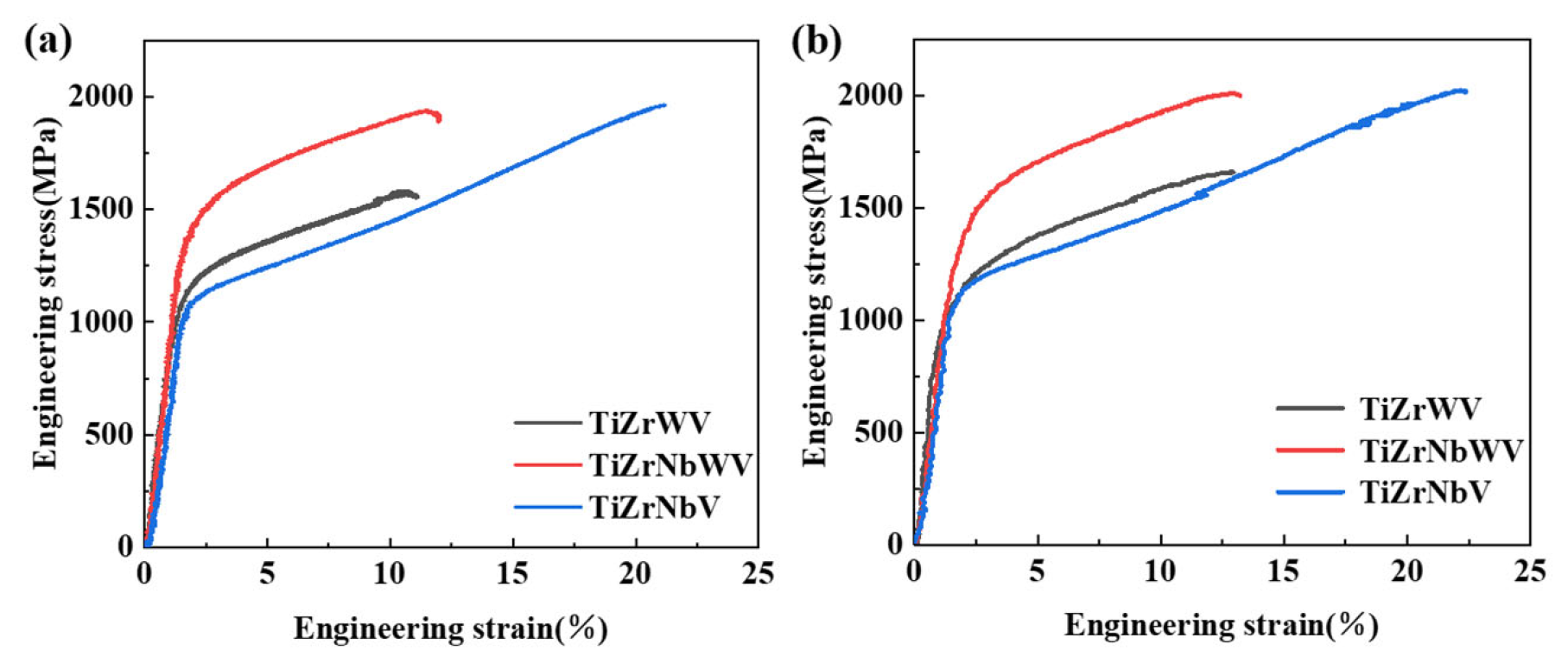
Figure 6Quasi-static compressive stress–strain curves for three TiZr-based HEAs at various strain rates. (a) Strain rate of 0.001 s−1; (b) strain rate of 0.01 s−1.
The stress–strain responses of the three alloys under quasi-static compression at the strain rate of 0.001 and 0.01 s−1 are shown in Fig. 6. All three TiZr-based HEAs exhibit a three-stage deformation behavior. In the elastic stage, the alloys undergo excellent elastic deformation, with the stress–strain relationship following Hooke's law. Subsequently, the yielding stage occurs, during which plastic deformation becomes dominant. Finally, the alloys enter the strain-hardening stage, characterized by a progressive increase in engineering stress with increasing strain.
The yielding and fracture strengths of the three alloys subjected to different strain rates are summarized in Table 2. Among them, TiZrNbWV exhibits the optimal mechanical properties, and possesses an extremely high yield strength, with a fracture strength of up to 2.0 GPa while maintaining a fracture strain of approximately 13 %. When the strain rate increases from 0.001 to 0.01 s−1, the yield strength of TiZrNbWV rises from 1418 to 1469 MPa, representing an increase of 3.6 %. Under identical strain rates, the yield strength of TiZrNbWV is 25.3 % and 35.5 % higher than that of TiZrWV, respectively. Its fracture strength reaches 1896 MPa at 0.001 s−1 and 2000 MPa at 0.01 s−1, exceeding the corresponding values of TiZrWV (1554 and 1659 MPa) by 22.0 % and 20.5 %, respectively.
Table 2The yield and fracture strengths of the three alloys subjected to different strain rates.
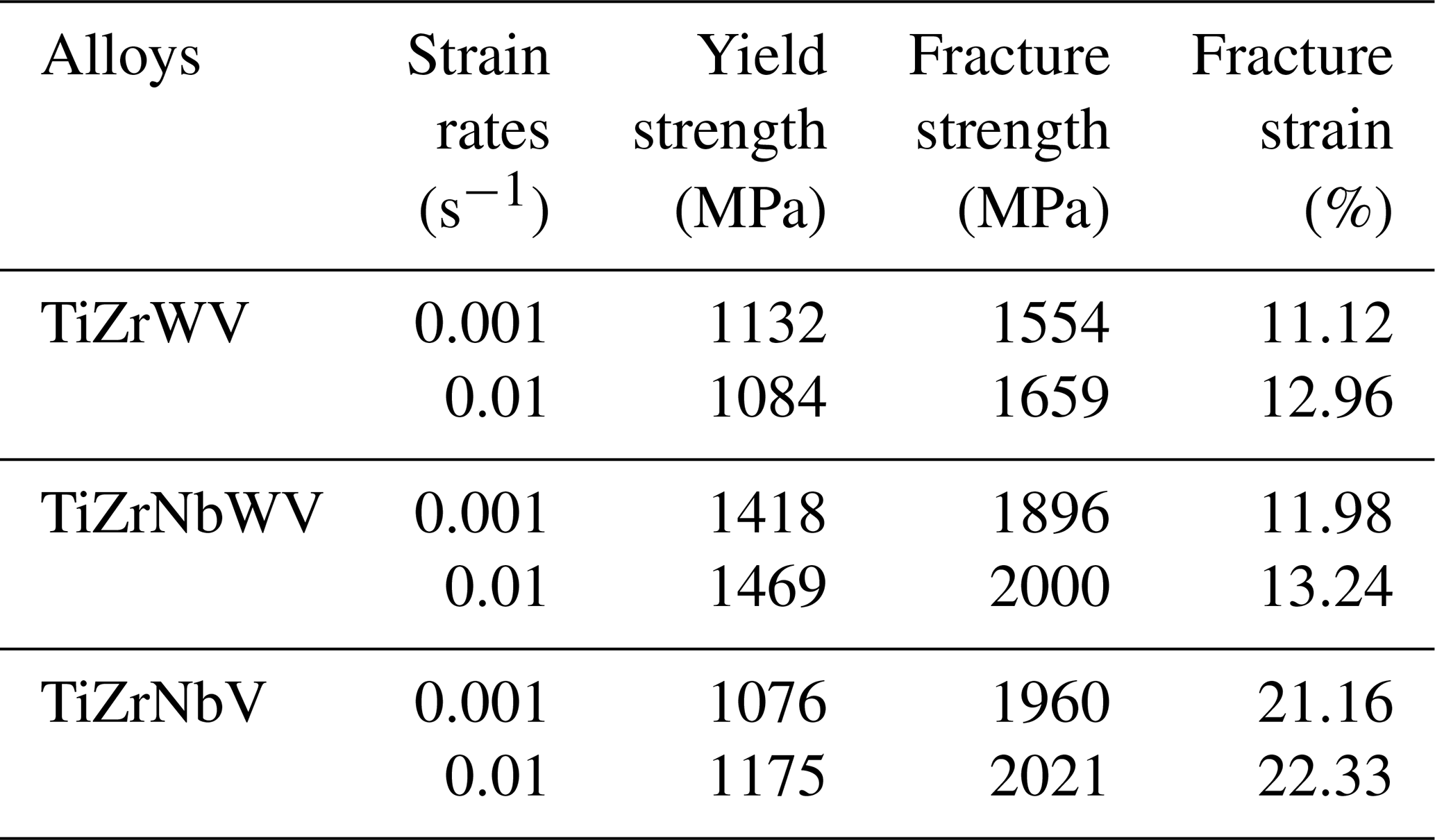
TiZrNbV exhibits the highest plastic deformation capacity among the three alloys across the tested strain rates. As the strain rate increases from 0.001 to 0.01 s−1, its yield strength increases from 1076 to 1175 MPa, corresponding to an increase of 9.2 %. At the same strain rates, the yield strength of TiZrNbV (1076 and 1175 MPa at 0.001 and 0.01 s−1, respectively) is comparable to that of TiZrWV (1132 and 1084 MPa) but remains significantly lower than that of TiZrNbWV (1418 and 1469 MPa). TiZrNbV achieves a slightly higher fracture strength under quasi-static compression, which is attributed to its enhanced plastic deformation capability. Regarding fracture strength, TiZrNbV increases from 1960 to 2021 MPa, exceeding the values of TiZrWV (1554 and 1659 MPa) and slightly surpassing those of TiZrNbWV (1896 and 2000 MPa). Additionally, TiZrWV exhibits intermediate mechanical behavior. As the strain rate increases from 0.001 to 0.01 s−1, its yield strength shows a slight decrease from 1132 to 1084 MPa, whereas its fracture strength increases from 1554 to 1659 MPa, representing an increase of 6.8 %.
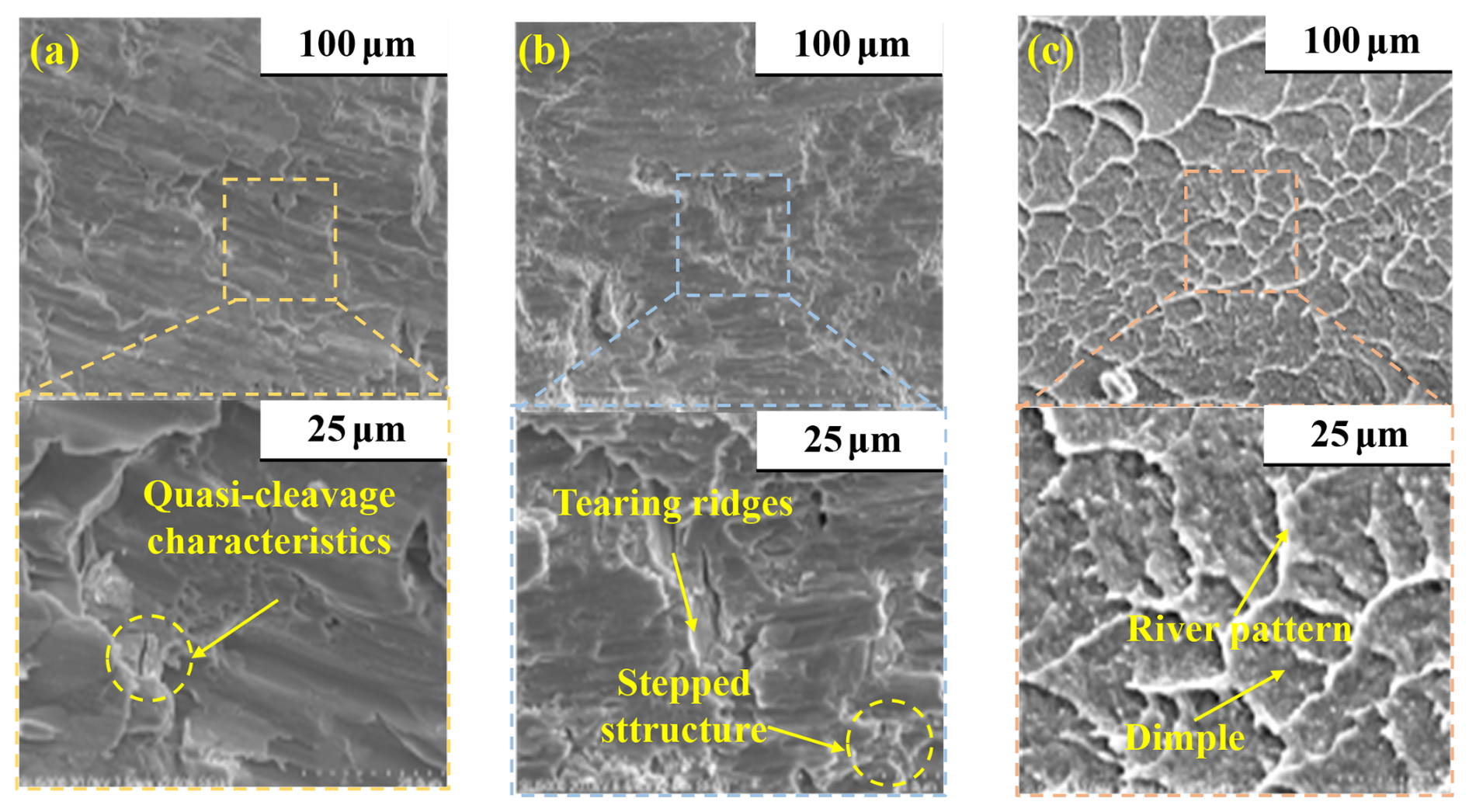
Figure 7Fracture morphology of three TiZr-based HEAs under quasi-static compression (strain rate 0.001 s−1). (a) TiZrWV; (b) TiZrNbWV; and (c) TiZrNbV.
The three alloys exhibit distinct mechanical behaviors under quasi-static compression. To elucidate the underlying fracture mechanisms, the fracture morphology of the specimens compressed at a strain rate of 0.001 s−1 were characterized using a SU-5000 scanning electron microscope (SEM, Hitachi, Japan), as shown in Fig. 7. TiZrWV exhibits quasi-cleavage planes, indicating a brittle fracture mode. In contrast, the fracture surface of TiZrNbWV displays a layered and stepped morphology accompanied by folds, tear ridges, and obvious plastic deformation features. These characteristics suggest that the alloy undergoes a mixed brittle–ductile fracture process, in which brittle crack propagation is accompanied by considerable plastic deformation. The fracture surface of TiZrNbV is characterized by a mixed morphology consisting of river-like patterns and numerous ductile dimples. The uneven fracture surface, together with distinct tear ridges and extensive plastic deformation features, indicates a complex crack propagation path and substantial plastic deformation during fracture. At the macroscopic scale, the crack appears to propagate from the specimen edge toward the center. Moreover, the ductile dimples are relatively uniform in size and moderate in depth, suggesting that fracture proceeds primarily through the nucleation, growth, and coalescence of microvoids. Consequently, the dominant fracture mechanism of TiZrNbV is ductile fracture, characterized by microvoid coalescence and tearing induced by plastic deformation.
3.2 Dynamic mechanical property
The dynamic compression testing results are shown in Fig. 8. The mechanical behavior and energy-release characteristics of TiZrWV and TiZrNbWV alloys both exhibit shear fracture along planes oriented at approximately 45° to the compression axis, with energy release primarily concentrated in the fracture region. All three alloys display more pronounced fracture and energy-release behavior under a higher strain rate; however, differences in energy-release intensity are evident. TiZrNbV exhibits relatively low energy-release intensity. By contrast, TiZrNbWV shows the most pronounced and concentrated energy-release behavior, while TiZrWV presents a comparable energy-release intensity to that of TiZrNbWV.
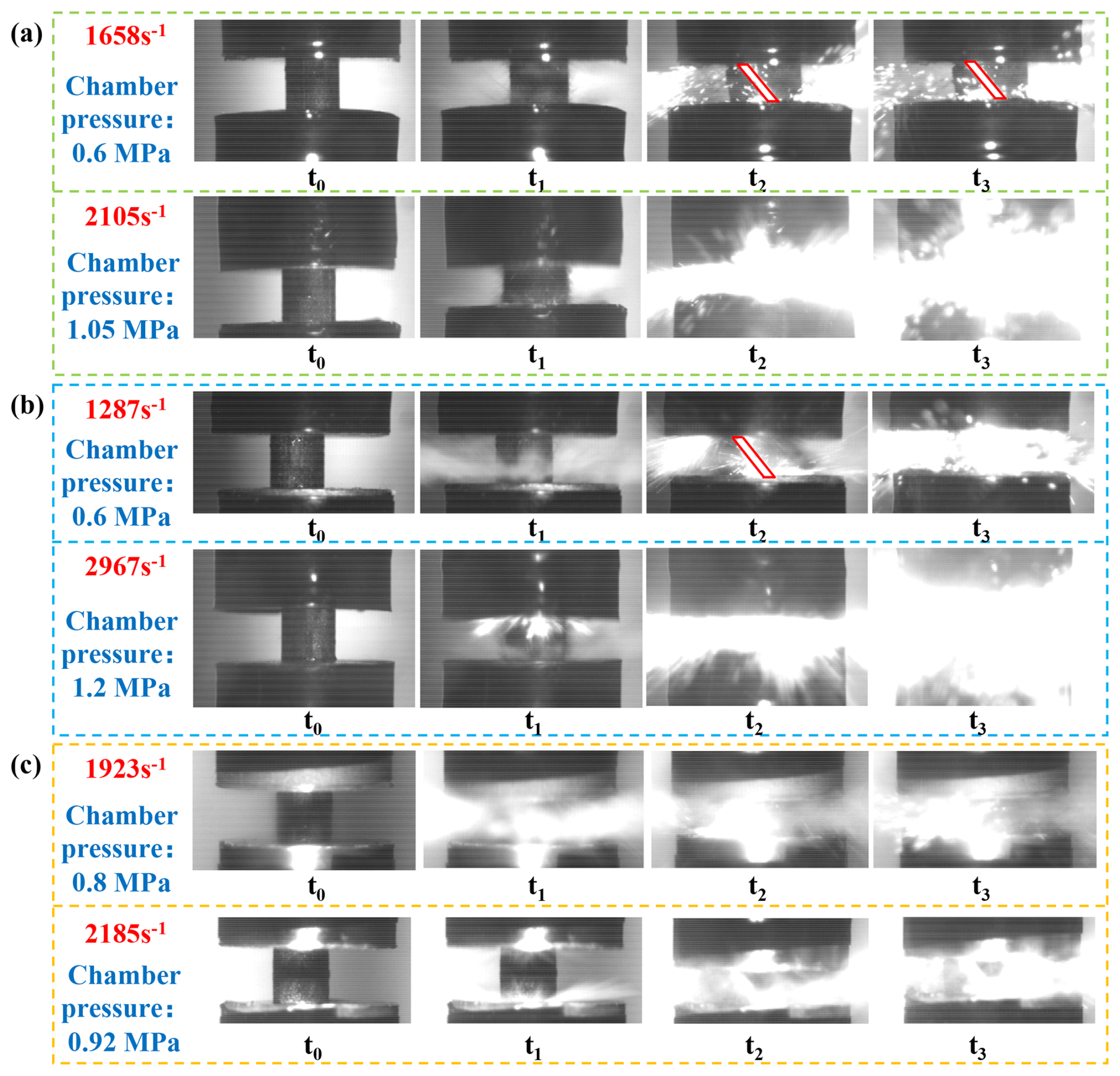
Figure 8The energy-release results of three TiZr-based HEAs subjected to dynamic compression. (a) TiZrWV; (b) TiZrNbWV; and (c) TiZrNbV.
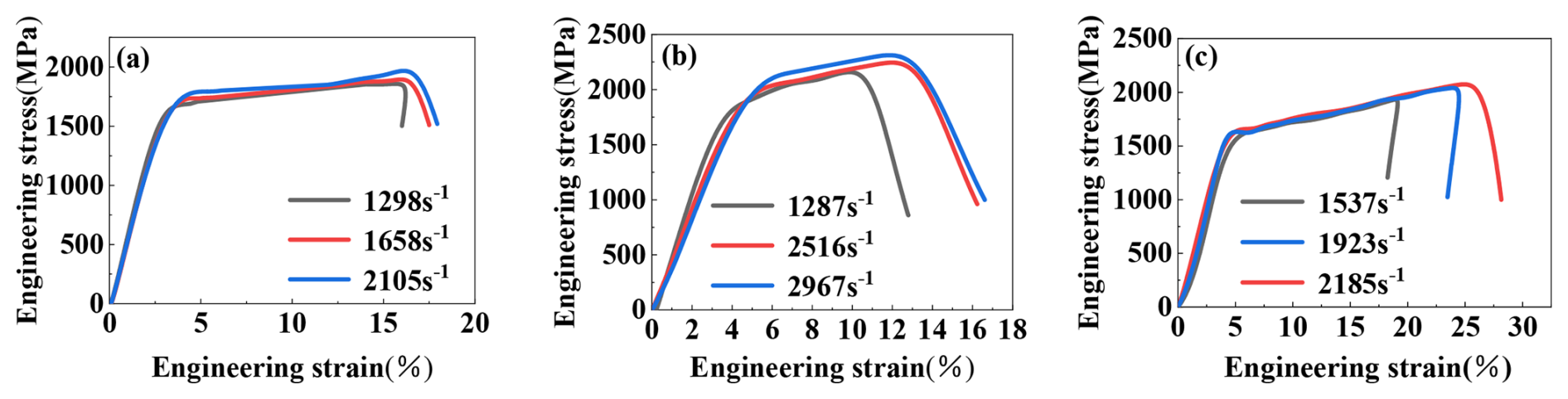
Figure 9Dynamic stress–strain curves of three TiZr-based HEAs. (a) TiZrWV; (b) TiZrNbWV; and (c) TiZrNbV.
Table 3The yield strength and fracture strength of the three alloys under dynamic compression.
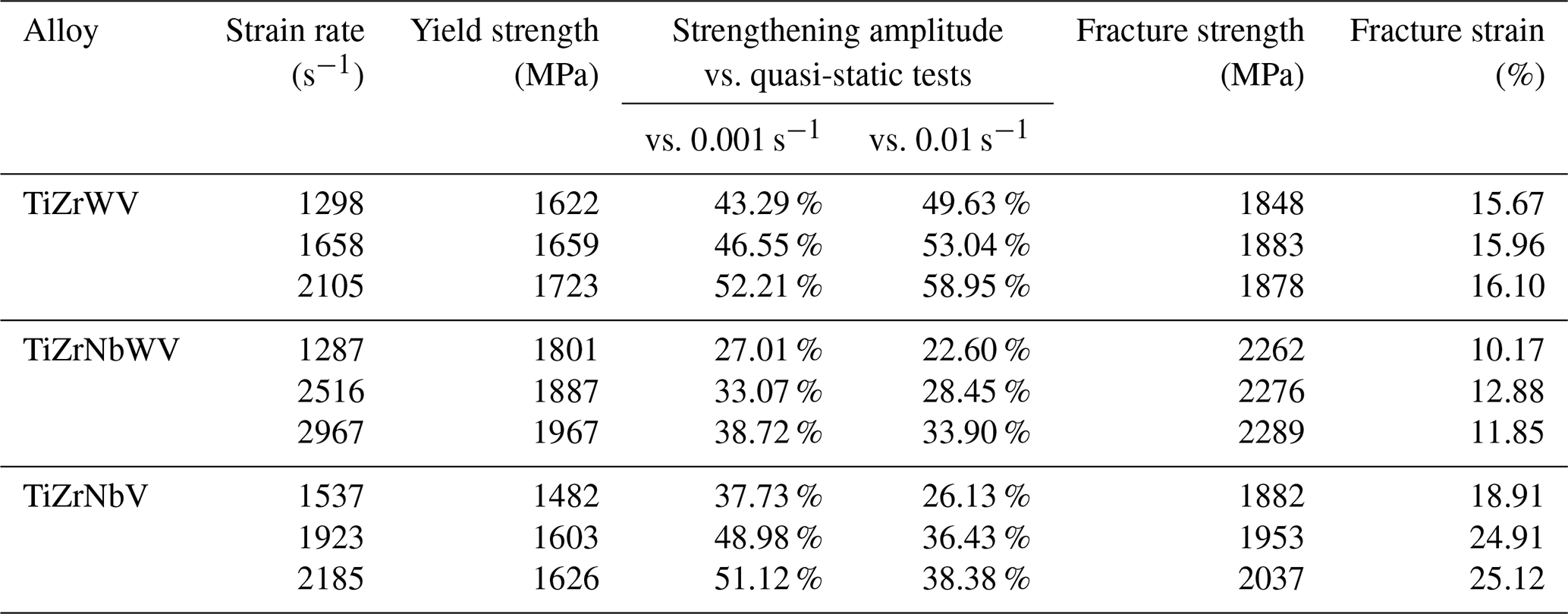
The engineering stress–strain curves of the three HEAs under dynamic compression are shown in Fig. 9, exhibiting stages of elastic deformation, work hardening, and fracture failure. All three TiZr-based HEAs exhibit pronounced strain-rate strengthening, which is evidenced by the systematic increase in yield strength with increasing strain rate, as summarized in Table 3. For TiZrWV, at a strain rate of 2105 s−1, the yield strength reaches 1723 MPa, representing an increase of 52.2 % and 58.94 % compared with the quasi-static values at 0.001 and 0.01 s−1, respectively. TiZrNbWV exhibits a yield strength of 1967 MPa at a strain rate of 2967 s−1, corresponding to an increment of 38.71 % and 33.9 % relative to its quasi-static yield strength. TiZrNbV reaches a yield strength of 1626 MPa at 2185 s−1, with increments of 51.11 % and 38.38 % compared with the quasi-static values at the same reference strain rates.
To quantitatively compare their dynamic hardening responses, the strain-rate strengthening amplitude was calculated and is summarized in Table 3; the relative strain-rate strengthening follows the order TiZrWV > TiZrNbV > TiZrNbWV. This composition-dependent response indicates that Nb and W affect dynamic hardening through different contributions to the baseline strength and strain-rate sensitivity. The incorporation of Nb and W substantially increases the quasi-static yield strength, with TiZrNbWV reaching 1469 MPa at 0.01 s−1, compared with 1084 MPa for TiZrWV and 1175 MPa for TiZrNbV. However, the higher initial resistance to plastic deformation in TiZrNbWV results in a smaller relative increase under dynamic loading. In contrast, TiZrWV, which has a lower quasi-static yield strength, exhibits the largest relative strengthening amplitude with increasing strain rate. Therefore, Nb–W alloying primarily enhances the absolute strength level, while simultaneously reducing the apparent relative strain-rate sensitivity within the investigated strain-rate range.
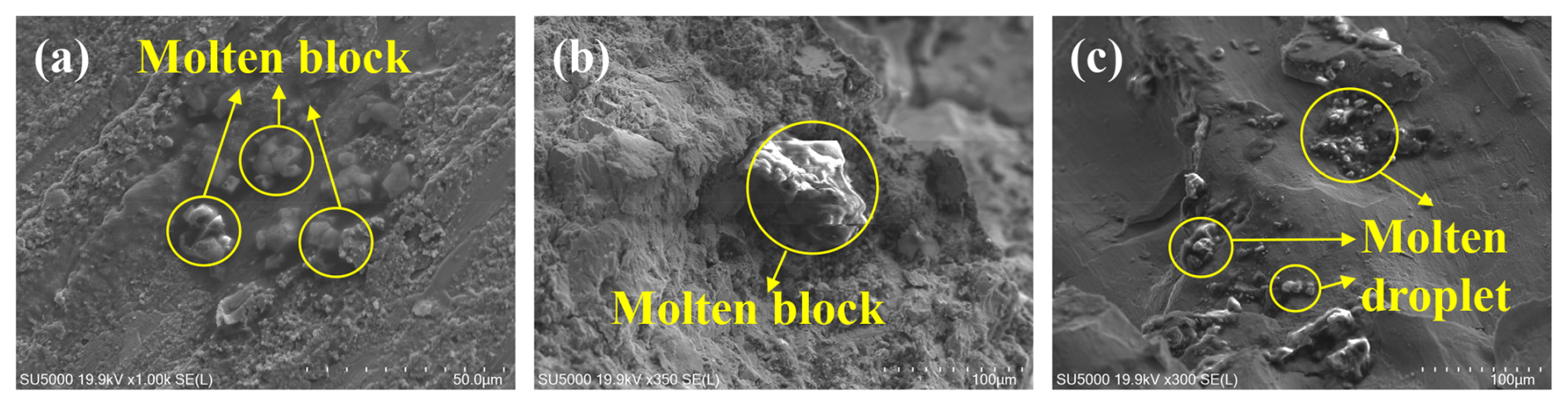
Figure 10Fracture morphology of three TiZr-based HEAs under dynamic compression. (a) TiZrWV; (b) TiZrNbWV; and (c) TiZrNbV.
After the dynamic compression tests, the fracture surfaces were characterized by SEM, and the results are shown in Fig. 10. The fracture morphology of TiZrWV under dynamic loading differs from that observed under quasi-static conditions, with visible molten block structures on the fracture surface. This indicates that under high strain-rate loading, localized regions experience rapid temperature rise due to adiabatic shear, leading to melting, which reflects significant energy-release behavior. Similarly, the fracture surface of TiZrNbWV also exhibits a large melted region, with morphological features comparable to those of TiZrWV. In contrast, TiZrNbV displays more typical dynamic response features, characterized by numerous fine molten droplets and flow traces distributed across the fracture surface. Microstructural analysis of the fracture surfaces under high strain-rate conditions reveals that all three HEAs develop localized molten structures, demonstrating that effective energy release occurs under high strain-rate loading.
3.3 Impact-induced energy-release property against multi-layer targets
The impact-induced energy-release behavior of the three HEAs against multi-layer targets are illustrated in Fig. 11. As shown in Fig. 11a, at an initial impact velocity of 548 m s−1, the TiZrWV projectile exhibits energy-release reactions. However, owing to the limited input kinetic energy, the projectile undergoes insufficient fragmentation, resulting in restricted energy release and low overall efficiency. At 874 m s−1, the projectile experiences more complete fragmentation upon impact, leading to enhanced energy-release intensity. This indicates superior energy release and penetration-damage performance under high-velocity conditions. When the impact velocity further increases to 948 m s−1, more extensive fragmentation occurs, substantially enlarging the effective contact area with ambient oxygen. Consequently, a more intense thermochemical energy release is triggered within a shorter time, producing a quasi-detonation phenomenon.
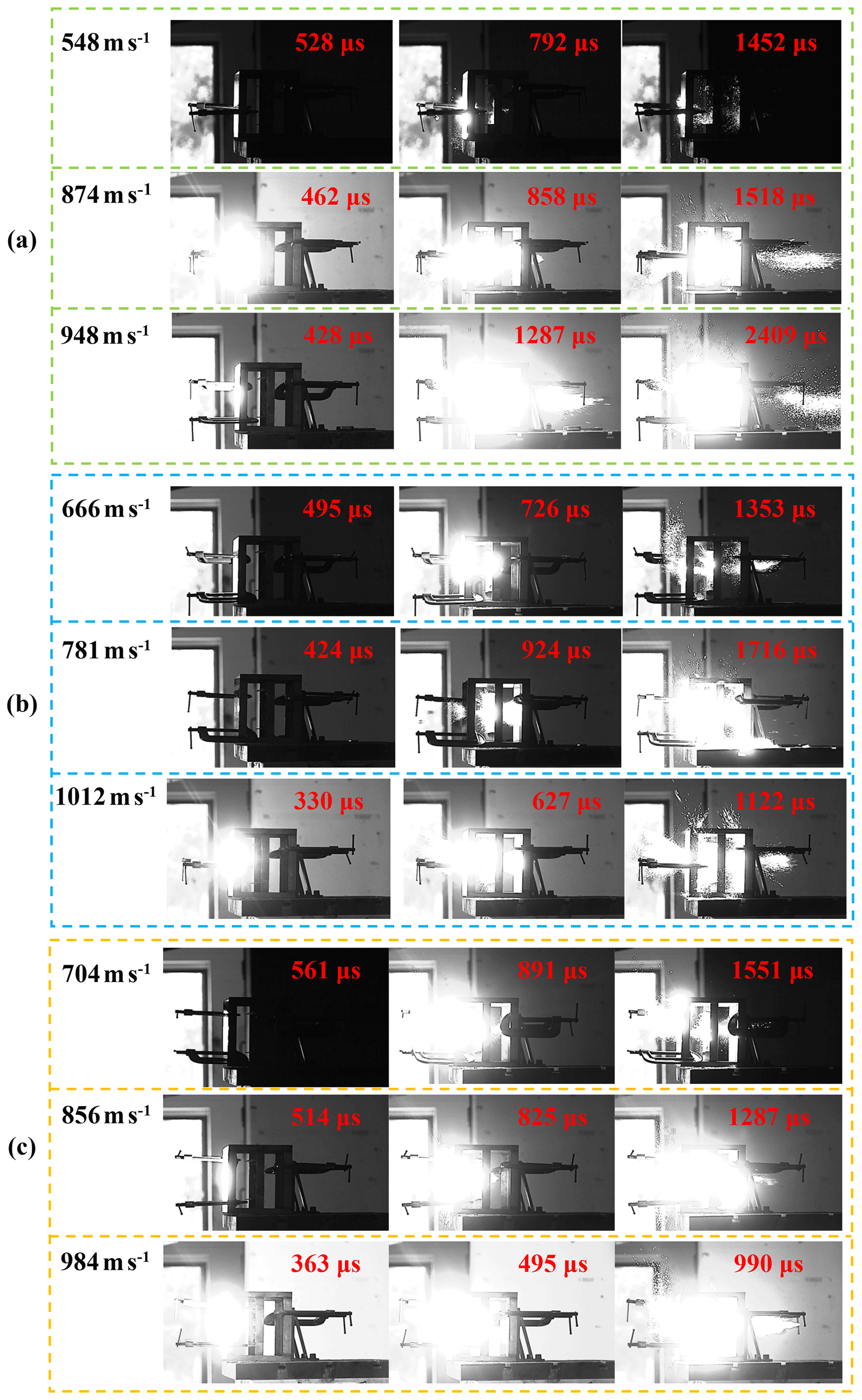
Figure 11Impact-induced energy-release process of three TiZr-based HEAs projectiles impacting the three-layer target at various initial impact velocities. (a) TiZrWV; (b) TiZrNbWV; and (c) TiZrNbV.
As shown in Fig. 11b, at an initial velocity of 666 m s−1, a faint flash appears upon initial impact, indicating the onset of energy-release reactions. Nevertheless, the light intensity remains weak and decays rapidly, suggesting incomplete chemical energy release in the early stage. At 726 µs, the projectile reaches the intermediate electronic-component target, where the flash intensity increases and the radiating area expands, reflecting enhanced energy-release intensity. Fragmentation of the projectile after penetrating the front target exposes reactive fragments to oxygen, promoting further chemical reactions. As the impact velocity increases to 781 and 1012 m s−1, the energy release becomes more thorough, and a pronounced post-penetration effect is observed: even after perforating the third target layer, energy release continues behind the target.
As illustrated in Fig. 11c, the energy-release intensity of TiZrNbV increases with impact velocity. At an initial velocity of 984 m s−1, the alloy exhibits superior penetration and energy-release characteristics. Moreover, after fully perforating the three-layer target, the TiZrNbV projectile continues to release energy, demonstrating sustained post-penetration reactivity.
In summary, the impact-induced behavior indicates that when HEA fragments strike the front target, their primary mechanism is kinetic penetration. A large proportion of reactive fragments remain unreacted, producing only weak flashes. The main energy-release reactions occur after a short delay, when the fragments impact the rear circuit board. Intense collisions cause complete fragmentation of the projectile, generating a high-temperature fragment cloud that reacts violently with atmospheric oxygen, releasing substantial chemical energy and producing bright, sustained flashes. This process resembles detonation behavior; however, unlike traditional explosives, the energy release is not instantaneous, highlighting the unique characteristics of HEAs as ESMs.
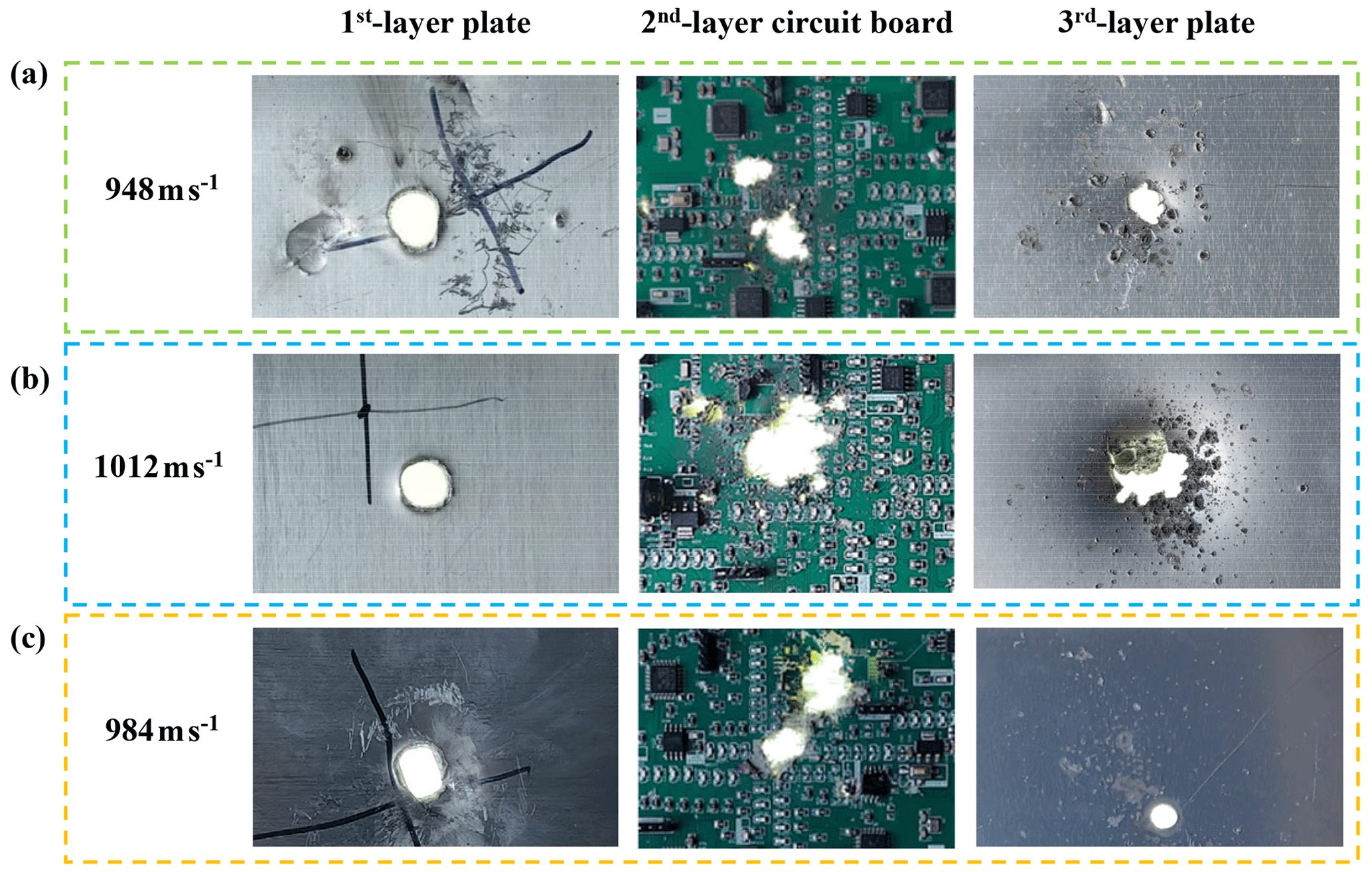
Figure 12Energy-release-induced damage morphology of the three-layer target impacted by the three TiZr-based HEAs projectiles. (a) TiZrWV; (b) TiZrNbWV; and (c) TiZrNbV.
Figure 12 presents the energy-release-induced damage morphology of the three-layer spaced targets after impact by the three TiZr-based HEA projectiles. The first-layer Al plate exhibits typical circular perforation, with failure dominated by kinetic penetration and plug-shear mechanisms, representing classic kinetic-energy penetration behavior. The middle circuit board shows multiple unevenly distributed perforations, indicating that the HEA projectiles had already undergone partial energy-release reactions after penetrating the first-layer plate, thereby causing more extensive damage to the subsequent layer.
A distinct difference is further observed in the perforation morphologies of the third-layer Al plates. The TiZrNbV projectile produces a relatively regular circular perforation with smooth edges, indicating that the residual projectile population remains comparatively concentrated during its interaction with the third-layer plate. In contrast, the TiZrWV and TiZrNbWV projectiles produce irregular, jagged, and tear-like perforations with rough and uneven boundaries. These morphological differences are closely associated with their alloy-dependent dynamic responses. TiZrWV exhibits pronounced dynamic fracture and fragmentation behavior, which results in a more dispersed residual fragment population and spatially nonuniform impact loading. TiZrNbWV possesses the highest dynamic yield strength and the longest energy-release duration, leading to sustained and spatially nonuniform interactions between residual fragments and the third-layer plate. These characteristics are consistent with the irregular perforation morphologies observed for these two alloys. In contrast, TiZrNbV exhibits a comparatively good plastic deformation capability, a relatively rapid dynamic fracture process, and a substantially shorter energy-release duration. These characteristics reveal that the residual projectile population remains relatively concentrated after penetrating the preceding layers, resulting in a more localized loading condition and consequently a more regular circular perforation. Thus, the third-layer perforation morphology provides macroscopic evidence of the differences in post-penetration fragmentation and energy-transfer behavior among the three TiZr-based HEAs.
3.4 Energy-release flash characteristics
To further investigate the impact-induced energy-release characteristics of TiZr-based HEAs against three-layer spaced targets, two characteristic parameters of the energy-release flash, namely flash duration and flash intensity, were introduced for quantitative correlation analysis. The flash duration was employed to reveal differences in the persistence of energy release among the three HEAs, whereas the flash intensity was used to characterize their transient energy-release behavior.
The onset of flash duration is defined as the moment when a visible flash first appears upon impact of the HEA projectile on the first target plate, and the endpoint is defined as the time when the flash intensity gradually decays to the background light level. Figure 13 presents the flash durations generated by the three HEAs projectiles against the three-layer targets at representative impact velocities. Among the tested alloys, the TiZrNbWV projectile exhibits the most outstanding energy-release persistence under all velocity conditions, with a flash duration reaching 73.92 ms at a high impact velocity. The TiZrWV projectile shows the second-best persistence, attaining a maximum flash duration of 55.08 ms under high-velocity impact. In contrast, TiZrNbV displays the shortest energy-release duration; even at a relatively high velocity of 984 m s−1, its flash duration is only 15.02 ms, significantly lower than those of the other two alloys.
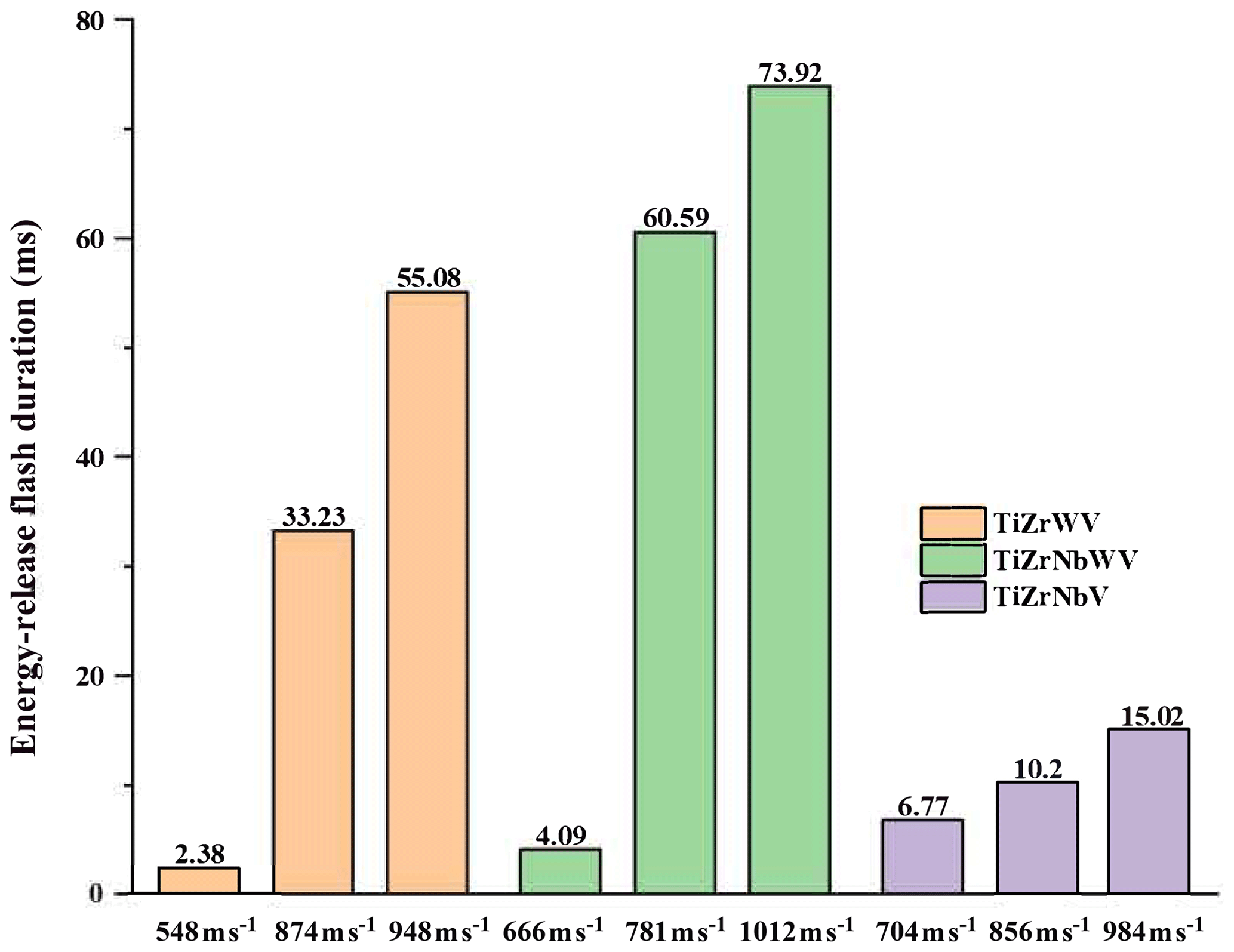
Figure 13Impact-induced energy-release flash duration of the three TiZr-based HEAs projectiles (TiZrWV; TiZrNbWV; and TiZrNbV.) impacting the three-layer target.
Regarding energy-release persistence, both TiZrWV and TiZrNbWV exhibit pronounced velocity sensitivity. Increasing impact velocity enhances projectile fragmentation, leading to more complete energy-release reactions and prolonged flash duration. Notably, TiZrNbWV demonstrates the best persistence, with the flash duration under high-velocity conditions reaching nearly 18 times that under low-velocity impact. By comparison, the persistence behavior of TiZrNbV is relatively insensitive to impact velocity. As the impact velocity increases from 704 to 984 m s−1, the flash duration increases only from 6.77 to 15.02 ms, which is a much smaller increase than those observed for the other two alloys. This indicates that the influence of impact velocity on the energy-release persistence of TiZrNbV is relatively limited.
The energy-release flash intensity was quantitatively characterized based on grayscale information extracted from the high-speed images. To ensure consistent data length and temporal resolution across different impact conditions, an image sequence ranging from 50 frames before impact to 350 frames after impact was selected as the unified analytical window. A region of interest (ROI) was spatially defined to encompass the effective flash-emission region generated during the impact-induced energy-release process while excluding non-target features, such as splashed fragments, target debris, and background disturbances. For each image frame, the grayscale values of all pixels within the selected ROI were extracted, and the mean grayscale value was calculated to construct the original time-dependent grayscale intensity sequence. Background correction was performed using the grayscale information obtained from the pre-impact frames to reduce the influence of ambient illumination and camera noise. The grayscale images were stored as 8-bit unsigned integer matrices, where the grayscale values ranged from 0 to 255, corresponding to pure black and pure white, respectively. Pixels with grayscale values reaching the maximum of 255 were retained in the calculation because they represent regions with intense optical emission during the energy-release process. Since the grayscale intensity from high-speed imaging represents a relative optical response rather than an absolute radiation intensity, the calculated flash intensity was expressed as normalized grayscale intensity dimensionless. To further improve the clarity of the temporal evolution characteristics, Gaussian smoothing filtering was applied to the grayscale intensity sequences to suppress random noise and high-frequency fluctuations while preserving the overall variation trend of the energy-release behavior.
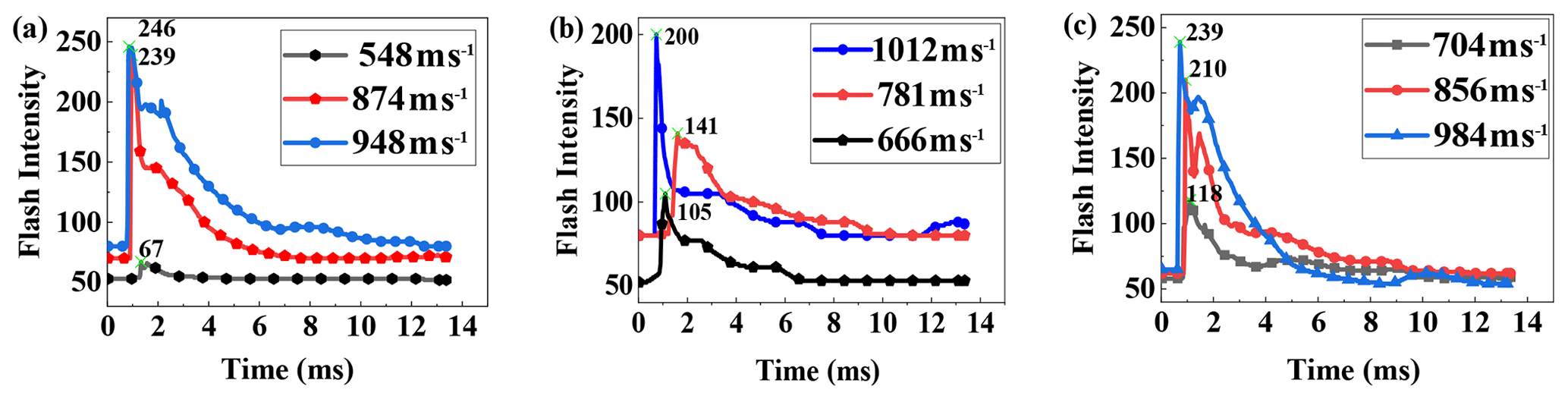
Figure 14Flash-intensity curves of three TiZr-based HEAs projectiles impacting the three-layer target at various initial impact velocities. (a) TiZrWV; (b) TiZrNbWV; and (c) TiZrNbV.
Figure 14 presents the energy-release flash intensity curves of the three HEAs under different impact velocities, recorded by a high-speed camera (Photron APX-RS, Japan) operating at 30 000 fps with an exposure time of 0.5 µs, a gain of 12 dB, and a spatial resolution of 512 × 512 pixels. For all three alloys, a positive correlation is observed between impact velocity and the resulting energy-release response. At relatively low impact velocities, the impact-triggered chemical reactions and energy-release processes are not fully activated, leading to a weak energy-release response. As impact velocity increases, the internal energy release becomes more complete, resulting in enhanced instantaneous energy-release intensity and higher peak flash intensity. For the TiZrNbV alloy at the impact velocities of 856 and 984 m s−1, the energy-release curve exhibits a bimodal profile: this is mainly attributed to secondary fragmentation of the alloy, which generates additional energy-release effects and thus leads to an upward trend in the energy-release curve. Thus, impact velocity is a key parameter governing the impact-induced energy-release behavior of TiZr-based HEAs. Increasing impact velocity not only enhances energy-release intensity but also promotes a more concentrated energy-release process, demonstrating that TiZr-based HEAs exhibit efficient and controllable energy-release characteristics under impact loading.
Table 4 presents a statistical comparison of the total energy-release flash intensity, defined as the time integral of the flash intensity, under different impact velocities, further demonstrating that the energy-release intensity increases with impact velocity. Moreover, as the input kinetic energy increases, TiZrWV exhibits the highest energy-release intensity among the three alloys. Notably, for TiZrNbWV, as the impact velocity increases from 781 to 1012 m s−1, the peak flash intensity increases significantly, whereas the total intensity decreases slightly. This trend can be attributed to higher impact velocities intensifying the energy-release response; however, the excessively high projectile velocity causes rapid perforation of the three-layer target, thereby limiting the duration of the energy-release process.
Table 4Quantitative comparison of total energy-release flash intensity at different impact velocities.
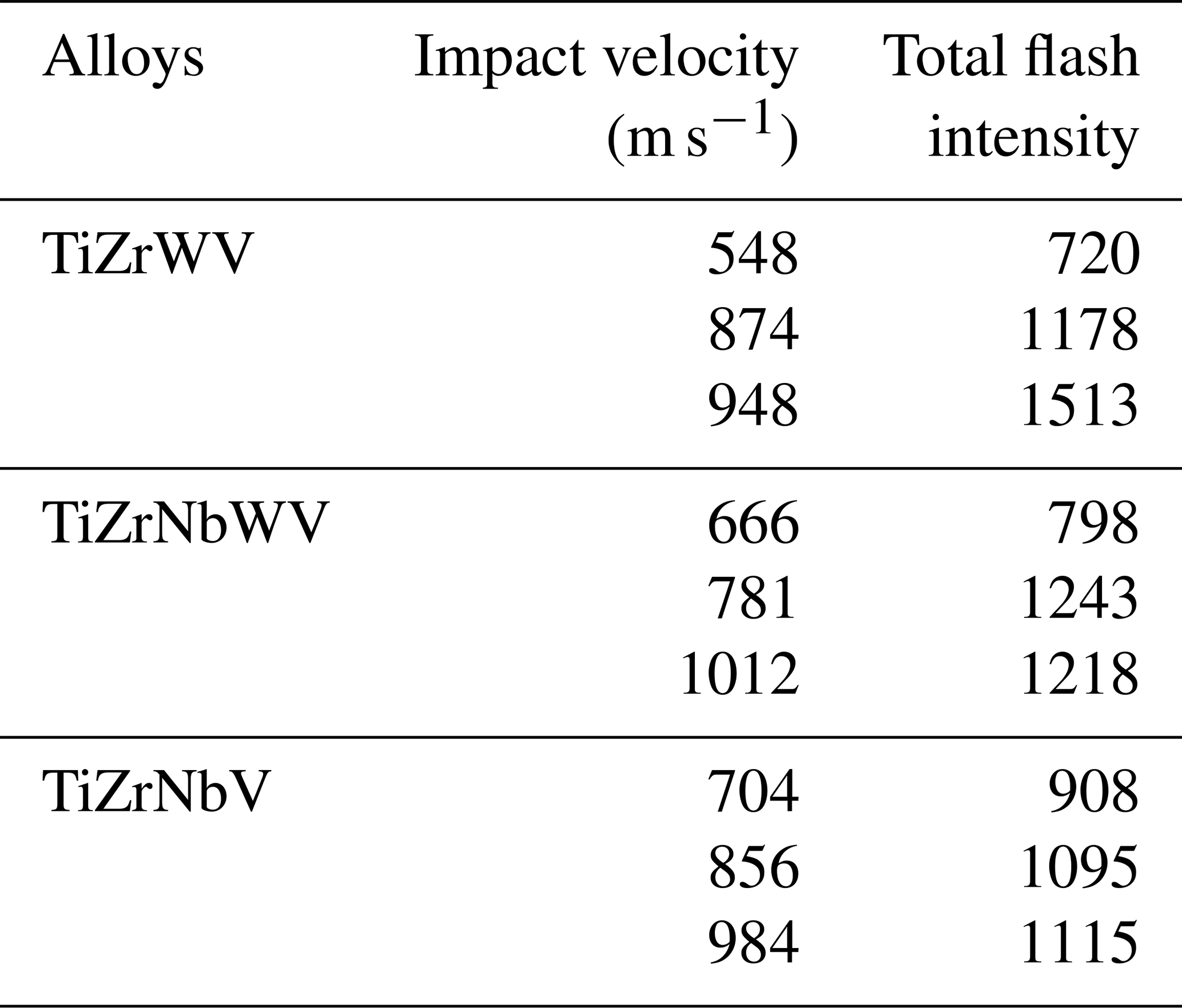
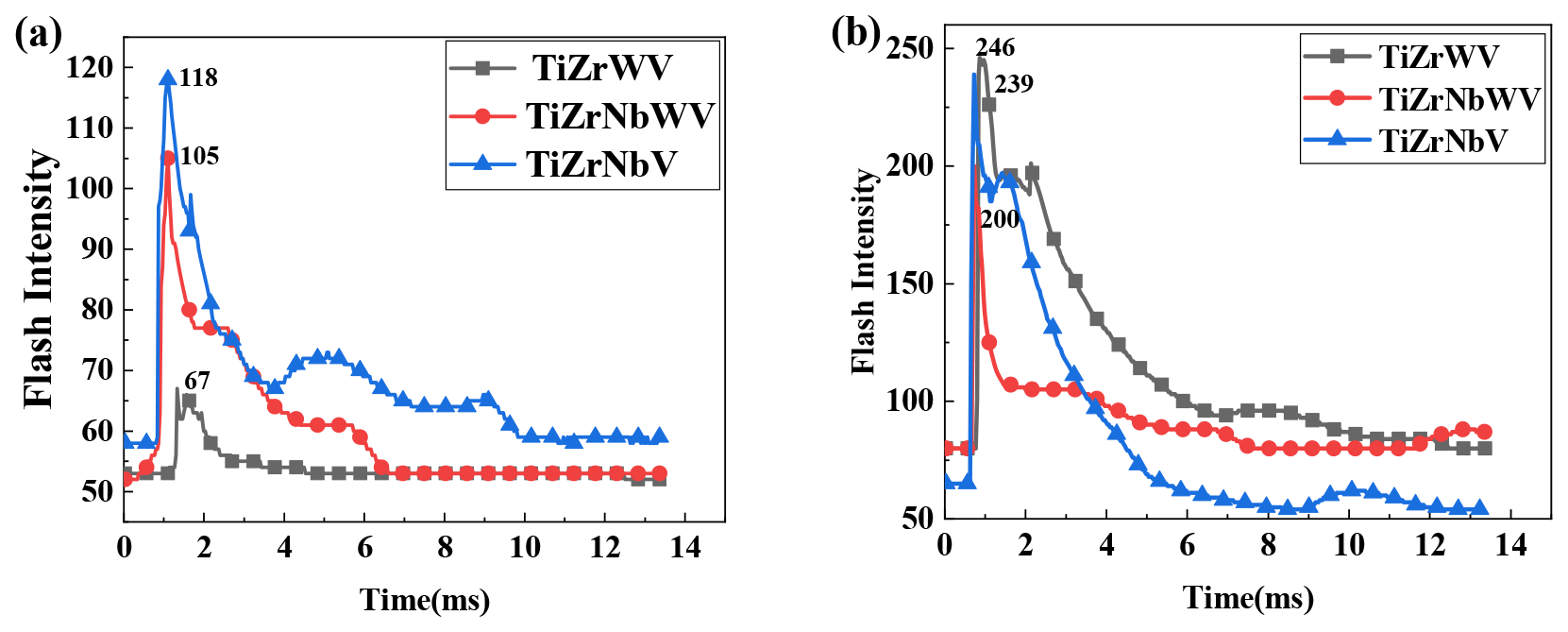
Figure 15Flash intensity of the three TiZr-based HEAs at low and high impact velocities. (a) Low impact velocities (548 m s−1 for TiZrWV, 666 m s−1 for TiZrNbWV, and 704 m s−1 for TiZrNbV); (b) high impact velocities (948 m s−1 for TiZrWV, 1012 m s−1 for TiZrNbWV, and 984 m s−1 for TiZrNbV).
Figure 15 compares the energy-release flash intensity of the three HEAs at impact velocities (548 m s−1 for TiZrWV, 666 m s−1 for TiZrNbWV, and 704 m s−1 for TiZrNbV) and high impact velocities (948 m s−1 for TiZrWV, 1012 m s−1 for TiZrNbWV, and 984 m s−1 for TiZrNbV). For all alloys, the flash-intensity curves exhibit a characteristic evolution involving a rapid rise followed by a sharp decay, although clear differences in energy-release behavior are observed. At low impact velocities, TiZrNbV exhibits the highest peak flash intensity and the steepest initial rise, followed by TiZrNbWV, whereas TiZrWV shows the weakest response, as shown in Fig. 15a. This indicates that TiZrNbV possesses superior instantaneous energy-release capability and faster reaction kinetics at relatively low impact velocities, resulting in a more concentrated energy-release process. During the decay stage, TiZrNbWV exhibits the slowest attenuation rate, suggesting a longer-lasting energy-release reaction.
At high impact velocities, TiZrWV exhibits the highest peak intensity and the steepest initial rise, reaching the peak value within an extremely short period, followed by TiZrNbV, whereas TiZrNbWV exhibits relatively lower intensity, as shown in Fig. 15b. These results indicate that TiZrWV exhibits the highest energy-release rate and the most rapid transient response under high-velocity impact, resulting in a highly concentrated energy-release process. Notably, during the decay stage, TiZrNbWV consistently exhibits the most gradual decay, further confirming its superior energy-release persistence. Unlike the behavior observed at low impact velocities, the energy-release intensity of the three alloys varies significantly with impact velocity, demonstrating that the impact-induced energy-release behavior is strongly dependent on alloy composition and loading conditions. These findings provide important experimental support for the design and optimization of high-performance HEAs for impact-triggered energetic applications.
In this study, the mechanical properties and impact-induced energy-release behavior of TiZr-based high-entropy alloys (HEAs) were investigated through quasi-static compression, dynamic compression, and impact-induced energy-release tests of projectiles against a three-layer spaced target. Energy-release flash characteristics, including flash duration and intensity, were introduced as key parameters to characterize the impact energy-release performance of TiZr-based HEAs. The main conclusions are as follows.
-
Under quasi-static compression, TiZrNbWV exhibits the highest yield strength but relatively poor ductility; TiZrNbV exhibits the highest quasi-static fracture strength and superior plastic deformation capability; and TiZrWV displays intermediate performance in both yield strength and fracture strength.
-
Under dynamic impact loading, all three alloys exhibit strain-rate strengthening, with TiZrNbWV showing the optimal dynamic mechanical performance. Furthermore, scanning electron microscopy (SEM) characterization of the fracture surfaces and microstructures of recovered specimens reveals the intrinsic mechanisms underlying the composition-dependent differences in mechanical properties at the microscopic scale.
-
Impact-induced energy-release tests indicate that TiZr-based HEAs exhibit typical kinetic penetration coupled with thermal energy-release behavior. When HEA fragments impact the front Al plate, kinetic penetration dominates, whereas energy-release reactions primarily occur upon impact with the rear circuit board. Moreover, the impact-induced energy-release behavior shows a pronounced velocity dependence, with higher impact velocities enhancing the energy-release response against the three-layer spaced target.
-
Using flash duration as a quantitative metric, we found that TiZrWV and TiZrNbWV exhibit pronounced velocity sensitivity, whereas the energy-release behavior of TiZrNbV is relatively insensitive to impact velocity. The persistence of impact-induced energy release among the three HEAs follows the order TiZrNbWV > TiZrWV > TiZrNbV.
-
Comparative analysis of flash intensity under different impact velocities reveals that, at low velocities, TiZrNbV exhibits the most pronounced energy-release characteristics, with the highest flash intensity peak and rapid fluctuations, indicating strong instantaneous energy-release capability. At higher impact velocities, the energy-release intensity of all three alloys varies significantly: TiZrWV exhibits the most prominent energy-release behavior, while TiZrNbWV exhibits a relatively lower peak intensity but a more gradual decay and a longer energy-release duration.
Through quantitative analysis of both flash duration and intensity, this work characterizes the mechanical properties of the three designed TiZr-based HEAs and examines the energy-release behavior of HEA projectiles impacting the three-layer spaced metal-circuitry target. A composition–property–application relationship can therefore be established for the three TiZr-based HEAs. TiZrNbWV is preferable for applications requiring high structural strength, strong penetration capability, and sustained post-impact energy release. TiZrWV is more suitable for scenarios emphasizing pronounced dynamic hardening and rapid, intense energy release under high-velocity impact. TiZrNbV is more appropriate for applications where comparatively good deformability, concentrated penetration, and a relatively rapid energy-release response are desired. This selection guideline demonstrates that the composition of TiZr-based HEAs can be tailored according to the required balance between structural strength, dynamic response, and energy-release characteristics.
The present study is subject to several limitations. The ballistic tests were performed over a limited impact-velocity range, and the proposed flash duration and intensity are image-based comparative parameters rather than direct measurements of absolute energy release. In addition, the quantitative relationship between microstructural evolution, projectile fragmentation, and energy-release kinetics remains to be established. Future work will therefore focus on a broader range of impact conditions and on quantitative characterization of energy-release mechanisms.
Code and data will be made available on request because they have potential defense and aerospace relevance. In addition, part of the raw data were generated under a research agreement that requires prior approval before public release.
Zhong Shi: Writing – original draft, Methodology, Investigation, Formal analysis, Conceptualization. Chenchen Wu: Writing – review & editing, Methodology. Wentong Qiao: Data curation, Methodology, Investigation, Conceptualization. Lijun Mao: Methodology, Investigation, Conceptualization. Zhaojun Pang: Supervision, Methodology, Funding acquisition, Conceptualization. Jinguo Liu: Supervision, Writing – review & editing.
The contact author has declared that none of the authors has any competing interests.
Publisher's note: Copernicus Publications remains neutral with regard to jurisdictional claims made in the text, published maps, institutional affiliations, or any other geographical representation in this paper. The authors bear the ultimate responsibility for providing appropriate place names. Views expressed in the text are those of the authors and do not necessarily reflect the views of the publisher.
The authors appreciate the editors and all of the anonymous reviewers for their great efforts towards the article.
This research has been supported by State Key Laboratory of Micro-Spacecraft Rapid Design and Intelligent Cluster (grant no. MS01250108), the Natural Science Foundation of China (grant no. 52672467), and the Fundamental Research Funds for the Central Universities.
This paper was edited by Pengyuan Zhao and reviewed by two anonymous referees.
Alijani, F., Reihanian, M., Gheisari, K., and Miyamoto, H.: Microstructure and high-temperature deformation behavior of FeCoNiMnV high entropy alloy, Mater. Chem. Phys., 256, 123675, https://doi.org/10.1016/j.matchemphys.2020.123675, 2020.
Butler, T. M., Chaput, K. J., Dietrich, J. R., and Senkov, O. N.: High temperature oxidation behaviors of equimolar NbTiZrV and NbTiZrCr refractory complex concentrated alloys (RCCAs), J. Alloys Compd., 729, 1004–1019, https://doi.org/10.1016/j.jallcom.2017.09.164, 2017.
Cantor, B., Chang, I. T. H., Knight, P., and Vincent, A. J. B.: Microstructural development in equiatomic multicomponent alloys, Mater. Sci. Eng. A, 375–377, 213–218, https://doi.org/10.1016/j.msea.2003.10.257, 2004.
Chen, H. H., Zhang, X. F., Dai, L. H., Liu, C., Xiong, W., and Tan, M. T.: Experimental study on WFeNiMo high-entropy alloy projectile penetrating semi-infinite steel target, Def. Technol., 18, 1470–1482, https://doi.org/10.1016/j.dt.2021.06.001, 2022.
Fang, Q., Chen, Y., Li, J., Jiang, C., Liu, B., Liu, Y., and Liaw, P. K.: Probing the phase transformation and dislocation evolution in dual-phase high-entropy alloys, Int. J. Plast., 114, 161–173, https://doi.org/10.1016/j.ijplas.2018.10.014, 2019.
Gorr, B., Azim, M., Christ, H.-J., Chen, H., Szabo, D. V., Kauffmann, A., and Heilmaier, M.: Microstructure evolution in a new refractory high-entropy alloy W-Mo-Cr-Ti-Al, Metall. Mater. Trans. A, 47, 961–970, https://doi.org/10.1007/s11661-015-3246-0, 2016.
Guo, K., Shi, F. Y., Chen, C., Chang, M. Z., and Tang, E. L.: Study on the penetration characteristics of WFeNiMo high-entropy alloy projectile impacting steel target at high speed, J. Mater. Eng. Perform., 34, 3281–3294, https://doi.org/10.1007/s11665-024-09268-y, 2024a.
Guo, Y., Liu, R., Ran, C., Arab, A., Geng, H., Gao, M., Guo, B., Zhou, Q., Zhou, Q., and Chen, P.: Ignition and energy-release characteristics of energetic high-entropy alloy HfZrTiTa0.2Al0.8 under dynamic loading, J. Mater. Res. Technol., 28, 2819–2830, https://doi.org/10.1016/j.jmrt.2023.12.198, 2024b.
Hastings, D. L. and Dreizin, E. L.: Reactive structural materials: Preparation and characterization, Adv. Eng. Mater., 20, 1700631, https://doi.org/10.1002/adem.201700631, 2018.
Huang, J., Wei, H., Han, T., Zhang, Z., Yu, Z., Zhang, M., Cheng, C., Wang, X., and Zheng, Y.: The influence of W and V elements on the mechanical properties and fracture ignition behavior of TiZrNb-based high-entropy alloys, Int. J. Refract. Met. Hard Mater., 137, 107684, https://doi.org/10.1016/j.ijrmhm.2026.107684, 2026.
Jain, S., Kumar, V., and Samal, S.: Prediction the effect of Ta on the mechanical behaviour and experimental validation of novel six component Fe-Co-Ni-Cr-V-Ta eutectic high entropy alloys, Int. J. Refract. Met. Hard Mater., 120, 106572, https://doi.org/10.1016/j.ijrmhm.2024.106572, 2024.
Li, R., Wang, R., Tian, Q., Zhong, X., Song, J., Huang, J., Wu, J., and Li, Y.: An investigation on the jet formation and penetration characteristics of the CuCoCrFeNi high-entropy alloy liner, AIP Adv., 14, 055017, https://doi.org/10.1063/5.0207709, 2024.
Li, Z., Pang, Z., Du, C., Du, Z., Huang, J., and Cheng, C.: Penetration mechanism of TiZrNbW high-entropy alloy rod projectile into steel plate, J. Alloys Compd., 1033, 181183, https://doi.org/10.1016/j.jallcom.2025.181183, 2025.
Lian, G., Wang, B., Gao, W., Chen, C., Feng, M., and Zhao, C.: Current research status on the effects of processing and composition design of refractory high-entropy alloys on performance, J. Alloys Compd., 1050, 185465, https://doi.org/10.1016/j.jallcom.2025.185465, 2026.
Liu, J., Zhao, P., Chen, K., Zhang, X., and Zhang, X.: 1U-sized deployable space manipulator for future on-orbit servicing, assembly, and manufacturing, Space Sci. Technol., 2022, 9894604, https://doi.org/10.34133/2022/9894604, 2022.
Ma, Y., He, J., Zhou, L., Zhang, K., Gai, X., and Zhang, X.: Mechanical properties and impact energy-release characteristics of Al0.5NbZrTi1.5Ta0.8Ce0.85 high-entropy alloy, Mater. Res. Express, 9, 116510, https://doi.org/10.1088/2053-1591/ac9f04, 2022.
Meng, J., Shen, B., Wang, J., Xue, R., Chen, J., Li, S., and Tang, Y.: Energy-release behavior of TiZrNbV high-entropy alloy, Intermetallics, 162, 108036, https://doi.org/10.1016/j.intermet.2023.108036, 2023.
Meng, J., He, J., Zhang, B., Chen, J., Li, S., Niu, D., and Tang, Y.: The effect of Ti and Zr content on the structure, mechanics and energy-release characteristics of Ti-Zr-Ta alloys, Def. Technol., 31, 343–350, https://doi.org/10.1016/j.dt.2023.01.007, 2024.
Qi, Y., Chen, Y., Ren, X., Meng, X., Pang, B., and Li, Y.: Microstructures and dynamic compression properties of a WTaTiCrV refractory high-entropy alloys as an energetic structural material, Int. J. Refract. Met. Hard Mater., 130, 107178, https://doi.org/10.1016/j.ijrmhm.2025.107178, 2025.
Ren, J. T., Chen, L., Wang, H. Y., and Yuan, Z. Y.: High-entropy alloys in electrocatalysis: From fundamentals to applications, Chem. Soc. Rev., 52, 8319–8373, https://doi.org/10.1039/D3CS00557G, 2023.
Resnina, N., Belyaev, S., Ivanov, A., Bikbaev, R., Ponikarova, I., Starodubova, M., Rebrov, T., and Bazlov, A.: Functional properties of the Ti-Hf-Zr-Ni-Cu-Co shape memory alloys with low, medium and high configuration entropy, J. Alloys Compd., 1044, 184322, https://doi.org/10.1016/j.jallcom.2025.184322, 2025.
Senkov, O. N., Rao, S., Chaput, K. J., and Woodward, C.: Compositional effect on microstructure and properties of NbTiZr-based complex concentrated alloys, Acta Mater., 151, 201–215, https://doi.org/10.1016/j.actamat.2018.03.065, 2018.
Shi, K. W., Cheng, J. C., Cui, L., Qiao, J. W., Huang, J. Y., Zhang, M., Yang, H. J., and Wang, Z. H.: Ballistic impact response of Fe40Mn20Cr20Ni20 high-entropy alloys, J. Appl. Phys., 132, 205105, https://doi.org/10.1063/5.0130634, 2022.
Ugwuegbu, C. C., Egole, C. P., Odumosu, A. K., Tom-Okoro, M. E., Mbamara, F., Okoro, C. V., Okolo, D. C., Anaele, J. U., and Nzebuka, G. C.: Local ordering in high-entropy alloys: A comprehensive review, J. Alloys Compd., 1067, 188384, https://doi.org/10.1016/j.jallcom.2026.188384, 2026.
Wu, Q., He, F., Li, J., Kim, H. S., Wang, Z., and Wang, J.: Phase-selective recrystallization makes eutectic high-entropy alloys ultra-ductile, Nat. Commun., 13, 4697, https://doi.org/10.1038/s41467-022-32444-4, 2022.
Wu, W. S., Gan, K. F., Yang, Q. K., Yan, D. S., Zhang, Y., and Li, Z. M.: Modulating hierarchical microstructural components to enhance strength-ductility synergy of a high-entropy alloy containing brittle sigma phase, Mater. Sci. Eng. A, 900, 146511, https://doi.org/10.1016/j.msea.2024.146511, 2024.
Yang, W., Pang, S., Liu, Y., Wang, Q., Liaw, P. K., and Zhang, T.: Design and properties of novel Ti-Zr-Hf-Nb-Ta high-entropy alloys for biomedical applications, Intermetallics, 141, 107421, https://doi.org/10.1016/j.intermet.2021.107421, 2022.
Yeh, J. W., Chen, S. K., Lin, S. J., Gan, J. Y., Chin, T. S., Shun, T. T., Tsau, C. H., and Chang, S. Y.: Nanostructured high-entropy alloys with multiple principal elements: Novel alloy design concepts and outcomes, Adv. Eng. Mater., 6, 299–303, https://doi.org/10.1002/adem.200300567, 2004.
Yi, X., Song, G., and Li, M.: Optimization strategies for biocompatibility, mechanical properties, and corrosion resistance of medical high-entropy alloys for sports injuries, J. Alloys Compd., 1047, 184997, https://doi.org/10.1016/j.jallcom.2025.184997, 2025.
Yu, B. H., Ding, N., Chen, H. M., Yang, X. X., Wang, H. J., Chen, J., Cai, Z. Y., and Xie, G. Q.: Design strategy of Ti-Zr-Hf-Nb high-entropy alloys based on first principles computations, Acta Mater., 295, 121183, https://doi.org/10.1016/j.actamat.2025.121183, 2025.
Zhang, Y., Guo, Y., Tian, Z., Liu, R., Zhou, Q., and Chen, P.: Impact-induced energy-release mechanism of W/Zr/Al energetic structural materials, J. Alloys Compd., 1061, 187423, https://doi.org/10.1016/j.jallcom.2026.187423, 2026.
Zhao, P., Jiao, Z., Zhang, T., Wang, J., Ma, S., Chang, H., Xiao, X., Dai, X., Song, W., and Wang, Z.: Coupling effect of penetration and explosion in a novel high-entropy alloy energetic structural material under ballistic impact, Int. J. Impact Eng., 209, 105592, https://doi.org/10.1016/j.ijimpeng.2025.105592, 2026.
Zheng, H., Wang, Z., Li, Z., Wang, M., Li, X., Li, X., Liu, A., Wang, J., Xu, L., and Du, Z.: Study on deformation mechanism and energy-release characteristics of refractory high-entropy alloy (Ti2Zr)1.5NbVAl0.5 under different loading conditions, J. Alloys Compd., 1018, 179031, https://doi.org/10.1016/j.jallcom.2025.179031, 2025.
Zhou, Q., Hu, Q., Wang, B., Zhou, B., Chen, P., and Liu, R.: Fabrication and characterization of the Ni-Al energetic structural material with high energy density and mechanical properties, J. Alloys Compd., 832, 154894, https://doi.org/10.1016/j.jallcom.2020.154894, 2020.