Articles | Volume 17, issue 1
https://doi.org/10.5194/ms-17-593-2026
© Author(s) 2026. This work is distributed under
the Creative Commons Attribution 4.0 License.
https://doi.org/10.5194/ms-17-593-2026
© Author(s) 2026. This work is distributed under
the Creative Commons Attribution 4.0 License.
Effect of surface roughness on erosion wear of turboshaft engine compressor blades
Dunyuan Luo
School of Mechanical Engineering, Hunan University of Science and Technology, Xiangtan 411201, China
Guangfu Bin
CORRESPONDING AUTHOR
School of Mechanical Engineering, Hunan University of Science and Technology, Xiangtan 411201, China
Andrew Ball
Centre for Efficiency and Performance Engineering, University of Huddersfield, Huddersfield HD1 3DH, UK
Fengshou Gu
Centre for Efficiency and Performance Engineering, University of Huddersfield, Huddersfield HD1 3DH, UK
Haiyan Miao
Centre for Efficiency and Performance Engineering, University of Huddersfield, Huddersfield HD1 3DH, UK
Chao Li
School of Mechanical Engineering, Hunan University of Science and Technology, Xiangtan 411201, China
Ahmed Hamood
Centre for Efficiency and Performance Engineering, University of Huddersfield, Huddersfield HD1 3DH, UK
Wei Yuan
AECC HAPRI Aviation Key Laboratory of Aero-engine Vibration Technology, Zhuzhou 412002, China
Related authors
No articles found.
Hongli Yue, Chao Li, Guangfu Bin, Xianghuan Liu, Jian Li, Anhua Chen, and Qiang Li
Mech. Sci., 17, 545–555, https://doi.org/10.5194/ms-17-545-2026, https://doi.org/10.5194/ms-17-545-2026, 2026
Short summary
Short summary
Helicopter engines often generate rapidly changing torque under different flight conditions, which can increase vibration in the transmission system and affect reliability. This study examines how these variations influence system behavior in typical scenarios. The results show that the rate of torque change, rather than its magnitude, plays a key role. Faster changes significantly amplify vibration in critical components, providing guidance for improving system safety and durability.
Ziyang Zhou, Guangfu Bin, Chao Li, Yaozhi Gao, and Maharaja Bayjid Md
Mech. Sci., 16, 375–390, https://doi.org/10.5194/ms-16-375-2025, https://doi.org/10.5194/ms-16-375-2025, 2025
Short summary
Short summary
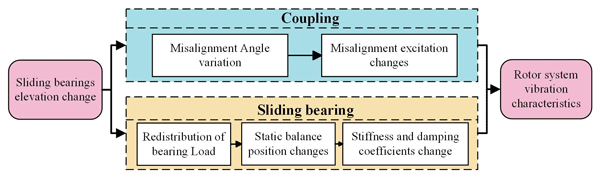
The two-span three-support rotor is a typical structure of rotating machinery such as steam turbine units, compressor units, and water pumps. When the elevation of the sliding bearing changes, the misalignment excitation of the coupling and the stiffness damping of the bearing will change accordingly, which will affect the vibration characteristics of the rotor. This paper can provide theoretical guidance and data support for the structural design and fault diagnosis of the two-span three-support rotor.
Hong Wei, Fulong Liu, Guoxing Li, Xingchen Yun, Muhammad Yousaf Iqbal, and Fengshou Gu
Mech. Sci., 15, 445–460, https://doi.org/10.5194/ms-15-445-2024, https://doi.org/10.5194/ms-15-445-2024, 2024
Short summary
Short summary
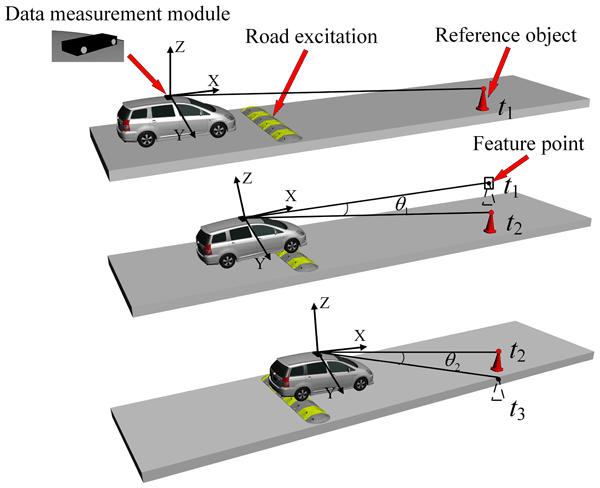
Vibration measurement technology based on binocular vision and kinematic decoupling is a new method which can effectively extract vertical vibration signal. The proposed method has the advantages of real-time measurement and low cost and overcomes the limitations of traditional measurement methods in error accumulation.
Huawen Peng, Bo Zou, Jingyun Yang, Rong Fu, Xingwu Ding, Da Zhang, and Guangfu Bin
Mech. Sci., 15, 461–472, https://doi.org/10.5194/ms-15-461-2024, https://doi.org/10.5194/ms-15-461-2024, 2024
Short summary
Short summary
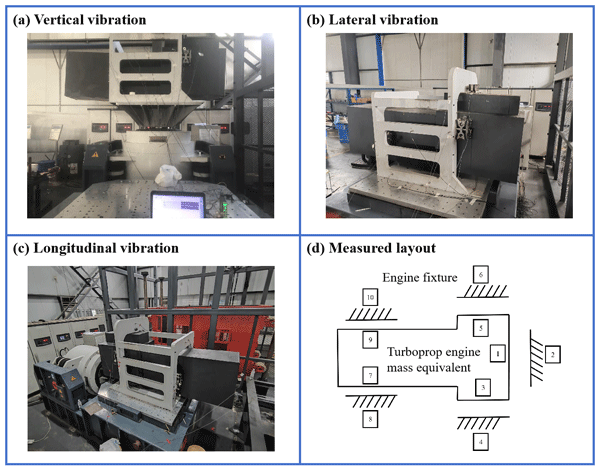
This study explores the actual demand of wide-frequency vibration isolation and low-frequency shock resistance of a vibration isolation system for complex external excitation of the aircraft turboprop engine. The performance of a type of turbo-propeller engine vibration isolation system at a 1.5–2000 Hz vibration frequency is investigated by combining simulation and experimental research. It provides the test basis and idea for the optimization of the aero-engine vibration isolation system.
Qingxiong Lu, Chao Li, Yangyan Zhang, Hao Fang, and Guangfu Bin
Mech. Sci., 14, 237–246, https://doi.org/10.5194/ms-14-237-2023, https://doi.org/10.5194/ms-14-237-2023, 2023
Short summary
Short summary
Helicopters are easy to hit by hard objects during operation, harming pilots. So, we want to provide some technical references for the safe operation of helicopters. What are the factors that affect the safety? Then we analyze how to control this factor through simulation and specific experiments and observe the vibration of the equipment. Finally, results show that the stability of the equipment can be enhanced by designing a certain device to adjust the influencing factors.
Cited articles
Azakli, Z. and Gumruk, R.: Particle Erosion Performance of Additive Manufactured 316L Stainless Steel Materials, Tribol. Lett., 69, https://doi.org/10.1007/s11249-021-01503-0, 2021.
Azimian, M., Schmitt, P., and Bart, H. J.: Numerical investigation of single and multi impacts of angular particles on ductile surfaces, Wear, 342, 252–261, https://doi.org/10.1016/j.wear.2015.08.022, 2015.
Altmeppen, J., Sommerfeld, H., Koch, C., and Staudacher, S.: Experimental and numerical investigation into the effect of surface roughness on particle rebound, Front. Mech. Eng., 8, 918708, https://doi.org/10.3389/fmech.2022.918708, 2022.
Biazar, D. and Afzalian, A.: The Impact of Blade Surface Roughness on Wind Turbine Efficiency: A Monte Carlo Method Approach, Energy Sci. Eng., 13, 2022–2030 https://doi.org/10.1002/ese3.70026, 2025.
Coto, B., Hallander, P., Mendizabal, L., Pagano, F., and Kling, H.: Particle and rain erosion mechanisms on Ti/TiN multilayer PVD coatings for carbon fibre reinforced polymer substrates protection, Wear, 466, 203575, https://doi.org/10.1016/j.wear.2020.203575, 2021.
Cai, F., Zhang, J., Wang, J., Zheng, J., and Wang, Q.: Improved adhesion and erosion wear performance of CrSiN/Cr multi-layer coatings on Ti alloy by inserting ductile Cr layers, Tribol. Int., 153, 106657, https://doi.org/10.1016/j.triboint.2020.106657, 2021a.
Cai, L., Wang, S., Li, Y., Mao, J., and Li, F.: Experimental and numerical studies on rebound characteristics of non-spherical particles impacting on stainless-steel at high temperature, Powder Technol., 381, 110–121, https://doi.org/10.1016/j.powtec.2020.12.004, 2021b.
Chen, Y., Gao, C., and Chu, W.: Effect and mechanism of roughness on the performance of a five-stage axial flow compressor, Aerospace, 9, 428, https://doi.org/10.3390/aerospace9080428, 2022.
Di, J., Wang, S., and Xie, Y.: Investigation on the erosion characteristics of martensitic blade steel material 1Cr12W1MoV by micro-particle swarm with high velocity, Powder Technol., 345, 111–128, https://doi.org/10.1016/j.powtec.2018.12.083, 2019.
Finnie, I.: Erosion of surfaces by solid particles, Wear, 3, 87–103, https://doi.org/10.1016/0043-1648(78)90147-3, 1960.
Finnie, I., Stevick, G., and Ridgely, J.: The influence of impingement angle on the erosion of ductile metals by angular abrasive particles, Wear, 152, 91–98, https://doi.org/10.1016/0043-1648(92)90206-N, 1992.
Grant, G. and Tabakoff, W.: An experimental investigation of the erosive characteristics of 2024 aluminum alloy, University of Cincinnati, Cincinnati 1–41, 1973.
Hao, Y., Yang, S., Li, D., Li, W., and Li, X.: Vibratory finishing for the cavity of aero-engine integral casting casing: mechanism analysis and performance evaluation, Int. J. Adv. Manuf. Tech., 125, 713–729, https://doi.org/10.1007/s00170-022-10728-9, 2023.
He, G., Sun, D., Chen, J., Han, X., and Zhang, Z.: Key problems affecting the anti-erosion coating performance of aero-engine compressor: A review, Coatings, 9, 821, https://doi.org/10.3390/coatings9120821, 2019.
Hu, G., Ou, J., Tang, K., Luo, H., and Wang, G.: Influence of Particle Size on Friction and Wear Behavior of Hydrogenated Nitrile Rubber, Tribol. Lett., 72, https://doi.org/10.1007/s11249-024-01854-4, 2024.
Islam, M. A., Alam, T., Farhat, Z. N., Mohamed, A., and Alfantazi, A.: Effect of microstructure on the erosion behavior of carbon steel, Wear, 332, 1080–1089, https://doi.org/10.1016/j.wear.2014.12.004, 2015.
Joaquin, G., Brink, T., and Molinari, J.: Roughness evolution induced by thirdbody wear, Tribol. Lett., 72, https://doi.org/10.1007/s11249-024-01833-9, 2024.
Ji, X., Qing, Q., Ji, C., Cheng, J., and Zhang, Y.: Slurry erosion wear resistance and impact-induced phase transformation of titanium alloys, Tribol. Lett., 66, https://doi.org/10.1007/s11249-018-1015-0, 2018.
Jiang, H., Browning, R., Fincher, J., Gasbarro, A., and Jones, S.: Influence of surface roughness and contact load on friction coefficient and scratch behavior of thermoplastic olefins, Appl. Surf. Sci., 254, 4494–4499, https://doi.org/10.1016/j.apsusc.2008.01.067, 2008.
Kwon, H. J., Lee, D., and Lee, Y. K.: Failure analysis of blades and vanes of a compressor for a gas turbine engine, Eng. Fail. Anal., 124, 105386, https://doi.org/10.1016/j.engfailanal.2021.105386, 2021.
Koch, C. C. and Smith, L. H.: Loss sources and magnitudes in axial-flow compressors, J. Eng. Gas Turb. Power, 98, 411–424, https://doi.org/10.1115/1.3446202, 1976.
Kamble, C., Girimaji, S., and Chen, H.: Partially averaged navier–stokes formulation of a two-layer turbulence model, AIAA J., 58, 174–183, https://doi.org/10.2514/1.J058742, 2020.
Li, C., Bin, G., Li, J., and Liu Z.: Study on the erosive wear of the gas-solid flow of compressor blade in an aero-turboshaft engine based on the Finnie model, Tribol. Int., 163, 107197, https://doi.org/10.1016/j.triboint.2021.107197, 2021.
Li, C., Bin, G., Li, J., Yang, P., and Wang, W.: Influence of inlet distortion on the wear of aero-compressor blades, Int. J. Mech. Sci., 230, 107551, https://doi.org/10.1016/j.ijmecsci.2022.107551, 2022.
Li, C., Bin, G., Li, J., and Yang P.: Erosion wear characteristics of the aero-compressor blades in full speed range, Powder Technol., 418, 118227, https://doi.org/10.1016/j.powtec.2023.118227, 2023.
Liu, C., Cao, Y., Ding, S., Zhang, W., Cai, Y., and Lin, A.: Effects of blade surface roughness on compressor performance and tonal noise emission in a marine diesel engine turbocharger, P. I. Mech. Eng. Part D-J. Aut., 234, 3476–3490, https://doi.org/10.1177/0954407020927637, 2020.
Liu, R., Pan, Y., Chen, A., Bin, G., and Li, H.: Study on the influence of surface roughness on the erosion characteristics of compressor blades, Powder Technol., 430, 119037, https://doi.org/10.1016/j.powtec.2023.119037, 2023.
Ma, A., Liu, D., Zhang, X., Liu, D., He, G., and Yin, X.: Solid particle erosion behavior and failure mechanism of TiZrN coatings for Ti-6Al-4V alloy, Surf. Coat. Tech., 426, 127701, https://doi.org/10.1016/J.SURFCOAT.2021.127701, 2021.
Ma, S. B., Choi, J., and Shim, H. S.: Impact of Surface Roughness on Aerodynamic Performance of Axial Compressor Blades under Various Altitude Conditions, Aerosp. Sci. Technol., 110368, https://doi.org/10.1016/j.ast.2025.110368, 2025.
Malhotra, A., Goswami, S., and Madathil, P. A.: Performance deterioration of axial compressor rotor due to uniform and non-uniform surface roughness, P. I. Mech. Eng. G-J. Aer., 236, 2687–2707, https://doi.org/10.1177/09544100211068912, 2022.
Naveed, M., Schlag, H., König, F., and Weiß, S.: Influence of the erodent shape on the erosion behavior of ductile and brittle materials, Tribol. Lett., 65, https://doi.org/10.1007/s11249-016-0800-x, 2017.
Oka, Y. I., Okamura, K., and Yoshida, T.: Practical estimation of erosion damage caused by solid particle impact: Part 1: Effects of impact parameters on a predictive equation, Wear, 259, 95–101, https://doi.org/10.1016/j.wear.2005.01.039, 2005.
Persson, B.: Surface roughness-induced stress concentration, Tribol. Lett., 71, https://doi.org/10.1007/S11249-023-01741-4, 2023.
Poursaeidi, E., Tafrishi, H., and Amani, H.: Experimental-numerical investigation for predicting erosion in the first stage of an axial compressor, Powder Technol., 306, 80–87, https://doi.org/10.1016/j.powtec.2016.10.057, 2017.
Przysowa, R., Gawron, B., Küaszka, A., and Placha-Hetman K.: Polish experience from the operation of helicopters under harsh conditions, Journal of KONBiN, 48, https://doi.org/10.2478/jok-2018-0056, 2018.
Suzuki, M. and Yamamoto, M.: Numerical simulation of sand erosion phenomena in a single-stage axial compressor, Journal of Fluid Science and Technology, 6, 98–113, https://doi.org/10.1299/jfst.6.98, 2011.
Shi, L., Guo, S., Yu, P., Zhang, X., and Xiong, J.: A review on leading-edge erosion morphology and performance degradation of aero-engine fan and compressor blades, Energies, 16, 3068, https://doi.org/10.3390/en16073068, 2023.
Shinde, S. D. and Upadhyay, S. H.: Investigation on effect of orbital debris impact on tension forces in inflatable membrane reflector, 2025 IEEE 6th India Council International Subsections Conference, https://doi.org/10.1109/INDISCON66021.2025.11253784, 2025.
Shinde, S. D., Patel, P. K., and Upadhyay, S. H.: Design of deployable canister mechanism for the spaceborne inflatable planar membrane reflector antenna, 2025 16th International Conference on Mechanical and Aerospace Engineering, https://doi.org/10.1109/ICMAE66341.2025.11277197, 2025.
Shah, S. and Jain, S.: Coiled tubing erosion during hydraulic fracturing slurry flow, Wear, 264, 279–290, https://doi.org/10.1016/j.wear.2007.03.016, 2007.
Takaffoli, M. and Papini, M.: Material deformation and removal due to single particle impacts on ductile materials using smoothed particle hydrodynamics, Wear, 274, 50–59, https://doi.org/10.1016/j.wear.2011.08.012, 2012.
Tilly, G.: A two stage mechanism of ductile erosion, Wear, 23, 87–96, https://doi.org/10.1016/0043-1648(73)90044-6, 1973.
Tarodiya, R., Khullar, S., and Levy, A.: Assessment of erosive wear performance of Pelton turbine injectors using CFD-DEM simulations, Powder Technol., 408, 117763, https://doi.org/10.1016/j.powtec.2022.117763, 2022.
Taherkhani, B., Anaraki, A. P., and Farahani, N. K.: Surface roughness effect on turbine blade erosion due to micro-sized particle impact, J. Fail. Anal. Prev., 25, 370–377, https://doi.org/10.1007/s11668-025-02113-x, 2025.
Tabakoff, W., Grant, G., and Ball, R.: An experimental investigation of certain aerodynamic effects on erosion, 8th Aerodynamic Testing Conference, 639, https://doi.org/10.2514/6.1974-639, 1974.
Tabakoff, W., Kotwal, R., and Hamed, A.: Erosion study of different materials affected by coal ash particles, Wear, 52, 161–173, https://doi.org/10.1016/0043-1648(79)90206-0, 1979.
Wang, J. and Nguyen, T.: Mechanisms and predictive models for the erosion process of super hard and brittle materials by a vibration-assisted slurry jet, Int. J. Mech. Sci., 211, 106794, https://doi.org/10.1016/j.ijmecsci.2021.106794, 2021.
Wang, X., Xu, Z., Lu, H., Zhang, M., and Wu, H.: Synergistic enhancement of tribological properties of Ti-6Al-4V alloy via combined ultrasonic shot peening and thermal oxidation treatment, Tribol. Lett., 74, https://doi.org/10.1007/s11249-025-02080-2, 2026.
Wang, Y., Zou, B., Huang, C., Qi, H., and Song, J.: Feasibility study of the Ti (C7N3)-based cermet micro-mill based on dynamic fatigue behavior and modeling of the contact stress distribution on the round cutting edge, Int. J. Mech. Sci., 155, 143–158, https://doi.org/10.1016/j.ijmecsci.2019.02.038, 2019.
Wang, Z., Cheng, H., Bensow, R. E., Peng, X., and Ji, B.: Numerical assessment of cavitation erosion risk on the Delft twisted hydrofoil using a hybrid Eulerian-Lagrangian strategy, Int. J. Mech. Sci., 259, 108618, https://doi.org/10.1016/j.ijmecsci.2023.108618, 2023.
Wedel, J., Hribersek, M., Steinmann, P., and Ravnik, J.: Coefficient of tangential restitution for non-spherical particles, Powder Technol., 437, 119526, https://doi.org/10.1016/j.powtec.2024.119526, 2024.
Yan, C., Chen, W., Zhao, Z., and Liu, L.: A probability prediction model of erosion rate for Ti-6Al-4V on high-speed sand erosion, Powder Technol., 364, 373–381, https://doi.org/10.1016/j.powtec.2020.01.058, 2020.
Yang, P., Yue, W., Chen, A., and Bin, G.: Influence of SiO2 and Al2O3 particles on erosion wear of aero-compressor blades, Wear, 530, 204992, https://doi.org/10.1016/j.wear.2023.204992, 2023a.
Yang, P., Li, C., Yue, W., Bin, G., and Chen, A.: Study on erosion wear characteristics of aero-compressor blades considering distortion degree, Tribol. Int., 189, 108895, https://doi.org/10.1016/j.triboint.2023.108895, 2023b.
Yang, P., Li, C., Bin, G., Miao, H., and Gu, F.: Erosion wear patterns of turboshaft engine compressor under different radial inlet distortion conditions, Tribol. Int., 198, 109907, https://doi.org/10.1016/j.triboint.2024.109907, 2024.
Yazik, M. H. M., Zawawi, M. H., Ahmed, A. N., Sidek, L. M., Basri, H., and Ismail, F.: One-way fluid structure interaction analysis of a static savonius hydrokinetic turbine under different velocity and surface roughness with different blade materials, Ocean Eng., 291, 116373, https://doi.org/10.1016/j.oceaneng.2023.116373, 2024.
Zhan, H., Hou, Y., Cai, L., He, J., and Li, Y.: CFD and FEM combined study on the solid particle erosion damage of multi-stage compressor blades, Powder Technol., 121257, https://doi.org/10.1016/j.powtec.2025.121257, 2025.
Zhang, L., Bin, G., Zhong, X., Yang, F., and Chen, A.: Study on carbon particle deposition distribution of turbocharger turbine blade based on the gas-solid two-phase flow theory, Tribol. Int., 178, 108019, https://doi.org/10.1016/j.triboint.2022.108019, 2023.
Short summary
Surface roughness has the greatest impact on the erosion wear of the rotor blade, followed by the stator blade, with the least on the guide blade. As surface roughness increases, the maximum wear rate rises and the concentrated erosion wear area expands, while its location does not shift significantly. The results can provide a basis for the erosion wear assessment of compressor blades at different service stages.
Surface roughness has the greatest impact on the erosion wear of the rotor blade, followed by...